Pearson+ LogoPearson+ Logo
Ch.19 Enzymes and Vitamins
McMurry - Fundamentals of GOB 8th Edition
McMurry8th EditionFundamentals of GOBISBN: 9780134015187Not the one you use?Change textbook
Chapter 19, Problem 91b

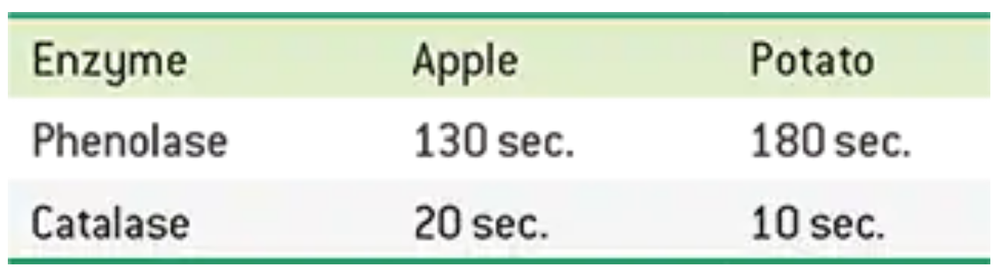
Apple slices and peeled potatoes rapidly brown in open air due to the presence of phenolases. Phenolases cause the oxidation of phenolic molecules like tyrosine to quinones, colored molecules responsible for the brown colors seen. An experiment comparing the time it took for a change to occur in the color of apple slices versus potato slices was done to test for phenolase activity. Then, a second experiment was done with new apple and potato slices with H2O2 measuring time until bubbles appeared.
Table comparing enzyme activity times for phenolase and catalase in apple and potato samples.
b. Which sample contains more catalase? Why?

Verified step by step guidance
1
Understand the role of catalase: Catalase is an enzyme that catalyzes the decomposition of hydrogen peroxide (H₂O₂) into water (H₂O) and oxygen (O₂). The presence of bubbles in the experiment indicates the release of oxygen gas, which is a direct result of catalase activity.
Analyze the experiment: In the second experiment, both apple and potato slices were exposed to H₂O₂, and the time until bubbles appeared was measured. The sample that produced bubbles more quickly or in greater quantity has higher catalase activity.
Compare the samples: Observe the results of the experiment. If one sample (e.g., potato slices) produced bubbles faster or more vigorously than the other (e.g., apple slices), it indicates that the sample with faster or more vigorous bubbling contains more catalase.
Explain the reasoning: Catalase activity is directly proportional to the rate of bubble formation because the enzyme speeds up the breakdown of H₂O₂. Therefore, the sample with more catalase will show a quicker and more pronounced bubbling reaction.
Conclude based on observations: Based on the experimental data provided (e.g., time until bubbles appeared or the intensity of bubbling), determine which sample—apple or potato—contains more catalase and explain why using the principles of enzyme activity and reaction rates.

Verified video answer for a similar problem:

This video solution was recommended by our tutors as helpful for the problem above.
Video duration:
2m
Was this helpful?

Key Concepts

Here are the essential concepts you must grasp in order to answer the question correctly.

Phenolases

Phenolases are enzymes that catalyze the oxidation of phenolic compounds, such as tyrosine, into quinones. This process is responsible for the browning of fruits and vegetables when exposed to air. Understanding phenolase activity is crucial for analyzing how different samples, like apple and potato slices, react to oxidation and how this relates to their enzymatic content.

Catalase

Catalase is an enzyme that catalyzes the decomposition of hydrogen peroxide (H2O2) into water and oxygen. It plays a vital role in protecting cells from oxidative damage by breaking down harmful peroxides. In the context of the experiment, measuring the time until bubbles appear indicates the presence and activity level of catalase in the samples, which helps determine which sample has a higher concentration of this enzyme.

Enzyme Activity Comparison

Comparing enzyme activity between different samples involves assessing how quickly a reaction occurs, often measured by the rate of product formation or substrate consumption. In this case, the time taken for visible reactions (browning or bubbling) provides insight into the relative amounts of phenolases and catalase present in apple and potato slices. This comparison is essential for understanding the biochemical properties of the samples.
Recommended video:
Guided course
1:06
Factors Affecting Enzyme Activity Concept 1