
Pearson+ LogoPearson+ Logo
Ch.21 The Generation of Biochemical Energy
McMurry - Fundamentals of GOB 8th Edition
McMurry8th EditionFundamentals of GOBISBN: 9780134015187Not the one you use?Change textbook
Chapter 21, Problem 5

A common metabolic strategy is the lack of reactivity—that is, the slowness to react—of compounds whose breakdown is exergonic. For example, hydrolysis of ATP to ADP or adenosine monophosphate (AMP) is exergonic but does not take place without an appropriate enzyme present. Why would the cell use this metabolic strategy?

Verified step by step guidance
1
Understand the concept of exergonic reactions: Exergonic reactions release energy as they proceed. The hydrolysis of ATP to ADP or AMP is an example of an exergonic reaction, meaning it releases energy that can be used by the cell for various processes.
Recognize the role of enzymes in metabolic reactions: Enzymes are biological catalysts that speed up chemical reactions by lowering the activation energy required for the reaction to occur. Without enzymes, even exergonic reactions may proceed very slowly or not at all.
Consider the importance of controlled energy release: If exergonic reactions like ATP hydrolysis occurred spontaneously and uncontrollably, the cell would lose energy in an unregulated manner, leading to inefficiency and potential damage to cellular structures.
Understand the metabolic strategy: By requiring enzymes to catalyze the hydrolysis of ATP, the cell ensures that energy release is tightly regulated and occurs only when and where it is needed. This allows the cell to efficiently harness the energy for specific processes such as muscle contraction, active transport, or biosynthesis.
Conclude the reasoning: The lack of reactivity of compounds like ATP without enzymes is a protective mechanism. It prevents wasteful or harmful energy release and ensures that the cell maintains control over its metabolic processes, promoting efficiency and stability.

Verified video answer for a similar problem:

This video solution was recommended by our tutors as helpful for the problem above.
Video duration:
4m
Was this helpful?

Key Concepts

Here are the essential concepts you must grasp in order to answer the question correctly.

Exergonic Reactions

Exergonic reactions are chemical processes that release energy, typically in the form of heat or work, as they proceed. In the context of metabolism, these reactions are crucial because they provide the energy necessary for cellular functions. However, despite being energetically favorable, they may not occur spontaneously without the presence of catalysts, such as enzymes, which lower the activation energy required for the reaction.
Recommended video:
Guided course
1:30
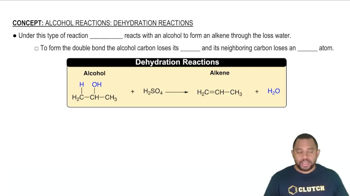
Alcohol Reactions: Dehydration Reactions Concept 1

Enzyme Catalysis

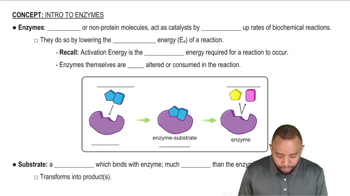
Enzymes are biological catalysts that accelerate chemical reactions in living organisms by lowering the activation energy barrier. This allows metabolic reactions, including the hydrolysis of ATP, to occur at a rate sufficient for cellular processes. Without enzymes, many exergonic reactions would proceed too slowly to support life, highlighting the importance of these proteins in metabolic pathways.
Recommended video:
Guided course
2:14
Intro to Enzymes Concept 1

Metabolic Regulation

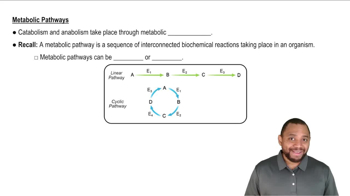
Metabolic regulation refers to the mechanisms that control the rate and direction of metabolic pathways in response to the cell's needs and environmental conditions. By using enzymes to regulate exergonic reactions, cells can prevent uncontrolled energy release, ensuring that energy is released in a controlled manner and utilized effectively for various cellular activities, thus maintaining homeostasis.
Recommended video:
Guided course
0:52
Metabolic Pathways Concept 2