

Ch. 11 - Organometallic Compounds
Bruice - Organic Chemistry 8th Edition
Bruice8th EditionOrganic ChemistryISBN: 9780135213711Non è quello che usi tu?Cambia libro di testo
Capitolo 11, Problema 32c,d

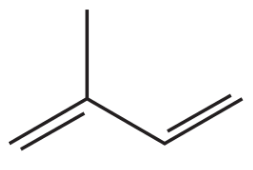
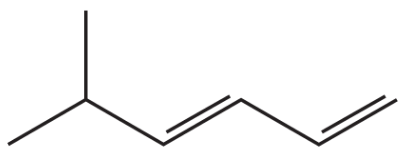
What alkyl halide reacts with lithium divinylcuprate [(CH2=CH)2CuLi] for the synthesis of each of the following compounds?
c.
d.

Guida verificata passo dopo passo
1
Step 1: Analyze the target compounds (c and d) provided in the image. Compound c is a linear alkene with two vinyl groups added to a straight-chain alkyl group. Compound d is a branched alkene with two vinyl groups added to a branched alkyl group.
Step 2: Understand the role of lithium divinylcuprate (3(CH2=CH)2CuLi4). This reagent is used for conjugate addition of vinyl groups to alkyl halides. The reaction involves the replacement of a halide group with vinyl groups.
Step 3: For compound c, identify the alkyl halide precursor. The target structure suggests that the starting alkyl halide should be a straight-chain alkyl halide with a halogen atom (e.g., bromine or iodine) at the position where the vinyl groups are added.
Step 4: For compound d, identify the alkyl halide precursor. The target structure suggests that the starting alkyl halide should be a branched alkyl halide with a halogen atom at the position where the vinyl groups are added.
Step 5: Write the general reaction mechanism. The lithium divinylcuprate reagent reacts with the alkyl halide via nucleophilic substitution, replacing the halogen atom with two vinyl groups. Ensure the correct stereochemistry and connectivity in the final product.

Risposta video verificata per un problema simile:

Questa soluzione video è stata consigliata dai nostri tutor come utile per risolvere questo problema.
Durata del video:
1m

Concetti chiave

Ecco i concetti essenziali che devi comprendere per rispondere correttamente alla domanda.

Alkyl Halides

Alkyl halides are organic compounds containing a carbon atom bonded to a halogen atom (F, Cl, Br, I). They are important in organic synthesis due to their reactivity, particularly in nucleophilic substitution and elimination reactions. Understanding the structure and reactivity of alkyl halides is crucial for predicting the products of reactions involving these compounds.
Video consigliato:
01:52
How to name alkyl halides

Lithium Divinylcuprate

Lithium divinylcuprate (Li2CuC4H4) is a reagent used in organic synthesis, particularly for the conjugate addition to α,β-unsaturated carbonyl compounds. It acts as a nucleophile, allowing for the formation of new carbon-carbon bonds. Recognizing how this reagent interacts with alkyl halides is essential for determining the appropriate starting materials for synthesizing target compounds.
Video consigliato:
01:17
Reactivity of Molecules

Nucleophilic Substitution Reactions

Nucleophilic substitution reactions involve the replacement of a leaving group (such as a halide) by a nucleophile. These reactions can follow either an SN1 or SN2 mechanism, depending on the structure of the alkyl halide and the conditions of the reaction. Understanding these mechanisms is vital for predicting the outcome of reactions involving alkyl halides and reagents like lithium divinylcuprate.
Video consigliato:
01:47
Nucleophiles and Electrophiles can react in Substitution Reactions.