Ch. 18 - Reactions of Benzene and Substituted Benzenes
Bruice - Organic Chemistry 8th Edition
Bruice8th EditionOrganic ChemistryISBN: 9780135213711Non è quello che usi tu?Cambia libro di testo
Capitolo 18, Problema 43d

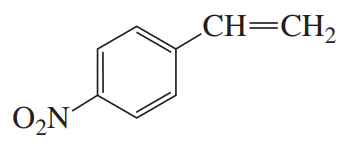
Name the following:
d. Chemical structure of a benzene ring with a nitro group (O2N) and an ethylene group (CH=CH2) attached.

Guida verificata passo dopo passo
1
Step 1: Identify the parent structure. The parent structure is a benzene ring, which is an aromatic compound.
Step 2: Determine the substituents attached to the benzene ring. There are two substituents: a nitro group (-NO₂) and an ethyl group (-CH₂CH₃).
Step 3: Assign positions to the substituents on the benzene ring. The nitro group is at position 1 (default starting point for naming), and the ethyl group is at position 2 relative to the nitro group.
Step 4: Name the substituents and combine them with the parent structure. The nitro group is named 'nitro,' and the ethyl group is named 'ethyl.' The positions are indicated numerically.
Step 5: Combine the names of the substituents with the parent structure in alphabetical order, ensuring the positions are included. The final name will follow IUPAC nomenclature rules.

Risposta video verificata per un problema simile:

Questa soluzione video è stata consigliata dai nostri tutor come utile per risolvere questo problema.
Durata del video:
4m

Concetti chiave

Ecco i concetti essenziali che devi comprendere per rispondere correttamente alla domanda.

Benzene Ring Structure

The benzene ring is a fundamental structure in organic chemistry, characterized by its six carbon atoms arranged in a planar hexagonal ring with alternating double bonds. This resonance structure allows for delocalization of electrons, contributing to the stability and unique reactivity of aromatic compounds. Understanding the properties of benzene is crucial for naming and identifying derivatives.
Video consigliato:
09:04
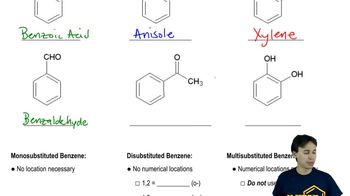
Benzene Nomenclature

Substituent Nomenclature

In organic chemistry, substituents are atoms or groups that replace hydrogen atoms in a hydrocarbon. The naming of compounds involves identifying the main chain and the substituents attached to it. For example, in nitrobenzene, the nitro group (NO2) is a substituent on the benzene ring, and its position relative to other groups is essential for proper nomenclature.
Video consigliato:
Percorso guidato
2:14
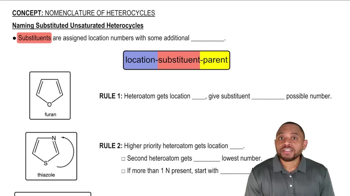
Nomenclature of Heterocycles Concept 3

IUPAC Naming Conventions

The International Union of Pure and Applied Chemistry (IUPAC) provides systematic rules for naming chemical compounds. For aromatic compounds like nitrobenzene, the IUPAC name is derived from the parent hydrocarbon (benzene) with the substituent (nitro) indicated. The position of the substituent is specified using numbers based on the carbon atoms in the ring, ensuring clarity and consistency in chemical communication.
Video consigliato:
03:43
The different parts of an IUPAC name