
Ch. 9 - Substitution and Elimination Reactions of Alkyl Halides
Bruice - Organic Chemistry 8th Edition
Bruice8th EditionOrganic ChemistryISBN: 9780135213711Non è quello che usi tu?Cambia libro di testo
Capitolo 9, Problema 86f

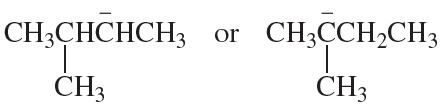
Which species in each pair is more stable?
f. Comparison of two alkene structures with labels indicating which species is more stable.

Guida verificata passo dopo passo
1
Step 1: Understand the concept of stability in organic chemistry. Stability can be influenced by factors such as resonance, inductive effects, hyperconjugation, steric hindrance, and aromaticity. These factors help determine which species in a pair is more stable.
Step 2: Analyze the electronic structure of each species in the pair. Look for resonance structures, as delocalization of electrons typically increases stability. Use resonance rules to determine if one species has more resonance contributors than the other.
Step 3: Evaluate the inductive effects. Electronegative atoms or groups attached to the molecule can withdraw electron density through sigma bonds, stabilizing the molecule. Compare the presence and position of electronegative groups in each species.
Step 4: Consider hyperconjugation. If one species has more alkyl groups attached to a positively charged carbon or a double bond, it may be stabilized by hyperconjugation. Count the number of hyperconjugative interactions in each species.
Step 5: Check for steric hindrance and aromaticity. Steric hindrance can destabilize a molecule if bulky groups are too close together. Aromatic species are highly stable due to delocalized π-electrons following Huckel's rule (4n+2 π-electrons). Determine if either species is aromatic or suffers from steric hindrance.

Risposta video verificata per un problema simile:

Questa soluzione video è stata consigliata dai nostri tutor come utile per risolvere questo problema.
Durata del video:
3m

Concetti chiave

Ecco i concetti essenziali che devi comprendere per rispondere correttamente alla domanda.

Stability of Chemical Species

The stability of chemical species refers to their tendency to maintain their structure and resist change. Factors influencing stability include bond strength, molecular geometry, and the presence of electron-withdrawing or donating groups. More stable species typically have lower energy configurations and are less reactive, making them less likely to undergo chemical transformations.
Video consigliato:
Percorso guidato
3:11
Chemical Reactions of Phosphate Anhydrides Concept 1

Resonance Structures

Resonance structures are different ways of drawing the same molecule that illustrate the delocalization of electrons. A molecule with multiple resonance structures can distribute its electron density more evenly, leading to increased stability. The actual structure of the molecule is a hybrid of these resonance forms, and the more resonance forms a species has, the more stable it generally is.
Video consigliato:
03:04
Drawing Resonance Structures

Electronegativity and Inductive Effects

Electronegativity is the ability of an atom to attract electrons in a bond. Atoms with high electronegativity can stabilize negative charges through inductive effects, where they pull electron density towards themselves. This can enhance the stability of a species, especially in the presence of electronegative atoms or groups that can help distribute charge or stabilize reactive intermediates.
Video consigliato:
1:47
Electronegativity