뒤로
뒤로
문제 19b
Give the expected products for the aldol condensations of (b) phenylacetaldehyde.
문제 19c
Give the expected products for the aldol condensations of (c) pentan-3-one.
문제 21
Propose a complete mechanism for the acid-catalyzed aldol condensation of acetone.
문제 22a,b
Propose a mechanism for the dehydration of diacetone alcohol to mesityl oxide
(a) in acid.
(b) in base.
문제 24a
Predict the products of aldol condensation, followed by dehydration, of the following ketones and aldehydes.
(a) butyraldehyde
문제 24b
Predict the products of aldol condensation, followed by dehydration, of the following ketones and aldehydes.
(b) acetophenone
문제 24c
Predict the products of aldol condensation, followed by dehydration, of the following ketones and aldehydes.
(c) cyclohexanone
문제 25a
Propose mechanisms for the following base-catalyzed condensations, with dehydration.
(a) 2,2-dimethylpropanal with acetaldehyde
문제 25b
Propose mechanisms for the following base-catalyzed condensations, with dehydration.
(b) benzaldehyde with propionaldehyde
문제 28a
Predict the major products of the following base-catalyzed aldol condensations with dehydration.
(a) benzophenone (PhCOPh) + propionaldehyde
문제 28b
Predict the major products of the following base-catalyzed aldol condensations with dehydration.
(b) 2,2-dimethylpropanal + acetophenone
문제 30
Show how octane-2,7-dione might cyclize to a cycloheptenone. Explain why ring closure to the cycloheptenone is not favored.
문제 31
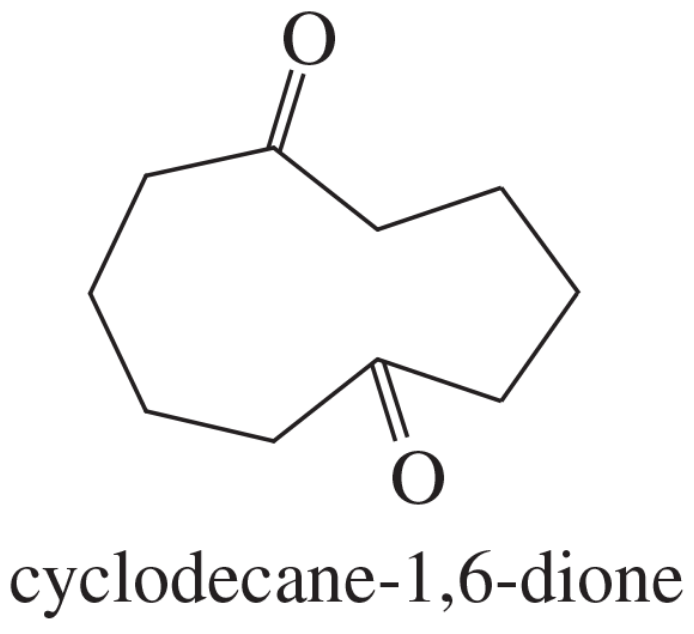
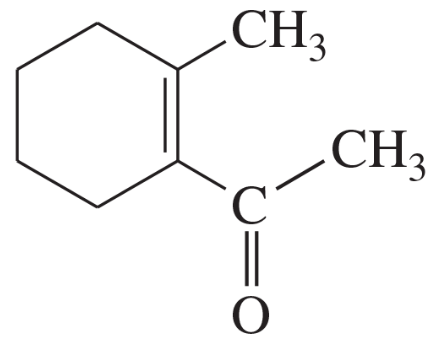
When cyclodecane-1,6-dione is treated with sodium carbonate, the product gives a UV spectrum similar to that of 1-acetyl-2-methylcyclopentene. Propose a structure for the product, and give a mechanism for its formation.
문제 32a
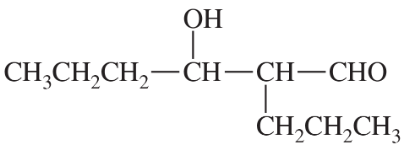
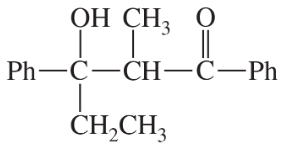
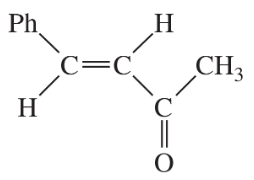
Show how each compound can be dissected into reagents joined by an aldol condensation, then decide whether the necessary aldol condensation is feasible.
(a)
문제 32b
Show how each compound can be dissected into reagents joined by an aldol condensation, then decide whether the necessary aldol condensation is feasible.
(b)
문제 32c
Show how each compound can be dissected into reagents joined by an aldol condensation, then decide whether the necessary aldol condensation is feasible.
(c)
문제 32e
Show how each compound can be dissected into reagents joined by an aldol condensation, then decide whether the necessary aldol condensation is feasible.
(e)
문제 33a
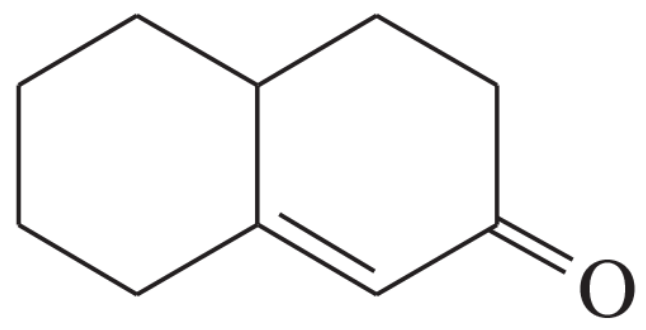
The following compound results from base-catalyzed aldol cyclization of a 2-substituted cyclohexanone.
(a) Show the diketone that would cyclize to give this product.
문제 33b
The following compound results from base-catalyzed aldol cyclization of a 2-substituted cyclohexanone.
(b) Propose a mechanism for the cyclization.
문제 34
Ethoxide is used as the base in the condensation of ethyl acetate to avoid some unwanted side reactions. Show what side reactions would occur if the following bases were used.
(a) sodium methoxide
(b) sodium hydroxide
문제 35
Esters with only one α hydrogen generally give poor yields in the Claisen condensation. Propose a mechanism for the Claisen condensation of ethyl isobutyrate, and explain why a poor yield is obtained.
문제 36a,b
Predict the products of self-condensation of the following esters.
(a) methyl propanoate + NaOCH3
(b) ethyl phenylacetate + NaOCH2CH3
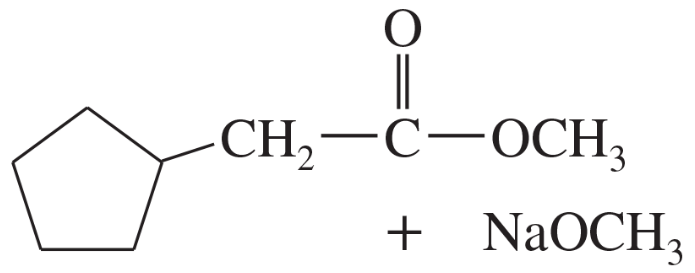
문제 36c
Predict the products of self-condensation of the following esters.
(c)
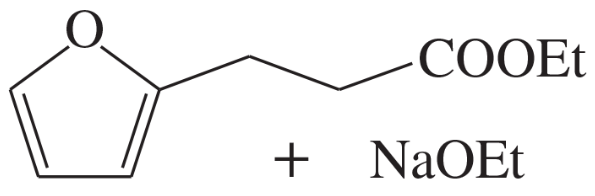
문제 36d
Predict the products of self-condensation of the following esters.
(d)
문제 37
Propose a mechanism for the self-condensation of methyl 3-phenylpropionate promoted by sodium methoxide.
문제 38a
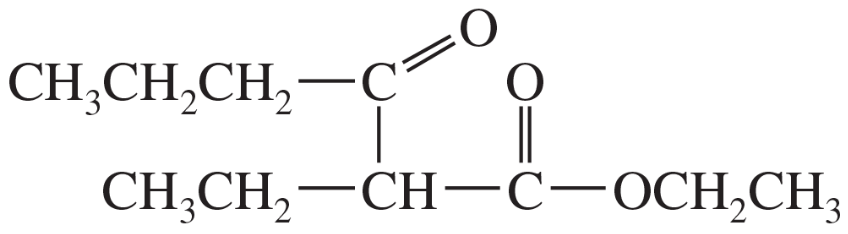
Show what esters would undergo Claisen condensation to give the following β-keto esters.
(a)
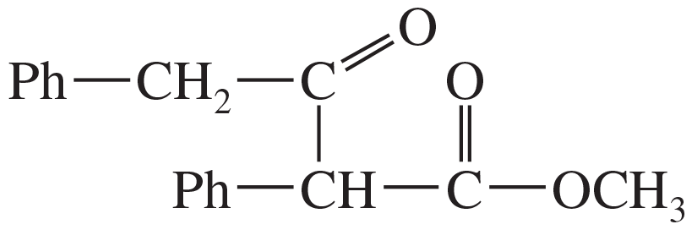
문제 38b
Show what esters would undergo Claisen condensation to give the following β-keto esters.
(b)
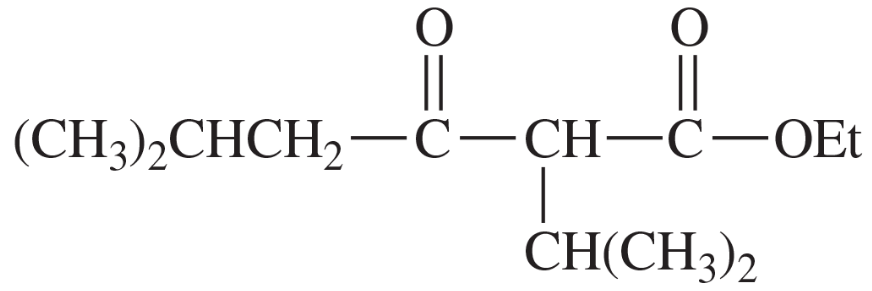
문제 38c
Show what esters would undergo Claisen condensation to give the following β-keto esters.
(c)
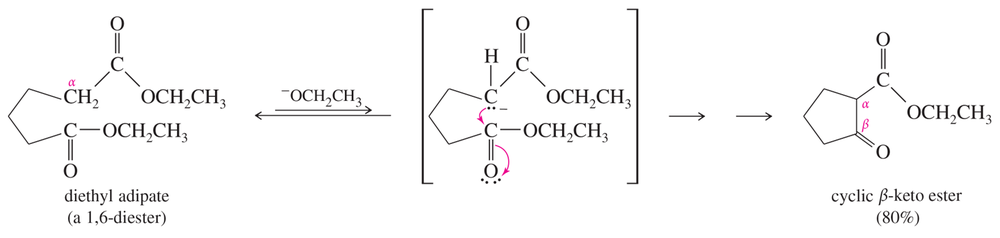
문제 39a
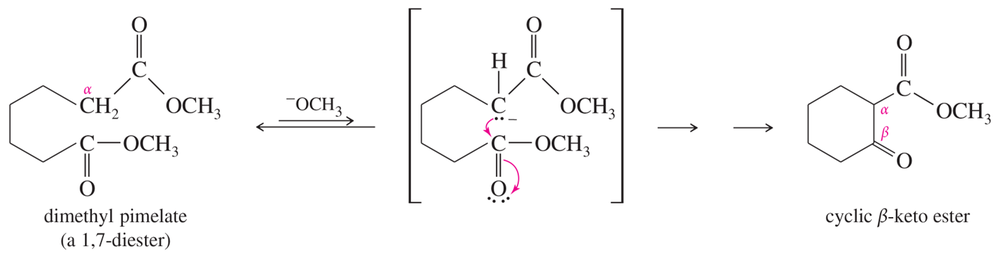
Propose mechanisms for the two Dieckmann condensations just shown.
문제 39b
Propose mechanisms for the two Dieckmann condensations just shown.