Ch. 2 The Chemical Level of Organization
Martini - Fundamentals of Anatomy & Physiology 11th Edition
Martini, Nath, Bartholomew11th EditionFundamentals of Anatomy & PhysiologyISBN: 9780136874089당신이 사용하는 게 아니라요?교과서 변경
2장, 문제 27

In an exergonic reaction,
(a) Large molecules are broken down into smaller ones.
(b) Small molecules are assembled into larger ones.
(c) Molecules are rearranged to form new molecules.
(d) Molecules move from reactants to products and back.
(e) Energy is released during the reaction.

검증된 단계별 안내
1
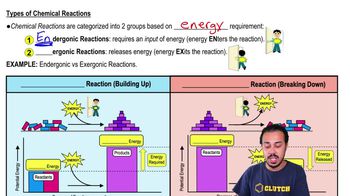
Step 1: Understand the term 'exergonic reaction' in the context of biochemistry and physiology. An exergonic reaction is a chemical reaction that releases energy to the surroundings.
Step 2: Analyze each option in the problem to see which best fits the definition of an exergonic reaction:
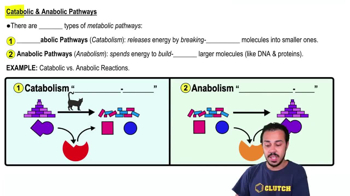
Step 3: Option (a) describes breaking down large molecules into smaller ones, which often releases energy (catabolic process). This is a common example of an exergonic reaction.
Step 4: Option (b) describes assembling small molecules into larger ones, which usually requires energy input (an endergonic process), so it does not fit the exergonic definition.
Step 5: Option (e) directly states that energy is released during the reaction, which aligns perfectly with the definition of an exergonic reaction.

비슷한 문제에 대한 검증된 영상 답변:

이 영상 해법은 위 문제에 도움이 된다고 튜터들이 추천한 것입니다.
영상 길이:
2m
도움이 되었나요?

주요 개념

질문에 올바르게 답하기 위해 반드시 이해해야 하는 핵심 개념들은 다음과 같습니다.

Exergonic Reactions

Exergonic reactions are chemical processes that release energy, usually in the form of heat or light. These reactions have a negative Gibbs free energy change, meaning the products have less energy than the reactants, making the reaction spontaneous.
추천 영상:
가이드 코스
05:48
Types of Chemical Reactions

Catabolic Processes

Catabolic processes involve breaking down large molecules into smaller ones, releasing energy stored in chemical bonds. This breakdown is typical in exergonic reactions, such as cellular respiration, where complex molecules like glucose are decomposed.
추천 영상:
가이드 코스
03:25
Catabolic & Anabolic Pathways

Energy Flow in Chemical Reactions

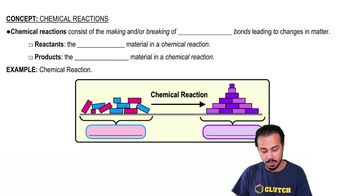
Energy flow refers to how energy is absorbed or released during chemical reactions. In exergonic reactions, energy is released to the surroundings, which can be harnessed to perform cellular work or drive other endergonic reactions.
추천 영상:
가이드 코스
01:56
Chemical Reactions