Ch.1 Matter and Measurements
McMurry - Fundamentals of General, Organic, and Biological Chemistry 8th Edition
McMurry8th EditionFundamentals of General, Organic, and Biological ChemistryISBN: 9780134015187당신이 사용하는 게 아니라요?교과서 변경
1장, 문제 52

Write the formula for ibuprofen: 13 carbons, 18 hydrogens, and 2 oxygens. What are the common uses of ibuprofen?

검증된 단계별 안내
1
Step 1: To write the molecular formula for ibuprofen, count the number of each type of atom present in the molecule. According to the problem, ibuprofen contains 13 carbon atoms, 18 hydrogen atoms, and 2 oxygen atoms.
Step 2: Combine the counts of each atom into a molecular formula. The general format for a molecular formula is to list the elements in the order of carbon (C), hydrogen (H), and then oxygen (O), followed by their respective counts.
Step 3: Write the molecular formula for ibuprofen as \( \text{C}_{13}\text{H}_{18}\text{O}_2 \) using the counts provided.
Step 4: Ibuprofen is a nonsteroidal anti-inflammatory drug (NSAID). It is commonly used to reduce fever, relieve pain (such as headaches, muscle aches, or menstrual cramps), and decrease inflammation (such as swelling caused by arthritis).
Step 5: Note that the molecular formula \( \text{C}_{13}\text{H}_{18}\text{O}_2 \) represents the composition of ibuprofen but does not provide structural information about how the atoms are arranged. The structural formula would show the specific arrangement of atoms in the molecule.

비슷한 문제에 대한 검증된 영상 답변:

이 영상 해법은 위 문제에 도움이 된다고 튜터들이 추천한 것입니다.
영상 길이:
2m
도움이 되었나요?

주요 개념

질문에 올바르게 답하기 위해 반드시 이해해야 하는 핵심 개념들은 다음과 같습니다.

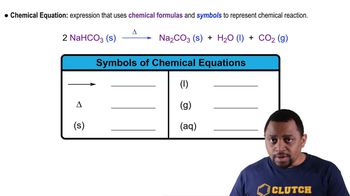
Chemical Formula

The chemical formula of a compound provides a concise representation of its molecular composition, indicating the number of each type of atom present. For ibuprofen, the formula C13H18O2 reflects that it contains 13 carbon atoms, 18 hydrogen atoms, and 2 oxygen atoms. Understanding chemical formulas is essential for identifying the structure and potential reactivity of a substance.
추천 영상:
가이드 코스
02:04
Chemical Reaction: Chemical Change Concept 2

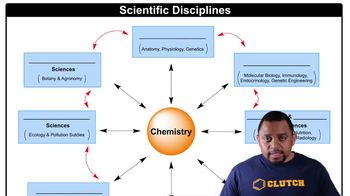
Pharmacological Uses

Ibuprofen is a nonsteroidal anti-inflammatory drug (NSAID) commonly used to relieve pain, reduce inflammation, and lower fever. It is effective for various conditions, including headaches, muscle aches, arthritis, and menstrual cramps. Recognizing its pharmacological uses helps in understanding its role in pain management and its therapeutic applications.
추천 영상:
가이드 코스
02:36
What is Chemistry? Concept 2

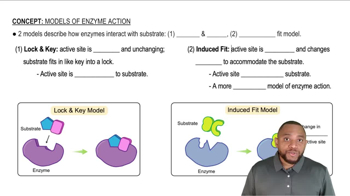
Mechanism of Action

The mechanism of action of ibuprofen involves the inhibition of cyclooxygenase (COX) enzymes, which play a crucial role in the synthesis of prostaglandins—compounds that mediate inflammation and pain. By blocking these enzymes, ibuprofen reduces the production of prostaglandins, leading to decreased inflammation and pain relief. This understanding is vital for comprehending how ibuprofen functions in the body.
추천 영상:
가이드 코스
2:39
Models of Enzyme Action Concept 1