Ch.2 Atoms and the Periodic Table
McMurry - Fundamentals of General, Organic, and Biological Chemistry 8th Edition
McMurry8th EditionFundamentals of General, Organic, and Biological ChemistryISBN: 9780134015187당신이 사용하는 게 아니라요?교과서 변경
2장, 문제 32

How do atoms of different elements differ?

검증된 단계별 안내
1
Understand that atoms of different elements are defined by the number of protons in their nucleus, which is called the atomic number. Each element has a unique atomic number.
Recognize that the number of neutrons in the nucleus can vary among atoms of the same element, leading to isotopes, but the atomic number remains constant for a given element.
Note that the number of electrons in a neutral atom equals the number of protons. However, atoms can gain or lose electrons to form ions, which affects their charge but not their identity as an element.
Consider that the arrangement of electrons in energy levels or orbitals around the nucleus differs between elements, influencing their chemical properties and reactivity.
Understand that the mass of an atom is primarily determined by the combined number of protons and neutrons in the nucleus, which varies between elements and isotopes.

비슷한 문제에 대한 검증된 영상 답변:

이 영상 해법은 위 문제에 도움이 된다고 튜터들이 추천한 것입니다.
영상 길이:
2m
도움이 되었나요?

주요 개념

질문에 올바르게 답하기 위해 반드시 이해해야 하는 핵심 개념들은 다음과 같습니다.

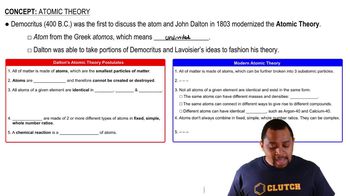
Atomic Structure

Atoms are the basic units of matter, consisting of protons, neutrons, and electrons. The number of protons in the nucleus defines the element and is known as the atomic number. Different elements have unique atomic structures, which determine their chemical properties and behavior.
추천 영상:

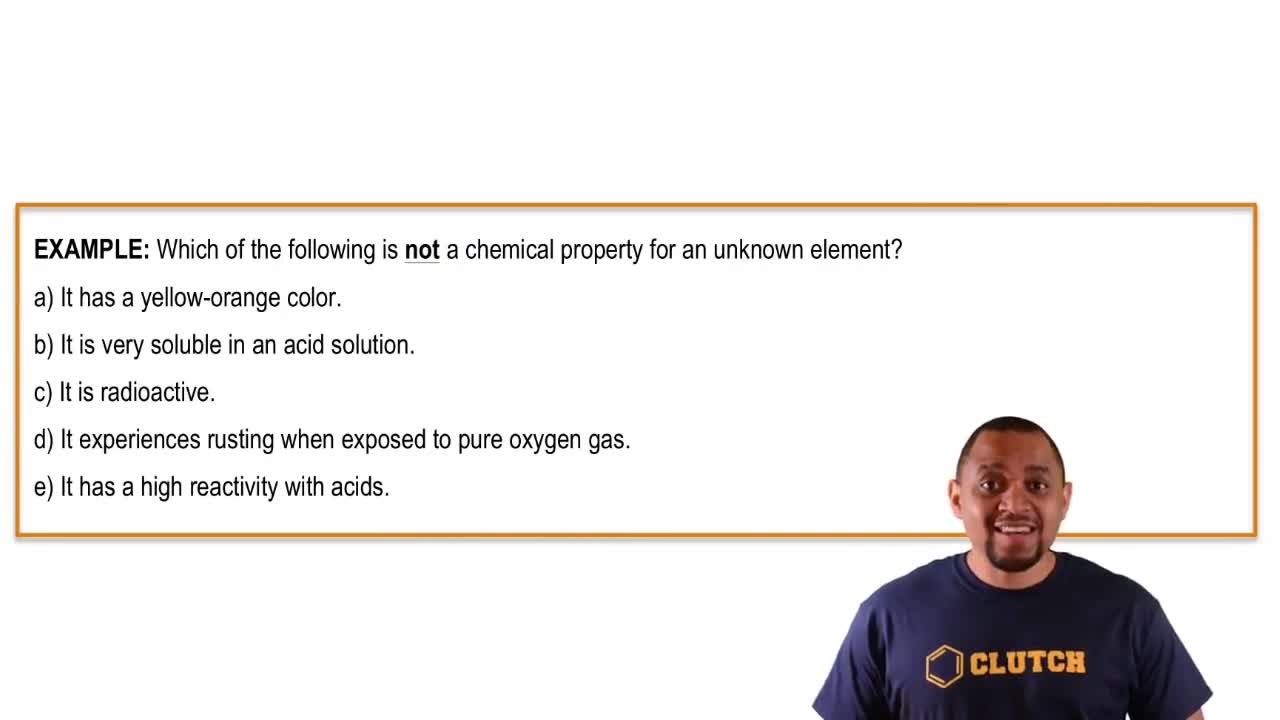
Elemental Properties

Each element has distinct properties, such as atomic mass, electronegativity, and ionization energy, which arise from its atomic structure. These properties influence how elements interact with one another, forming compounds and participating in chemical reactions. Understanding these properties is essential for distinguishing between different elements.
추천 영상:
가이드 코스
02:11
Chemical Properties Example 1

Periodic Table

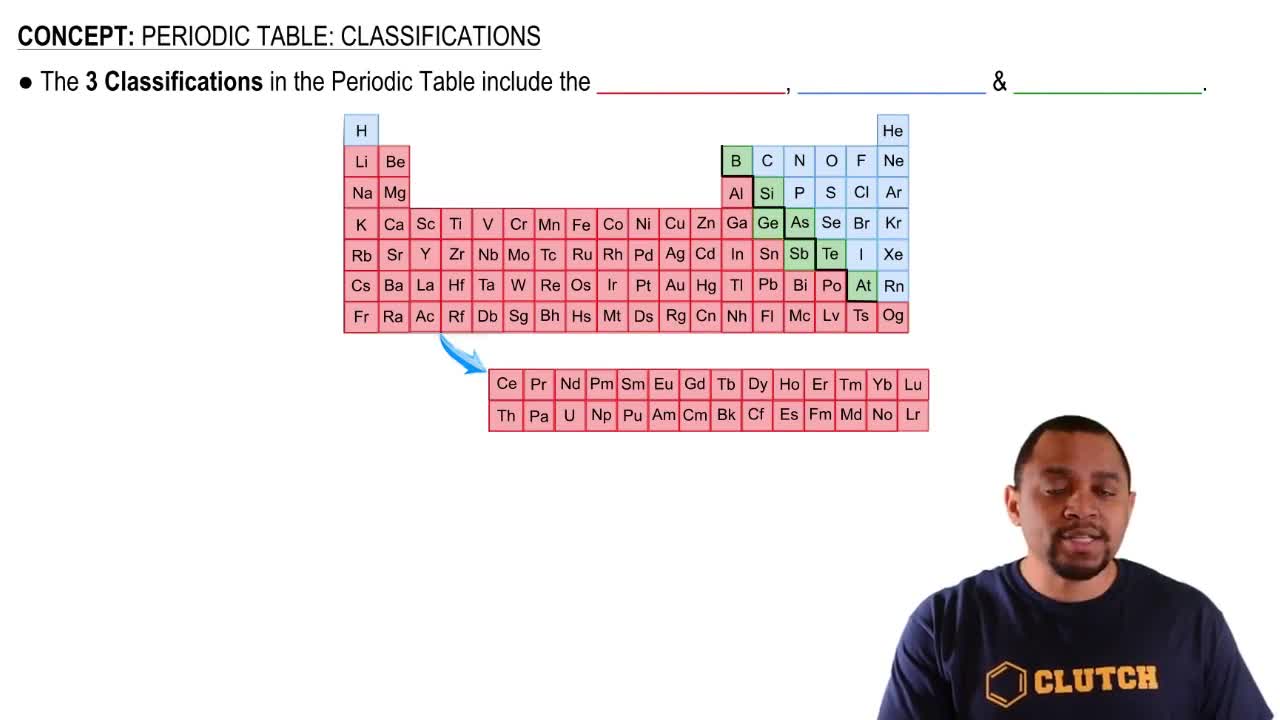
The periodic table organizes elements based on their atomic number and properties, revealing trends and relationships among them. Elements are grouped into categories such as metals, nonmetals, and metalloids, which exhibit similar characteristics. This organization helps in predicting how different elements will behave in chemical reactions.
추천 영상:
가이드 코스
02:40
Periodic Table: Classifications