Ch.4 Molecular Compounds
McMurry - Fundamentals of General, Organic, and Biological Chemistry 8th Edition
McMurry8th EditionFundamentals of General, Organic, and Biological ChemistryISBN: 9780134015187당신이 사용하는 게 아니라요?교과서 변경
4장, 문제 85a

The discovery in the 1960s that xenon and fluorine react to form a molecular compound was a surprise to most chemists, because it had been thought that noble gases could not form bonds.
a. Why was it thought that noble gases could not form bonds?

검증된 단계별 안내
1
Understand the electronic configuration of noble gases: Noble gases are located in Group 18 of the periodic table and have a full valence shell of electrons. This means their outermost electron shell is completely filled, making them highly stable and unreactive under normal conditions.
Recognize the concept of chemical bonding: Atoms form bonds to achieve a more stable electronic configuration, typically by sharing, gaining, or losing electrons. Since noble gases already have a stable configuration, they do not have a tendency to form bonds.
Consider the role of electronegativity and ionization energy: Noble gases have very high ionization energies, meaning it requires a significant amount of energy to remove an electron. Additionally, their electronegativity is low, so they do not readily attract electrons from other atoms to form bonds.
Understand the historical perspective: Before the 1960s, chemists believed that noble gases were completely inert due to their stable electronic configuration and lack of chemical reactivity observed in experiments. This led to the assumption that noble gases could not form bonds.
Learn about the breakthrough discovery: The reaction between xenon and fluorine demonstrated that under specific conditions, such as high pressure or the presence of highly electronegative elements like fluorine, noble gases can form compounds. This discovery challenged the earlier belief and expanded our understanding of chemical bonding.

비슷한 문제에 대한 검증된 영상 답변:

이 영상 해법은 위 문제에 도움이 된다고 튜터들이 추천한 것입니다.
영상 길이:
3m
도움이 되었나요?

주요 개념

질문에 올바르게 답하기 위해 반드시 이해해야 하는 핵심 개념들은 다음과 같습니다.

Noble Gases

Noble gases, located in Group 18 of the periodic table, are characterized by their full valence electron shells, which make them chemically inert under normal conditions. This stability leads to the belief that they do not readily form chemical bonds with other elements, as they do not need to gain, lose, or share electrons to achieve a stable electronic configuration.
추천 영상:
가이드 코스
14:42
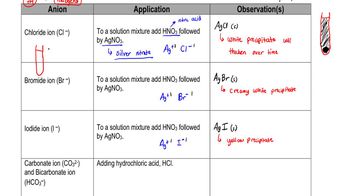
Test for Anions

Chemical Bonding

Chemical bonding refers to the forces that hold atoms together in compounds. The most common types of bonds are ionic, covalent, and metallic bonds. In the case of noble gases, the prevailing theory suggested that their lack of reactivity was due to an inability to form covalent bonds, which involve the sharing of electrons between atoms.
추천 영상:
가이드 코스
00:49
Chemical Reaction: Chemical Change Example 1

Reactivity of Elements

The reactivity of elements is influenced by their electron configuration and the tendency to achieve a stable state. Elements with incomplete valence shells are more likely to react to form bonds, while those with full shells, like noble gases, were historically considered non-reactive. The discovery of compounds formed by noble gases challenged this notion and expanded the understanding of chemical reactivity.
추천 영상:
가이드 코스
01:14
Valence Electrons of Elements (Simplified) Example 1