
교과서 질문
In Problem 6.40, hydrazine reacted with oxygen according to the following (unbalanced) equation: N2H4(l) + O2(g) → NO2(g) + H2O(g)
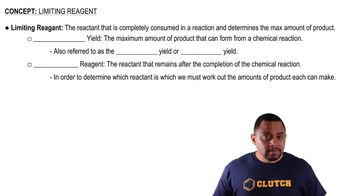
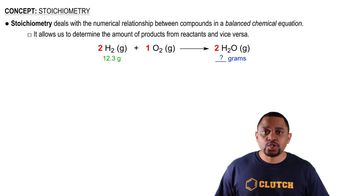
a. If 75.0 kg of hydrazine are reacted with 75.0 kg of oxygen, which is the limiting reagent?
2052
views

 검증된 단계별 안내
 01:30
01:30
 01:16
01:16 01:10
01:10In Problem 6.40, hydrazine reacted with oxygen according to the following (unbalanced) equation: N2H4(l) + O2(g) → NO2(g) + H2O(g)
a. If 75.0 kg of hydrazine are reacted with 75.0 kg of oxygen, which is the limiting reagent?
Nitrobenzene (C6H5NO2) is used in small quantities as a flavoring agent or in perfumes but can be toxic in large amounts. It is produced by reaction of benzene (C6H6) with nitric acid:
C6H6(l) + HNO3(aq) → C6H5NO2(l) + H2O(l)
b. Calculate the theoretical yield for this reaction.
Titanium metal is obtained from the mineral rutile, TiO2. The process requires multiple steps, as shown in the following reactions:
TiO2(s) + 2 Cl2(g) + 2 C(s) → TiCl4(s) + 2 CO(g)
TiCl4(s) + 2 Mg(s) → Ti(s) + 2 MgCl2(s)
c. How many kilograms of rutile are needed to produce 95 kg of Ti?
When table sugar (sucrose, C12H22O11) is heated, it decomposes to form C and H2O.
b. How many grams of carbon are formed by the breakdown of 60.0 g of sucrose?
When table sugar (sucrose, C12H22O11) is heated, it decomposes to form C and H2O.
a. Write a balanced equation for the process.
Titanium metal is obtained from the mineral rutile, TiO2. The process requires multiple steps, as shown in the following reactions:
TiO2(s) + 2 Cl2(g) + 2 C(s) → TiCl4(s) + 2 CO(g)
TiCl4(s) + 2 Mg(s) → Ti(s) + 2 MgCl2(s)
b. How many moles of TiO2 are needed to form one mole of titanium?