Ch.8 Gases, Liquids and Solids
McMurry - Fundamentals of General, Organic, and Biological Chemistry 8th Edition
McMurry8th EditionFundamentals of General, Organic, and Biological ChemistryISBN: 9780134015187당신이 사용하는 게 아니라요?교과서 변경
8장, 문제 114a

Obtain phase diagrams for water and carbon dioxide.
a. Based on the phase diagram for water, explain how it is possible to skate on ice, that is, solid water.

검증된 단계별 안내
1
Examine the phase diagram for water. The diagram shows the relationship between pressure and temperature, indicating the states of matter (solid, liquid, and gas) under different conditions. Key points include the triple point, normal freezing point, normal boiling point, and critical point.
Understand the unique property of water's phase diagram. The solid-liquid boundary line has a negative slope, meaning that increasing pressure can cause ice to melt at temperatures below the normal freezing point. This is due to the fact that ice is less dense than liquid water.
When skating on ice, the pressure exerted by the skate blade on the ice surface is significant. This pressure lowers the melting point of ice locally, causing a thin layer of liquid water to form beneath the blade.
The thin layer of liquid water acts as a lubricant, reducing friction and allowing the skate to glide smoothly over the ice surface. This phenomenon is explained by the phase diagram's solid-liquid boundary behavior under increased pressure.
Relate this concept to the phase diagram. The ability to skate on ice is a direct result of the negative slope of the solid-liquid boundary line, which allows ice to transition to liquid under localized high pressure conditions.

비슷한 문제에 대한 검증된 영상 답변:

이 영상 해법은 위 문제에 도움이 된다고 튜터들이 추천한 것입니다.
영상 길이:
1m

주요 개념

질문에 올바르게 답하기 위해 반드시 이해해야 하는 핵심 개념들은 다음과 같습니다.

Phase Diagram

A phase diagram is a graphical representation that shows the states of a substance (solid, liquid, gas) at various temperatures and pressures. It illustrates the conditions under which distinct phases occur and coexist, including critical points and phase transitions. Understanding phase diagrams is essential for analyzing how substances behave under different environmental conditions.
추천 영상:
가이드 코스
00:37
Energy Diagrams Example 1

Triple Point

The triple point of a substance is the unique set of conditions at which all three phases (solid, liquid, and gas) coexist in equilibrium. For water, this occurs at a specific temperature and pressure (0.01°C and 0.006 atm). This concept is crucial for understanding the phase transitions of water and how it can exist in different states simultaneously.
추천 영상:
가이드 코스
03:05
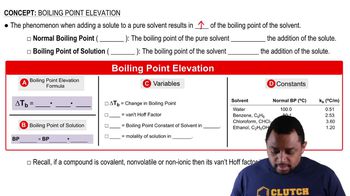
Boiling Point Elevation Concept 1

Pressure and Ice Skating

The phenomenon of skating on ice can be explained by the pressure exerted by the skate blade on the ice surface. According to the phase diagram, increased pressure can lower the melting point of ice, causing a thin layer of liquid water to form beneath the blade. This layer reduces friction, allowing the skater to glide smoothly over the ice, demonstrating the interplay between pressure and phase changes.
추천 영상:
가이드 코스
01:15
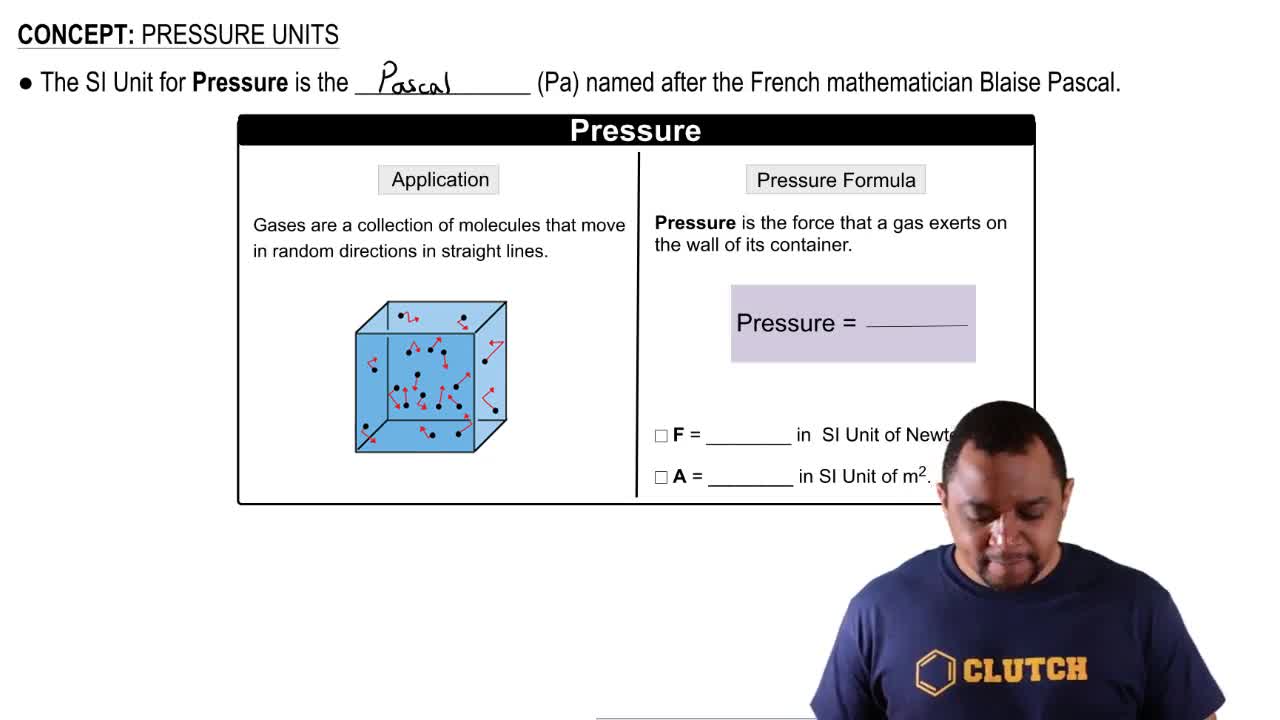
Pressure Units Concept 1