Ch.19 Enzymes and Vitamins
McMurry - Fundamentals of General, Organic, and Biological Chemistry 8th Edition
McMurry8th EditionFundamentals of General, Organic, and Biological ChemistryISBN: 9780134015187당신이 사용하는 게 아니라요?교과서 변경
19장, 문제 80

Look up the structures of vitamin C and vitamin E on the Web, and identify the functional groups in these vitamins.

검증된 단계별 안내
1
Search for the chemical structures of vitamin C (ascorbic acid) and vitamin E (tocopherol) using reliable sources such as scientific databases or trusted websites.
Examine the structure of vitamin C. Identify the functional groups present, such as hydroxyl (-OH) groups, a lactone ring (a cyclic ester), and any other relevant features.
Examine the structure of vitamin E. Identify the functional groups present, such as hydroxyl (-OH) groups on the aromatic ring, an ether group, and the long hydrocarbon tail.
Review the definitions of the identified functional groups to ensure you understand their chemical properties and roles in the molecules.
Summarize the functional groups found in each vitamin and consider how these groups contribute to the vitamins' chemical behavior and biological functions.

비슷한 문제에 대한 검증된 영상 답변:

이 영상 해법은 위 문제에 도움이 된다고 튜터들이 추천한 것입니다.
영상 길이:
1m
도움이 되었나요?

주요 개념

질문에 올바르게 답하기 위해 반드시 이해해야 하는 핵심 개념들은 다음과 같습니다.

Functional Groups

Functional groups are specific groups of atoms within molecules that are responsible for the characteristic chemical reactions of those molecules. They determine the properties and reactivity of organic compounds. Common functional groups include hydroxyl (-OH), carboxyl (-COOH), and ester (-COO-) groups, which can be found in various vitamins.
추천 영상:
가이드 코스
1:11
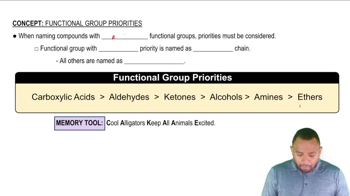
Functional Group Priorities Concept 1

Vitamin C Structure

Vitamin C, also known as ascorbic acid, has a structure that includes multiple hydroxyl groups and a lactone ring. These functional groups contribute to its antioxidant properties and its role in collagen synthesis. Understanding its structure helps in recognizing how it interacts with other molecules in biological systems.
추천 영상:
가이드 코스
1:03
Structural Formula Example 2

Vitamin E Structure

Vitamin E primarily exists in the form of tocopherols and tocotrienols, which contain a chromanol ring and a long phytyl side chain. The hydroxyl group on the chromanol ring is crucial for its antioxidant activity, allowing it to protect cell membranes from oxidative damage. Analyzing its structure reveals how it functions in the body.
추천 영상:
가이드 코스
1:13
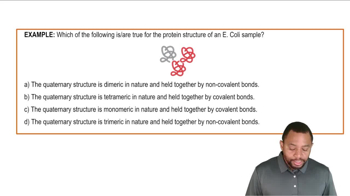
Quaternary Protein Structure Example 1