Ch.19 Enzymes and Vitamins
McMurry - Fundamentals of General, Organic, and Biological Chemistry 8th Edition
McMurry8th EditionFundamentals of General, Organic, and Biological ChemistryISBN: 9780134015187당신이 사용하는 게 아니라요?교과서 변경
19장, 문제 81

What is the relationship between vitamin A and β-carotene?

검증된 단계별 안내
1
Vitamin A and β-carotene are chemically related. β-carotene is a precursor to vitamin A, meaning it can be converted into vitamin A in the body.
β-carotene is a type of carotenoid, which is a class of organic pigments found in plants. Its structure consists of a long chain of conjugated double bonds, making it highly unsaturated.
Vitamin A, also known as retinol, has a smaller structure compared to β-carotene. It contains a hydroxyl group (-OH) and a shorter hydrocarbon chain.
The conversion of β-carotene to vitamin A occurs in the liver and intestinal mucosa. Enzymes cleave β-carotene into two molecules of vitamin A (retinal), which can then be reduced to retinol or oxidized to retinoic acid.
This relationship is important because β-carotene serves as a dietary source of vitamin A, especially in plant-based diets, and is essential for vision, immune function, and skin health.

비슷한 문제에 대한 검증된 영상 답변:

이 영상 해법은 위 문제에 도움이 된다고 튜터들이 추천한 것입니다.
영상 길이:
2m
도움이 되었나요?

주요 개념

질문에 올바르게 답하기 위해 반드시 이해해야 하는 핵심 개념들은 다음과 같습니다.

Vitamin A

Vitamin A is a fat-soluble vitamin essential for various bodily functions, including vision, immune function, and skin health. It exists in several forms, with retinol being the most active form in the body. Vitamin A is crucial for the maintenance of healthy vision, particularly in low-light conditions, and plays a role in cellular communication and growth.
추천 영상:
가이드 코스
1:10
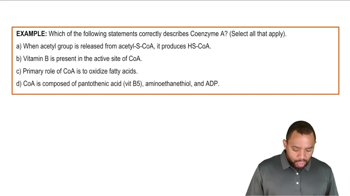
Coenzyme A Example 4

β-Carotene

β-Carotene is a carotenoid, a type of pigment found in plants that gives fruits and vegetables their orange and yellow colors. It serves as a precursor to vitamin A, meaning the body can convert β-carotene into vitamin A as needed. This conversion is particularly important for individuals who may not consume enough direct sources of vitamin A, as it provides a dietary means to meet vitamin A requirements.

Conversion Process

The conversion of β-carotene to vitamin A occurs primarily in the intestines and liver, where enzymes cleave β-carotene into retinol. This process is influenced by several factors, including dietary fat intake, the presence of other nutrients, and individual metabolic differences. Understanding this conversion is essential for grasping how dietary sources of β-carotene can impact vitamin A levels in the body.
추천 영상:
가이드 코스
03:45
Conversion Factors (Simplified) Example 2