Ch.19 Enzymes and Vitamins
McMurry - Fundamentals of General, Organic, and Biological Chemistry 8th Edition
McMurry8th EditionFundamentals of General, Organic, and Biological ChemistryISBN: 9780134015187당신이 사용하는 게 아니라요?교과서 변경
19장, 문제 16

Which type of enzyme regulation is best for the following situations?
a. An enzyme that becomes overactive during a disease
b. An enzyme needed only when there is low blood glucose
c. An enzyme that springs into action when a traumatic injury occurs
d. An enzyme needed only during adolescence

검증된 단계별 안내
1
Understand the concept of enzyme regulation: Enzyme regulation refers to the mechanisms that control the activity of enzymes, ensuring they function only when needed. Common types include allosteric regulation, covalent modification, feedback inhibition, and gene expression regulation.
For part (a): An enzyme that becomes overactive during a disease may require inhibition through covalent modification (e.g., phosphorylation) or the use of an allosteric inhibitor to reduce its activity. This ensures the enzyme does not contribute to disease progression.
For part (b): An enzyme needed only when there is low blood glucose is likely regulated by gene expression. The enzyme's production would be upregulated when blood glucose levels are low, ensuring it is synthesized only when required.
For part (c): An enzyme that springs into action during a traumatic injury is likely regulated by zymogen activation. Zymogens are inactive enzyme precursors that are activated in response to specific signals, such as those triggered by injury (e.g., blood clotting enzymes).
For part (d): An enzyme needed only during adolescence is likely regulated by hormonal control. Hormones such as growth hormone or sex hormones can regulate the expression of enzymes specific to developmental stages like adolescence.

비슷한 문제에 대한 검증된 영상 답변:

이 영상 해법은 위 문제에 도움이 된다고 튜터들이 추천한 것입니다.
영상 길이:
9m
도움이 되었나요?

주요 개념

질문에 올바르게 답하기 위해 반드시 이해해야 하는 핵심 개념들은 다음과 같습니다.

Enzyme Regulation

Enzyme regulation refers to the various mechanisms that control enzyme activity, ensuring that metabolic processes occur at the right time and in the right amounts. This can involve allosteric regulation, covalent modification, or feedback inhibition, allowing cells to respond dynamically to changes in their environment or internal conditions.
추천 영상:
가이드 코스
2:14
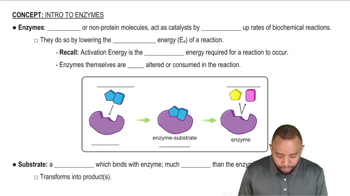
Intro to Enzymes Concept 1

Feedback Inhibition

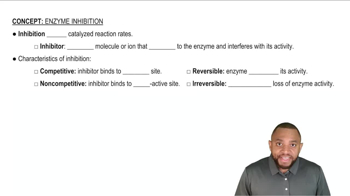
Feedback inhibition is a regulatory mechanism where the end product of a metabolic pathway inhibits an enzyme involved in its production. This process helps maintain homeostasis by preventing the overproduction of substances, making it particularly relevant for enzymes that become overactive during diseases.
추천 영상:
가이드 코스
1:19
Enzyme Inhibition Concept 1

Inducible Enzymes

Inducible enzymes are those that are synthesized in response to specific signals or conditions, such as low blood glucose levels. These enzymes are not constantly present but are produced when needed, allowing the organism to conserve resources and respond efficiently to changing physiological states.
추천 영상:
가이드 코스
2:39
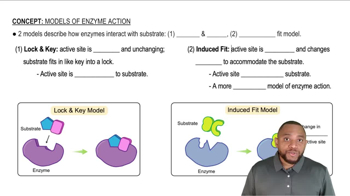
Models of Enzyme Action Concept 1