Ch.22 Carbohydrate Metabolism
McMurry - Fundamentals of General, Organic, and Biological Chemistry 8th Edition
McMurry8th EditionFundamentals of General, Organic, and Biological ChemistryISBN: 9780134015187당신이 사용하는 게 아니라요?교과서 변경
22장, 문제 68

Explain why the Cori cycle is necessary and when your cells would use this cycle.

검증된 단계별 안내
1
The Cori cycle is a metabolic pathway that connects anaerobic glycolysis in muscle cells with gluconeogenesis in the liver. It is necessary because it helps to manage the buildup of lactate in muscles during intense exercise when oxygen levels are insufficient for aerobic respiration.
During intense exercise, muscle cells rely on anaerobic glycolysis to produce ATP quickly. This process converts glucose into pyruvate, and in the absence of sufficient oxygen, pyruvate is reduced to lactate to regenerate NAD⁺, which is essential for glycolysis to continue.
The lactate produced in the muscles is transported through the bloodstream to the liver. In the liver, lactate is converted back into pyruvate and then into glucose through the process of gluconeogenesis. This glucose can then be released into the bloodstream and transported back to the muscles for energy production.
The Cori cycle is particularly important during periods of intense physical activity when oxygen supply to the muscles is limited. It prevents the accumulation of lactate in the muscles, which could lead to muscle fatigue and acidosis.
In summary, the Cori cycle allows the body to recycle lactate into glucose, ensuring a continuous supply of energy to the muscles while maintaining acid-base balance in the body during anaerobic conditions.

비슷한 문제에 대한 검증된 영상 답변:

이 영상 해법은 위 문제에 도움이 된다고 튜터들이 추천한 것입니다.
영상 길이:
2m
도움이 되었나요?

주요 개념

질문에 올바르게 답하기 위해 반드시 이해해야 하는 핵심 개념들은 다음과 같습니다.

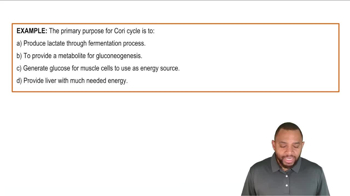
Cori Cycle

The Cori cycle is a metabolic pathway that enables the conversion of lactate produced in muscles during anaerobic respiration back into glucose in the liver. This cycle is crucial for maintaining energy levels during intense exercise when oxygen is scarce, allowing for continued ATP production despite the buildup of lactate.
추천 영상:
가이드 코스
1:19
Cori Cycle Example 6

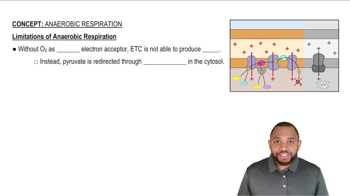
Anaerobic Respiration

Anaerobic respiration occurs when cells generate energy without oxygen, typically during high-intensity activities. This process leads to the production of lactate as a byproduct, which can accumulate and cause muscle fatigue. The Cori cycle helps to recycle this lactate, preventing excessive accumulation and facilitating recovery.
추천 영상:
가이드 코스
1:47
Anaerobic Respiration Concept 1

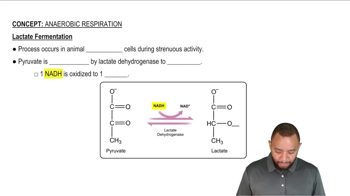
Lactate Utilization

Lactate utilization refers to the process by which the body converts lactate back into glucose, primarily in the liver. This is essential during recovery from strenuous exercise, as it helps restore glycogen stores and provides a continuous energy supply. The Cori cycle plays a vital role in this process, ensuring efficient energy management.
추천 영상:
가이드 코스
1:14
Anaerobic Respiration Concept 3