Ch.22 Carbohydrate Metabolism
McMurry - Fundamentals of General, Organic, and Biological Chemistry 8th Edition
McMurry8th EditionFundamentals of General, Organic, and Biological ChemistryISBN: 9780134015187당신이 사용하는 게 아니라요?교과서 변경
22장, 문제 1c

Name the following pathways:
c. Pathway for synthesis of glucose from lactate

검증된 단계별 안내
1
Understand the problem: The question asks for the name of the metabolic pathway responsible for synthesizing glucose from lactate. This involves understanding the biochemical processes that convert lactate back into glucose.
Recall the relevant metabolic pathway: The process of synthesizing glucose from non-carbohydrate precursors, such as lactate, is known as gluconeogenesis. This pathway is essentially the reverse of glycolysis, with some bypass steps to overcome irreversible reactions in glycolysis.
Identify the starting and ending points: Lactate, produced during anaerobic respiration, is converted back into pyruvate by the enzyme lactate dehydrogenase. Pyruvate then enters the gluconeogenesis pathway to form glucose.
Note the location of the pathway: Gluconeogenesis primarily occurs in the liver and, to a lesser extent, in the kidneys. It plays a critical role in maintaining blood glucose levels during fasting or intense exercise.
Summarize the pathway: The pathway for the synthesis of glucose from lactate is called gluconeogenesis. It involves multiple enzymatic steps, including the conversion of lactate to pyruvate, followed by a series of reactions that ultimately produce glucose.

비슷한 문제에 대한 검증된 영상 답변:

이 영상 해법은 위 문제에 도움이 된다고 튜터들이 추천한 것입니다.
영상 길이:
3m
도움이 되었나요?

주요 개념

질문에 올바르게 답하기 위해 반드시 이해해야 하는 핵심 개념들은 다음과 같습니다.

Gluconeogenesis

Gluconeogenesis is the metabolic pathway through which organisms synthesize glucose from non-carbohydrate precursors, such as lactate, glycerol, and certain amino acids. This process is crucial during periods of fasting or intense exercise when glucose levels are low. It primarily occurs in the liver and, to a lesser extent, in the kidneys, and involves several key enzymes that facilitate the conversion of pyruvate to glucose.
추천 영상:
가이드 코스
1:23
Gluconeogenesis Example 2

Lactate

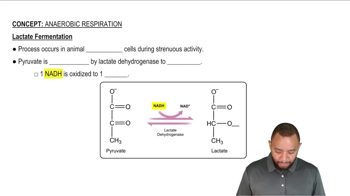
Lactate is a byproduct of anaerobic metabolism, particularly during intense exercise when oxygen levels are insufficient for aerobic respiration. It is produced from pyruvate through the action of the enzyme lactate dehydrogenase. Lactate can be transported to the liver, where it can be converted back into glucose via gluconeogenesis, thus playing a significant role in energy metabolism and maintaining blood glucose levels.
추천 영상:
가이드 코스
1:14
Anaerobic Respiration Concept 3

Cori Cycle

The Cori Cycle is a metabolic pathway that describes the process of converting lactate produced in muscles during anaerobic respiration back into glucose in the liver. This cycle helps to recycle lactate, allowing for its utilization as a substrate for gluconeogenesis. It is essential for maintaining energy balance and glucose homeostasis, especially during prolonged exercise or fasting when muscle activity generates excess lactate.
추천 영상:
가이드 코스
1:19
Cori Cycle Example 6