Ch.22 Carbohydrate Metabolism
McMurry - Fundamentals of General, Organic, and Biological Chemistry 8th Edition
McMurry8th EditionFundamentals of General, Organic, and Biological ChemistryISBN: 9780134015187당신이 사용하는 게 아니라요?교과서 변경
22장, 문제 25d

Outline the conditions that direct pyruvate toward the following:
d. Glucose synthesis (gluconeogenesis)
In what tissues or organisms is each pathway present?

검증된 단계별 안내
1
Understand that pyruvate is a key intermediate in cellular metabolism, and its fate depends on the energy needs of the cell and the availability of substrates. Gluconeogenesis is the process of synthesizing glucose from non-carbohydrate precursors, including pyruvate.
Recognize that gluconeogenesis occurs primarily in the liver and, to a lesser extent, in the kidneys. This pathway is crucial for maintaining blood glucose levels during fasting or intense exercise when dietary glucose is unavailable.
Identify the conditions that favor gluconeogenesis: (1) low blood glucose levels, (2) high levels of glucagon (a hormone that signals the need for glucose production), and (3) low levels of insulin (a hormone that promotes glucose storage). These hormonal signals activate enzymes specific to gluconeogenesis.
Note that gluconeogenesis is an energy-intensive process. It requires ATP and GTP, which are typically supplied by the breakdown of fatty acids. This ensures that the cell has sufficient energy to drive the synthesis of glucose.
Understand that gluconeogenesis is present in organisms that need to regulate blood glucose levels, such as humans and other mammals. It is especially active in tissues like the liver, which plays a central role in glucose homeostasis, and in the kidneys under prolonged fasting conditions.

비슷한 문제에 대한 검증된 영상 답변:

이 영상 해법은 위 문제에 도움이 된다고 튜터들이 추천한 것입니다.
영상 길이:
5m

주요 개념

질문에 올바르게 답하기 위해 반드시 이해해야 하는 핵심 개념들은 다음과 같습니다.

Gluconeogenesis

Gluconeogenesis is the metabolic pathway that results in the generation of glucose from non-carbohydrate substrates. This process primarily occurs in the liver and, to a lesser extent, in the kidneys. It is crucial during fasting or intense exercise when glucose levels are low, allowing the body to maintain energy supply by synthesizing glucose from pyruvate, lactate, glycerol, and certain amino acids.
추천 영상:
가이드 코스
1:23
Gluconeogenesis Example 2

Pyruvate Carboxylation

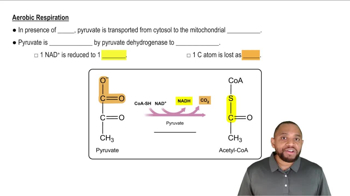
Pyruvate carboxylation is the first step in gluconeogenesis, where pyruvate is converted into oxaloacetate by the enzyme pyruvate carboxylase. This reaction requires ATP and bicarbonate and occurs in the mitochondria. The availability of acetyl-CoA stimulates this process, directing pyruvate toward glucose synthesis rather than entering the citric acid cycle.
추천 영상:
가이드 코스
1:38
Pyruvate Oxidation Concept 2

Regulatory Hormones

Regulatory hormones, such as insulin and glucagon, play a vital role in controlling gluconeogenesis. Insulin inhibits gluconeogenesis when glucose levels are high, while glucagon promotes it during fasting states. The balance of these hormones influences the direction of pyruvate metabolism, determining whether it is used for energy production or glucose synthesis.
추천 영상:
가이드 코스
1:21
Allosteric Control Example 1