
Ch.23 Lipids
McMurry - Fundamentals of General, Organic, and Biological Chemistry 8th Edition
McMurry8th EditionFundamentals of General, Organic, and Biological ChemistryISBN: 9780134015187당신이 사용하는 게 아니라요?교과서 변경
23장, 문제 19

As noted earlier (Section 22.3), he first step in glycolysis, which occurs within cells, is phosphorylation of glucose to glucose 6-phosphate. Why does this step prevent passive diffusion of glucose back out of the cell?

검증된 단계별 안내
1
Understand the concept of passive diffusion: Passive diffusion is the movement of molecules across a membrane from an area of higher concentration to an area of lower concentration without the use of energy. For glucose, this process depends on its ability to cross the cell membrane in its unmodified form.
Recognize the role of phosphorylation: In the first step of glycolysis, glucose is phosphorylated to form glucose 6-phosphate. This reaction is catalyzed by the enzyme hexokinase and involves the transfer of a phosphate group from ATP to glucose.
Analyze the chemical change: The addition of the phosphate group to glucose changes its chemical structure and properties. Specifically, glucose 6-phosphate is more polar and larger than glucose, which makes it unable to pass through the hydrophobic lipid bilayer of the cell membrane.
Consider the role of transport proteins: Glucose enters the cell through specific transport proteins in the membrane. These proteins are selective for glucose, not glucose 6-phosphate. Once phosphorylated, glucose 6-phosphate cannot bind to these transport proteins and, therefore, cannot exit the cell.
Conclude the purpose of phosphorylation: By converting glucose to glucose 6-phosphate, the cell effectively traps the glucose inside. This ensures that glucose remains available for metabolic processes like glycolysis, rather than diffusing back out of the cell.

비슷한 문제에 대한 검증된 영상 답변:

이 영상 해법은 위 문제에 도움이 된다고 튜터들이 추천한 것입니다.
영상 길이:
1m
도움이 되었나요?

주요 개념

질문에 올바르게 답하기 위해 반드시 이해해야 하는 핵심 개념들은 다음과 같습니다.

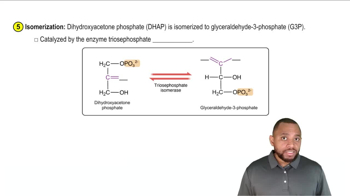
Glycolysis

Glycolysis is a metabolic pathway that converts glucose into pyruvate, producing energy in the form of ATP. It occurs in the cytoplasm of cells and consists of ten enzyme-catalyzed reactions. The first step involves the phosphorylation of glucose, which is crucial for trapping glucose within the cell and initiating its breakdown for energy production.
추천 영상:
가이드 코스
1:26
Glycolysis Concept 5

Phosphorylation

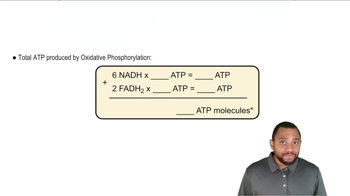
Phosphorylation is the addition of a phosphate group to a molecule, often altering its function and activity. In the context of glycolysis, the phosphorylation of glucose to glucose 6-phosphate is catalyzed by the enzyme hexokinase. This modification changes the chemical structure of glucose, making it more polar and preventing it from easily crossing the cell membrane back into the extracellular space.
추천 영상:
가이드 코스
0:51
Oxidative Phosphorylation Concept 2

Cell Membrane Permeability

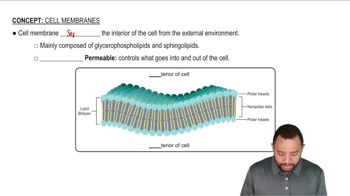
Cell membrane permeability refers to the ability of substances to pass through the cell membrane. The membrane is selectively permeable, allowing certain molecules to enter or exit while restricting others. The conversion of glucose to glucose 6-phosphate increases its polarity, which reduces its ability to diffuse passively through the lipid bilayer of the membrane, effectively trapping it inside the cell.
추천 영상:
가이드 코스
0:50
Cell Membranes Concept 1