Ch. 1 - Remembering General Chemistry: Electronic Structure and Bonding
Bruice - Organic Chemistry 8th Edition
Bruice8th EditionOrganic ChemistryISBN: 9780135213711당신이 사용하는 게 아니라요?교과서 변경
1장, 문제 54a

Draw the ground-state electronic configuration for each of the following:
a. Mg

검증된 단계별 안내
1
Step 1: Identify the atomic number of magnesium (Mg). Magnesium has an atomic number of 12, which means it has 12 electrons in its neutral state.
Step 2: Recall the order of electron filling based on the Aufbau principle. Electrons fill orbitals in the order of increasing energy levels: 1s, 2s, 2p, 3s, etc.
Step 3: Begin filling the orbitals with electrons. Start with the 1s orbital, which can hold a maximum of 2 electrons. Then proceed to the 2s orbital, which also holds 2 electrons.
Step 4: Next, fill the 2p orbital, which can hold a maximum of 6 electrons. After filling the 2p orbital, you will have placed 10 electrons. The remaining 2 electrons will go into the 3s orbital.
Step 5: Write the electronic configuration for magnesium. Using the format of subshell notation, the ground-state electronic configuration for Mg is: 1s22s22p63s2. This represents the distribution of electrons across the orbitals.

비슷한 문제에 대한 검증된 영상 답변:

이 영상 해법은 위 문제에 도움이 된다고 튜터들이 추천한 것입니다.
영상 길이:
4m
도움이 되었나요?

주요 개념

질문에 올바르게 답하기 위해 반드시 이해해야 하는 핵심 개념들은 다음과 같습니다.

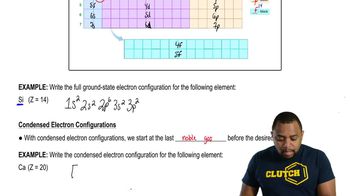
Electron Configuration

Electron configuration describes the distribution of electrons in an atom's orbitals. It follows the Aufbau principle, which states that electrons fill the lowest energy orbitals first, and is typically represented using a notation that indicates the number of electrons in each subshell (s, p, d, f). For example, magnesium (Mg) has an atomic number of 12, leading to an electron configuration of 1s² 2s² 2p⁶ 3s².
추천 영상:
02:14
The Electron Configuration

Ground State

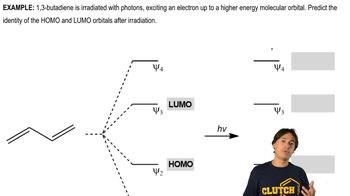
The ground state of an atom refers to the lowest energy configuration of its electrons. In this state, electrons occupy the lowest available energy levels without any excitation. Understanding the ground state is crucial for predicting the chemical behavior of an element, as it determines how the atom will interact with others during chemical reactions.
추천 영상:
03:08
Ground vs. Excited States

Periodic Table and Atomic Structure

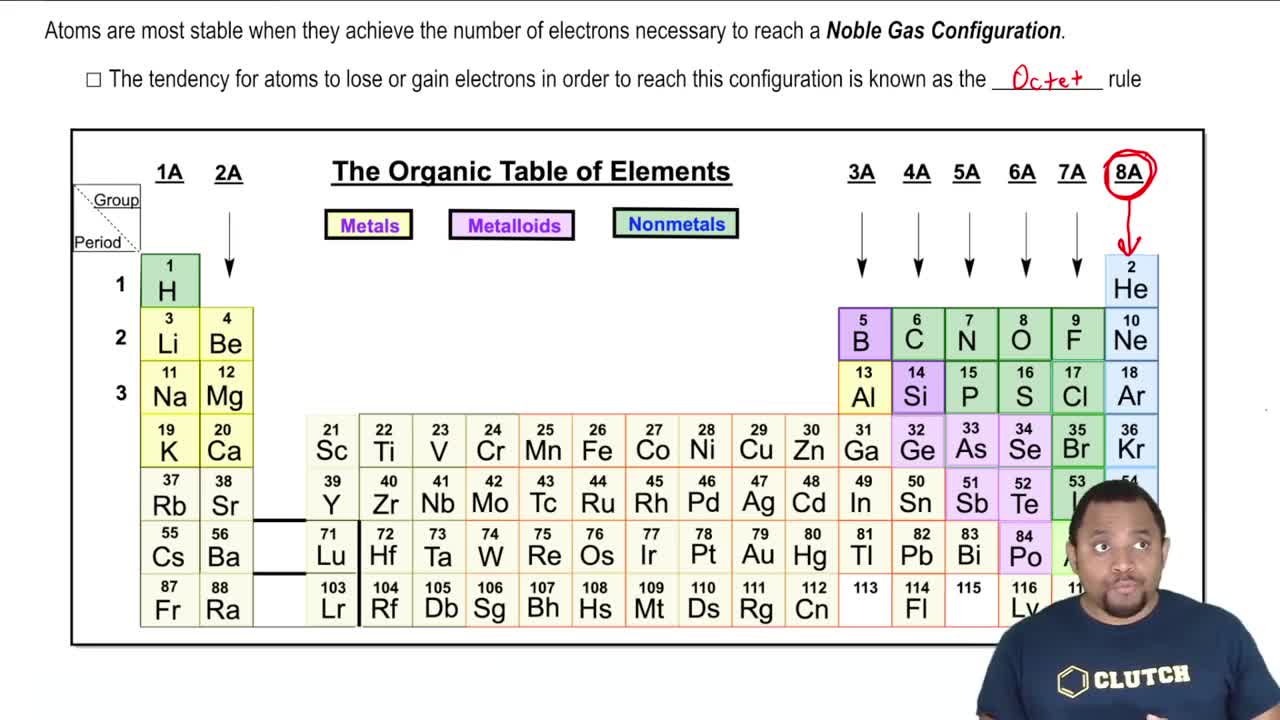
The periodic table organizes elements based on their atomic number and electron configurations, revealing trends in chemical properties. Elements in the same group often exhibit similar behaviors due to their valence electron configurations. For magnesium, located in group 2, its two valence electrons in the 3s subshell play a significant role in its reactivity and bonding characteristics.
추천 영상:
02:24
The most important parts of the periodic table for organic chemistry