Ch. 10 - Reactions of Alcohols, Ethers, Epoxides, Amines, and Sulfur-Containing Compounds
Bruice - Organic Chemistry 8th Edition
Bruice8th EditionOrganic ChemistryISBN: 9780135213711당신이 사용하는 게 아니라요?교과서 변경
10장, 문제 10

Fill in each box with the appropriate reagent: b. Chemical reaction diagram showing alcohol oxidation to carbonyl compound with reagents labeled.

검증된 단계별 안내
1
Identify the starting material as an alkene and the first product as an alcohol, indicating a hydration reaction.
Determine that the first reagent needed is water (H2O) in the presence of an acid catalyst, such as sulfuric acid (H2SO4), to perform the hydration of the alkene.
Recognize the second transformation as the oxidation of a secondary alcohol to a ketone.
Select an appropriate oxidizing agent for the second step, such as PCC (Pyridinium chlorochromate) or CrO3 in pyridine, to oxidize the alcohol to the aldehyde.
Ensure that the conditions chosen for each step are compatible with the functional groups present and the desired transformations.

비슷한 문제에 대한 검증된 영상 답변:

이 영상 해법은 위 문제에 도움이 된다고 튜터들이 추천한 것입니다.
영상 길이:
3m

주요 개념

질문에 올바르게 답하기 위해 반드시 이해해야 하는 핵심 개념들은 다음과 같습니다.

Alcohol Oxidation

Alcohol oxidation is a chemical reaction where an alcohol (R-OH) is converted into a carbonyl compound (aldehyde or ketone) by the removal of hydrogen atoms. This process typically involves the use of oxidizing agents, which facilitate the transfer of electrons and the formation of a double bond between carbon and oxygen.
추천 영상:
05:53
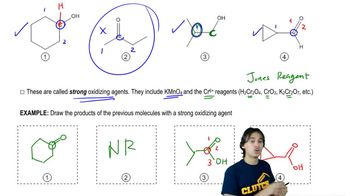
Strong oxidizing agents

Reagents for Oxidation

Common reagents used for the oxidation of alcohols include potassium dichromate (K2Cr2O7), chromium trioxide (CrO3), and pyridinium chlorochromate (PCC). Each of these reagents has specific conditions under which they operate, influencing whether the oxidation leads to an aldehyde or a ketone, depending on the type of alcohol being oxidized.
추천 영상:
03:51
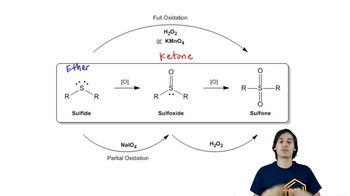
Reagents used to oxidize Sulfides.

Mechanism of Oxidation

The mechanism of alcohol oxidation generally involves the formation of a chromate ester intermediate, followed by the elimination of water and the formation of the carbonyl compound. Understanding this mechanism is crucial for predicting the products of the reaction and the conditions required for successful oxidation.
추천 영상:
01:31
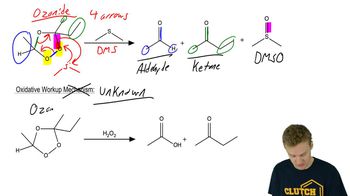
Oxidative Workup Mechanism: