Ch. 12 - Radicals
Bruice - Organic Chemistry 8th Edition
Bruice8th EditionOrganic ChemistryISBN: 9780135213711당신이 사용하는 게 아니라요?교과서 변경
12장, 문제 11c

Show how the following compounds could be prepared from 2-methylpropane:
c. 2-iodo-2-methylpropane

검증된 단계별 안내
1
Start with 2-methylpropane (isobutane), which has the structure (CH₃)₂CHCH₃. The goal is to introduce an iodine atom at the tertiary carbon (C-2).
Perform a free radical halogenation reaction using chlorine (Cl₂) in the presence of UV light or heat. This will selectively form 2-chloro-2-methylpropane ((CH₃)₃CCl) due to the stability of the tertiary radical intermediate.
Next, carry out a nucleophilic substitution reaction (SN2) to replace the chlorine atom with iodine. Use sodium iodide (NaI) in acetone as the reagent. This reaction is driven by the insolubility of NaCl in acetone, which helps to shift the equilibrium toward the formation of 2-iodo-2-methylpropane ((CH₃)₃CI).
Ensure proper reaction conditions, such as maintaining a suitable temperature and reaction time, to maximize the yield of the desired product.
Finally, purify the product (2-iodo-2-methylpropane) using techniques such as distillation or recrystallization, depending on the physical properties of the compound.

비슷한 문제에 대한 검증된 영상 답변:

이 영상 해법은 위 문제에 도움이 된다고 튜터들이 추천한 것입니다.
영상 길이:
4m

주요 개념

질문에 올바르게 답하기 위해 반드시 이해해야 하는 핵심 개념들은 다음과 같습니다.

Nucleophilic Substitution

Nucleophilic substitution is a fundamental reaction in organic chemistry where a nucleophile replaces a leaving group in a molecule. In the context of preparing 2-iodo-2-methylpropane from 2-methylpropane, this process typically involves the substitution of a halogen for a hydrogen atom, facilitated by a strong nucleophile such as iodide ion (I-). Understanding this mechanism is crucial for predicting the products of the reaction.
추천 영상:
01:47
Nucleophiles and Electrophiles can react in Substitution Reactions.

Radical Halogenation

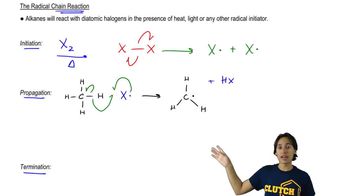
Radical halogenation is a reaction that introduces halogens into organic compounds through radical intermediates. In the case of converting 2-methylpropane to 2-iodo-2-methylpropane, the process often begins with the formation of bromine or iodine radicals, which abstract hydrogen atoms from the alkane, leading to the formation of alkyl radicals. This concept is essential for understanding how to selectively introduce iodine into the desired position of the molecule.
추천 영상:
12:11
Radical Chain Reaction Mechanism.

Rearrangement Reactions

Rearrangement reactions involve the structural reorganization of a molecule to form a more stable or reactive species. In the synthesis of 2-iodo-2-methylpropane, understanding how carbocation rearrangements can occur is important, as the formation of a more stable tertiary carbocation can facilitate the substitution reaction. This concept helps in predicting the pathways and products of reactions involving branched alkanes.
추천 영상:
06:28
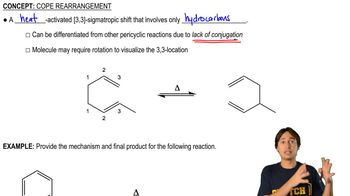
Definition of Cope Rearrangement