Ch. 5 - Alkenes: Structure, Nomenclature, and an Introduction to Reactivity • Thermodynamics and Kinetics
Bruice - Organic Chemistry 8th Edition
Bruice8th EditionOrganic ChemistryISBN: 9780135213711당신이 사용하는 게 아니라요?교과서 변경
5장, 문제 6a

Several studies have shown that β-carotene, a precursor of vitamin A, may play a role in preventing cancer. β-Carotene has a molecular formula of C40H56, and it contains two rings and no triple bonds. How many double bonds does it have?

검증된 단계별 안내
1
Determine the degree of unsaturation (also known as the index of hydrogen deficiency, IHD) for the molecule using the molecular formula C40H56. The formula for IHD is: IHD = (2C + 2 - H)/2, where C is the number of carbons and H is the number of hydrogens.
Substitute the values for C and H into the IHD formula: IHD = (2(40) + 2 - 56)/2. Simplify the expression to calculate the degree of unsaturation.
Interpret the IHD value. Each unit of IHD corresponds to either a double bond, a ring, or a triple bond. Since the problem states that the molecule contains two rings and no triple bonds, subtract 2 (for the rings) from the IHD value to determine the number of double bonds.
Verify the molecular structure of β-carotene. Ensure that the calculated number of double bonds aligns with the molecular formula and the structural constraints (e.g., no triple bonds, two rings).
Conclude the number of double bonds in β-carotene based on the IHD calculation and the structural information provided in the problem.

비슷한 문제에 대한 검증된 영상 답변:

이 영상 해법은 위 문제에 도움이 된다고 튜터들이 추천한 것입니다.

주요 개념

질문에 올바르게 답하기 위해 반드시 이해해야 하는 핵심 개념들은 다음과 같습니다.

Molecular Formula Interpretation

The molecular formula of a compound provides information about the number and types of atoms present. In the case of b-carotene, C40H56 indicates that there are 40 carbon atoms and 56 hydrogen atoms. Understanding how to interpret this formula is essential for deducing structural features, such as the presence of double bonds.
추천 영상:
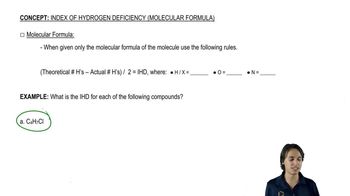
02:17
How to use IHD with molecular formula.

Unsaturation and Double Bonds

Unsaturation in organic compounds refers to the presence of double or triple bonds between carbon atoms. Each double bond reduces the number of hydrogen atoms that can be attached to the carbon skeleton. The degree of unsaturation can be calculated using the formula: (2C + 2 - H)/2, where C is the number of carbons and H is the number of hydrogens, helping to determine the number of double bonds in b-carotene.
추천 영상:
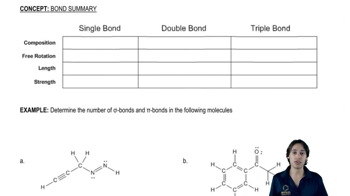
06:00
Single bonds, double bonds, and triple bonds.

Structure of b-Carotene

b-Carotene is a carotenoid with a specific structure that includes two conjugated double bond systems within its rings. The arrangement of these double bonds contributes to its color and biological activity. Recognizing the structural features of b-carotene is crucial for understanding its chemical properties and potential health benefits.
추천 영상:
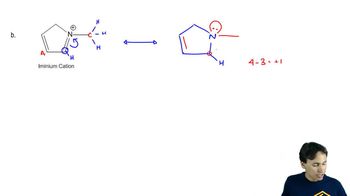
14:01
Drawing Contributing Structures