
Ch. 14 - Ethers, Epoxides, and Thioethers
Wade - Organic Chemistry 9th Edition
Wade9th EditionOrganic ChemistryISBN: 9780135213728당신이 사용하는 게 아니라요?교과서 변경
14장, 문제 18

Mustard gas, Cl–CH2CH2–S–CH2CH2–Cl, was used as a poisonous chemical agent in World War I. Mustard gas is much more toxic than a typical primary alkyl chloride. Its toxicity stems from its ability to alkylate amino groups on important metabolic enzymes, rendering the enzymes inactive.
a. Propose a mechanism to explain why mustard gas is an exceptionally potent alkylating agent.
b. Bleach (sodium hypochlorite, NaOCl, a strong oxidizing agent) neutralizes and inactivates mustard gas. Bleach is also effective on organic stains because it oxidizes colored compounds to colorless compounds. Propose products that might be formed by the reaction of mustard gas with bleach.

검증된 단계별 안내
1
Step 1: Analyze the structure of mustard gas (Cl-CH₂CH₂-S-CH₂CH₂-Cl). Note that it contains two alkyl chloride groups and a sulfur atom in the center, which can act as a nucleophile. The sulfur atom's lone pair can initiate an intramolecular reaction, forming a three-membered episulfonium ion intermediate.
Step 2: Propose the mechanism for mustard gas's alkylating ability. The sulfur atom attacks one of the carbon atoms bonded to a chlorine atom, displacing the chloride ion and forming the episulfonium ion. This intermediate is highly reactive and can easily react with nucleophiles, such as amino groups on enzymes, leading to alkylation and enzyme inactivation.
Step 3: Consider the reaction of mustard gas with bleach (NaOCl). Bleach is a strong oxidizing agent and can oxidize the sulfur atom in mustard gas. This oxidation likely converts the sulfur atom into a sulfoxide (R-S(=O)-R') or sulfone (R-S(=O)₂-R'), which are less reactive and no longer capable of forming the episulfonium ion.
Step 4: Propose the products of the reaction between mustard gas and bleach. The oxidation of the sulfur atom disrupts the ability of mustard gas to form the episulfonium ion, rendering it non-toxic. The products might include oxidized sulfur compounds such as sulfoxides or sulfones, along with chloride ions (Cl⁻) released during the reaction.
Step 5: Summarize the neutralization process. The reaction with bleach effectively inactivates mustard gas by oxidizing the sulfur atom, preventing the formation of the reactive episulfonium ion. This mechanism explains why bleach is effective in neutralizing mustard gas and highlights its utility as a decontaminant.

비슷한 문제에 대한 검증된 영상 답변:

이 영상 해법은 위 문제에 도움이 된다고 튜터들이 추천한 것입니다.
영상 길이:
3m
도움이 되었나요?

주요 개념

질문에 올바르게 답하기 위해 반드시 이해해야 하는 핵심 개념들은 다음과 같습니다.

Alkylation Mechanism

Alkylation is a chemical process where an alkyl group is transferred to a nucleophile, such as an amino group in proteins. In the case of mustard gas, its structure allows it to undergo a nucleophilic substitution reaction, where the chlorine atoms are displaced, leading to the formation of a highly reactive sulfonium ion. This ion can then react with amino groups, resulting in the modification and inactivation of essential enzymes, which contributes to the toxicity of mustard gas.
추천 영상:
06:30
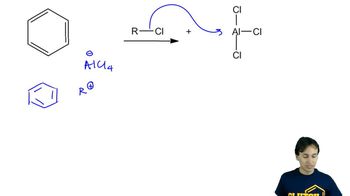
Friedel-Crafts Alkylation

Oxidizing Agents

An oxidizing agent is a substance that can accept electrons from another species, causing the oxidation of that species. In the context of bleach (sodium hypochlorite), it acts as a strong oxidizer that can react with mustard gas, breaking its chemical bonds and leading to the formation of less harmful products. This reaction is crucial for neutralizing the toxic effects of mustard gas and is also the basis for bleach's effectiveness in removing organic stains.
추천 영상:
03:40
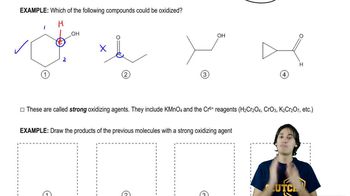
Strong oxidizing agents

Chemical Reactivity of Mustard Gas

Mustard gas exhibits unique chemical reactivity due to its bifunctional nature, containing two reactive chlorine atoms. This allows it to form cross-links with biological macromolecules, such as DNA and proteins, leading to significant cellular damage. Understanding this reactivity is essential for predicting the products formed when mustard gas interacts with other chemicals, such as bleach, which can facilitate the breakdown of its toxic structure.
추천 영상:
가이드 코스
3:11
Chemical Reactions of Phosphate Anhydrides Concept 1