Ch. 18 - Ketones and Aldehydes
Wade - Organic Chemistry 9th Edition
Wade9th EditionOrganic ChemistryISBN: 9780135213728당신이 사용하는 게 아니라요?교과서 변경
18장, 문제 53l

Predict the products formed when cyclohexanone reacts with the following reagents.
(l) acidic hydrolysis of the product from (k)

검증된 단계별 안내
1
Step 1: Understand the context of the problem. Cyclohexanone is a ketone, and the reaction in part (k) likely involves a transformation of cyclohexanone into a derivative. To proceed, you need to know the product from part (k). If part (k) involves a reaction like the formation of an imine or an enamine, this will influence the outcome of the acidic hydrolysis.
Step 2: Recall the general mechanism of acidic hydrolysis. Acidic hydrolysis typically involves the addition of water in the presence of an acid catalyst to break bonds such as imine (C=N) or enamine (C=C-N) bonds, regenerating the original carbonyl compound (in this case, cyclohexanone) and releasing the amine or ammonia.
Step 3: If the product from part (k) is an imine (R2C=NR'), the acidic hydrolysis will involve protonation of the imine nitrogen, followed by nucleophilic attack by water. This will lead to the formation of a tetrahedral intermediate, which will collapse to regenerate the ketone (cyclohexanone) and release the amine (R'NH2).
Step 4: If the product from part (k) is an enamine (R2C=C-NR2'), the acidic hydrolysis will involve protonation of the enamine double bond, followed by water addition to form a carbinolamine intermediate. This intermediate will then collapse to regenerate the ketone (cyclohexanone) and release the secondary amine (R2'NH).
Step 5: Summarize the expected products. The acidic hydrolysis of the product from part (k) will regenerate cyclohexanone and release the corresponding amine or ammonia, depending on the specific structure of the product from part (k). Ensure you understand the mechanism and intermediates involved in the hydrolysis process.

비슷한 문제에 대한 검증된 영상 답변:

이 영상 해법은 위 문제에 도움이 된다고 튜터들이 추천한 것입니다.
영상 길이:
1m
도움이 되었나요?

주요 개념

질문에 올바르게 답하기 위해 반드시 이해해야 하는 핵심 개념들은 다음과 같습니다.

Cyclohexanone Reactivity

Cyclohexanone is a cyclic ketone that can undergo various reactions due to its carbonyl group. The reactivity of cyclohexanone is influenced by the presence of the carbonyl, which can participate in nucleophilic addition reactions. Understanding how cyclohexanone reacts with different reagents is crucial for predicting the products formed in subsequent reactions.
추천 영상:
01:17
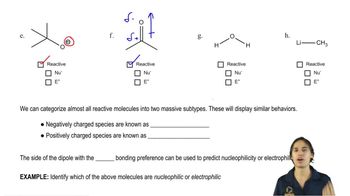
Reactivity of Molecules

Acidic Hydrolysis

Acidic hydrolysis is a reaction where a compound reacts with water in the presence of an acid, leading to the cleavage of bonds and the formation of new products. In the context of ketones, this process can lead to the formation of alcohols or carboxylic acids. Recognizing the conditions and mechanisms of acidic hydrolysis is essential for predicting the products of the reaction involving cyclohexanone.
추천 영상:
가이드 코스
0:55
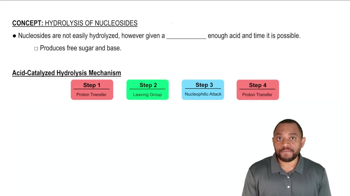
Hydrolysis of Nucleosides Concept 1

Reaction Mechanisms

Understanding reaction mechanisms is vital in organic chemistry as it explains the step-by-step process by which reactants transform into products. For cyclohexanone and its derivatives, mechanisms such as nucleophilic addition and subsequent protonation steps during acidic hydrolysis must be considered. Familiarity with these mechanisms allows for accurate predictions of the final products formed in the reaction sequence.
추천 영상:
02:16
Heck Reaction Mechanism