
Textbook Question
For each of the following molecules, draw a 3-D representation.
(d) CHClBrI
1237
views

 Verified step by step guidance
For each of the following molecules, draw a 3-D representation.
(d) CHClBrI
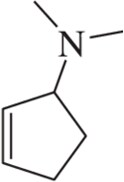
For each of the following molecules, identify all stereocenters and draw all possible stereoisomers.
(a)
For each of the following molecules, identify all stereocenters and draw all possible stereoisomers.
(e)
For each of the following molecules, identify all stereocenters and draw all possible stereoisomers.
(b)
For each of the following molecules, draw one 3-D representation at only the necessary atoms (that is, the ones with four different atoms/groups attached).
(b)
For each of the following molecules, draw one 3-D representation at only the necessary atoms (that is, the ones with four different atoms/groups attached).
(a)