The research behind the oral language assessment: LanguageScreen

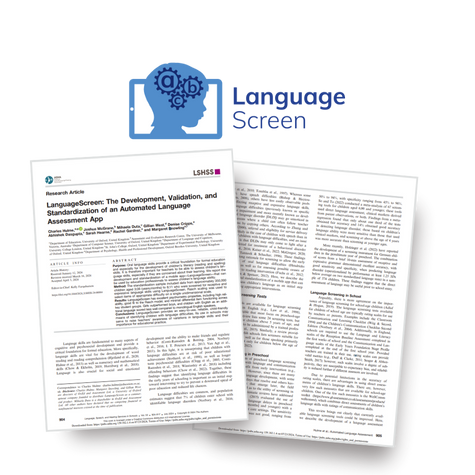
“In developing LanguageScreen we set out to design an objective and reliable test that would be quick and easy to administer and that would provide data that could be used to produce a single score indicative of a child’s language proficiency.”
— Hulme, C., et al. (2024). LanguageScreen: The Development, Validation, and Standardization of an Automated Language Assessment App. Language, Speech, and Hearing Services in Schools, p.906
Pearson Australia has partnered with OxEd & Assessment to bring a localised version of LanguageScreen, a highly evidenced early language assessment to Australia and New Zealand. It identifies students aged 3 to 11 years old who may require oral language intervention or additional support.
What is the research behind LanguageScreen?
The latest research paper on LanguageScreen was published in April 2024, examining the development validation and standardisation of the app.
The sample used for standardisation was comprised of data derived from approximately 350,000 children ranging in age from 3 years and 6 months to 8 years and 11 months. These children were assessed for their receptive and expressive language abilities using LanguageScreen. The Rasch model* was used to select items of appropriate difficulty on a single unidimensional scale.
What are the findings for LanguageScreen?
The findings have shown that LanguageScreen can be a quick and reliable assessment of a student’s oral language skills. Some of the key findings include:
- LanguageScreen is an easy-to-use, reliable and engaging method of identifying students with language difficulties.
- LanguageScreen assessment identifies areas where students with English as an Additional Language/Dialect (EAL/D) can benefit from targeted intervention, and progress tracking supports their growth and development.
- The use of LanguageScreen in schools helps increase teacher awareness regarding variations in language skills to then apply support for identified students in their educational practices.
Read the full published report here
*The Rasch model provides a reliable measure of the targeted construct as well as the assessment’s invariance across different demographic variables like age, gender and English as an Additional Language (EAL) status.
OxEd assessments and interventions now available from Pearson Australia
 Updated Jan 2025
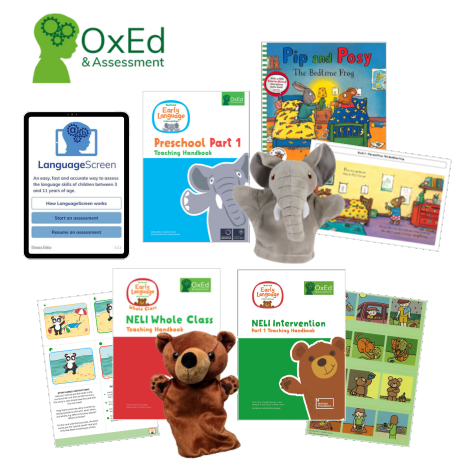
OxEd language assessment, intervention and enrichment
Effective, research-backed assessments, interventions and whole-class resources designed to improve oral language skills, tailored for the Australian and New Zealand curriculum.
 Updated May 2025
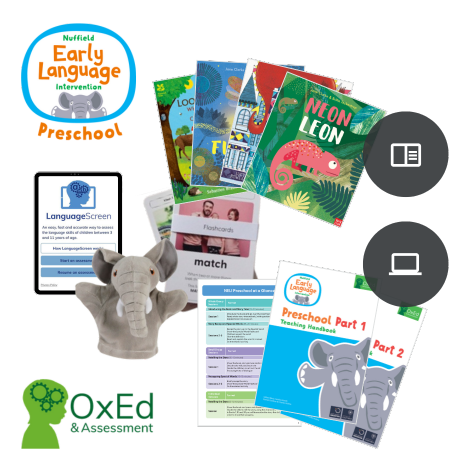
Build a language rich environment with NELI Preschool
Help children aged 3–4 build confidence and essential communication skills while having fun using this evidence-based oral language assessment, intervention and whole class enrichment resource.