Pearson+ LogoPearson+ Logo
Ch. 2 The Chemical Basis of Life
Taylor - Campbell Biology: Concepts & Connections 10th Edition
Taylor, Simon, Dickey, Hogan10th EditionCampbell Biology: Concepts & ConnectionsISBN: 9780136538783Not the one you use?Change textbook
Chapter 2, Problem 7

A can of cola consists mostly of sugar dissolved in water, with some carbon dioxide gas that makes it fizzy and makes the pH less than 7. In chemical terms, you could say that cola is an aqueous solution where water is the _________, sugar is a _________, and carbon dioxide makes the solution _________.
a. solvent . . . solute . . . basic
b. solute . . . solvent . . . basic
c. solvent . . . solute . . . acidic
d. solute . . . solvent . . . acidic

Verified step by step guidance
1
Step 1: Understand the concept of an aqueous solution. An aqueous solution is a mixture where water acts as the solvent, meaning it is the substance in which other materials are dissolved.
Step 2: Identify the role of sugar in the cola. Sugar is dissolved in water, making it the solute, which is the substance being dissolved in the solvent.
Step 3: Analyze the role of carbon dioxide in the cola. Carbon dioxide gas dissolves in water and forms carbonic acid, which lowers the pH of the solution, making it acidic (pH less than 7).
Step 4: Match the terms 'solvent,' 'solute,' and 'acidic' to their respective roles in the cola. Water is the solvent, sugar is the solute, and carbon dioxide makes the solution acidic.
Step 5: Review the answer choices and select the one that correctly matches the roles: solvent (water), solute (sugar), and acidic (carbon dioxide).

Verified video answer for a similar problem:

This video solution was recommended by our tutors as helpful for the problem above.
Video duration:
1m
Was this helpful?

Key Concepts

Here are the essential concepts you must grasp in order to answer the question correctly.

Aqueous Solution

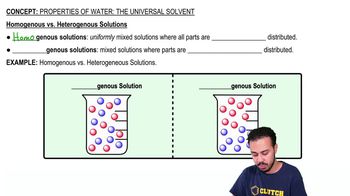
An aqueous solution is a solution in which water is the solvent. In this context, the solvent is the substance that dissolves the solute, allowing for the formation of a homogeneous mixture. For example, in a can of cola, water serves as the medium that dissolves sugar and carbon dioxide, creating the fizzy drink we consume.
Recommended video:
Guided course
02:19
Homogenous vs. Heterogenous Solutions

Solute and Solvent

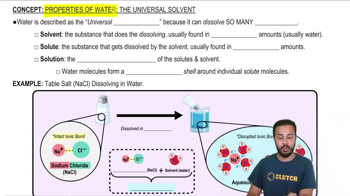
In a solution, the solute is the substance that is dissolved, while the solvent is the substance that does the dissolving. In cola, sugar is the solute because it is the component that dissolves in water, the solvent. Understanding the roles of solute and solvent is crucial for identifying the components of any solution.
Recommended video:
Guided course
06:20
Properties of Water- The Universal Solvent

pH and Acidity

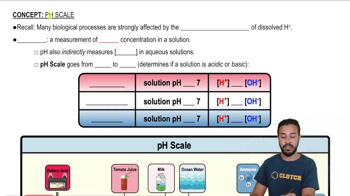
pH is a measure of the acidity or basicity of a solution, with values below 7 indicating acidity. In the case of cola, the presence of carbon dioxide contributes to its acidic nature, as it forms carbonic acid when dissolved in water. Recognizing the relationship between pH and the components of a solution helps in understanding the overall chemical properties of substances like cola.
Recommended video: