Pearson+ LogoPearson+ Logo
Ch. 37 Communities and Ecosystems
Taylor - Campbell Biology: Concepts & Connections 10th Edition
Taylor, Simon, Dickey, Hogan10th EditionCampbell Biology: Concepts & ConnectionsISBN: 9780136538783Not the one you use?Change textbook
Chapter 37, Problem 8

Explain how seed dispersal by animals is an example of mutualism in some cases.

Verified step by step guidance
1
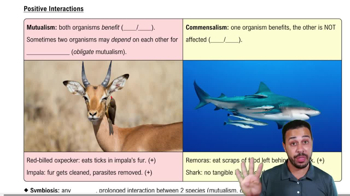
Identify the mutualistic relationship: Mutualism is a type of symbiotic relationship where both parties benefit. In the case of seed dispersal by animals, the mutualism occurs between the plant producing the seeds and the animals that disperse them.
Explain the benefit to the plant: The primary benefit to the plant is the dispersal of its seeds away from the parent plant. This reduces competition for resources among seedlings and increases the likelihood of the seeds finding a suitable environment to germinate and grow.
Describe the benefit to the animal: Animals that participate in seed dispersal often benefit by consuming the fruit provided by the plant. The fruit serves as a food source, which is rich in nutrients.
Discuss the method of dispersal: Animals may disperse seeds in several ways. Some eat the fruits and later excrete the seeds in different locations. Others may carry the fruits away and drop them, or the seeds might stick to the fur or feathers of the animals and fall off at a different location.
Highlight the ecological impact: This mutualistic relationship enhances biodiversity and ecosystem stability. By aiding in seed dispersal, animals help in maintaining plant populations and spreading vegetation, which in turn supports a wider range of other organisms in the ecosystem.

Verified video answer for a similar problem:

This video solution was recommended by our tutors as helpful for the problem above.
Video duration:
1m
Was this helpful?

Key Concepts

Here are the essential concepts you must grasp in order to answer the question correctly.

Mutualism

Mutualism is a type of symbiotic relationship where both species involved benefit from the interaction. In the context of seed dispersal, animals gain food from fruits while helping plants by spreading their seeds, which can lead to new growth in different locations. This relationship enhances the survival and reproduction of both the plants and the animals.
Recommended video:
Guided course
02:56
Positive Interactions

Seed Dispersal

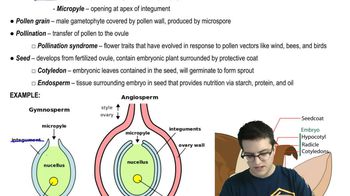
Seed dispersal is the process by which seeds are spread away from the parent plant to reduce competition and increase the chances of germination in suitable environments. Animals often play a crucial role in this process by consuming fruits and excreting the seeds at different locations, which can lead to the establishment of new plants in diverse habitats.
Recommended video:
Guided course
06:26
Seed Plants - 1

Animal Behavior in Ecology

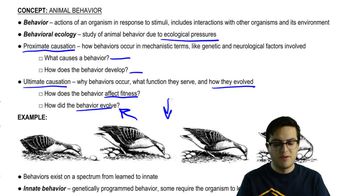
Animal behavior in ecology refers to the ways in which animals interact with their environment and other organisms, including their feeding habits and movement patterns. Understanding these behaviors is essential for comprehending how animals contribute to seed dispersal, as their foraging and nesting habits can significantly influence the distribution and success of plant species.
Recommended video: