
Pearson+ LogoPearson+ Logo
Ch. 37 Communities and Ecosystems
Taylor - Campbell Biology: Concepts & Connections 10th Edition
Taylor, Simon, Dickey, Hogan10th EditionCampbell Biology: Concepts & ConnectionsISBN: 9780136538783Not the one you use?Change textbook
Chapter 37, Problem 9

What is rapid eutrophication? What steps might be taken to slow this process?

Verified step by step guidance
1
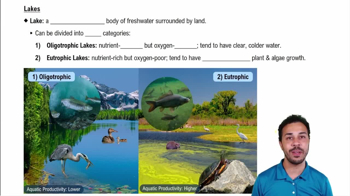
Understand the concept of eutrophication: Eutrophication is the process by which a body of water becomes overly enriched with nutrients, leading to excessive growth of algae and other aquatic plants. This often results from the runoff of fertilizers, sewage, and other nutrient-rich materials from the surrounding land into a water body.
Identify the consequences of rapid eutrophication: Rapid eutrophication can lead to severe ecological disruptions. As algae and aquatic plants grow excessively, they can deplete the water's oxygen when they die and decompose, leading to dead zones where most aquatic life cannot survive.
Implement nutrient management strategies: To slow rapid eutrophication, it is crucial to manage the source of nutrients. This can involve using fewer fertilizers in agriculture, employing precision farming techniques, and ensuring that sewage systems are adequately treated to remove excess nutrients before they are discharged into water bodies.
Restore wetlands and riparian zones: Wetlands and riparian zones act as natural filters for nutrients. Restoring these areas can help absorb and break down pollutants before they reach larger bodies of water, thereby reducing the nutrient load and mitigating eutrophication.
Promote public awareness and community involvement: Educating the public about the causes and effects of eutrophication can lead to more responsible behavior regarding nutrient pollution. Community involvement in monitoring water quality and participating in clean-up and restoration projects can also be effective in managing eutrophication.

Verified video answer for a similar problem:

This video solution was recommended by our tutors as helpful for the problem above.
Video duration:
1m
Was this helpful?

Key Concepts

Here are the essential concepts you must grasp in order to answer the question correctly.

Eutrophication

Eutrophication is the process by which water bodies become enriched with nutrients, particularly nitrogen and phosphorus, leading to excessive growth of algae. This phenomenon can result in decreased oxygen levels in the water, harming aquatic life and disrupting ecosystems. It often occurs due to runoff from agricultural land, wastewater discharge, and urban development.
Recommended video:

Rapid Eutrophication

Rapid eutrophication refers to the accelerated rate at which nutrient enrichment occurs, often due to human activities such as industrial pollution and agricultural runoff. This swift increase in nutrients can lead to harmful algal blooms, which can produce toxins and create dead zones where aquatic life cannot survive. Understanding the causes of rapid eutrophication is crucial for developing effective management strategies.
Recommended video:

Mitigation Strategies

Mitigation strategies for slowing rapid eutrophication include reducing nutrient runoff through best agricultural practices, implementing wastewater treatment improvements, and restoring wetlands. These approaches aim to limit the input of excess nutrients into water bodies, thereby maintaining ecological balance and protecting water quality. Public awareness and policy changes are also essential components of effective mitigation efforts.
Recommended video:
Guided course
02:51
Life History: Population Reproductive Strategies