Back
Back
Problem 1
Determine which functions are polynomial functions. For those that are, identify the degree.
Problem 3
Determine which functions are polynomial functions. For those that are, identify the degree.
Problem 5
Determine which functions are polynomial functions. For those that are, identify the degree.
Problem 7
Determine which functions are polynomial functions. For those that are, identify the degree.
Problem 9
Determine which functions are polynomial functions. For those that are, identify the degree.
Problem 10
Determine which functions are polynomial functions. For those that are, identify the degree.
Problem 11
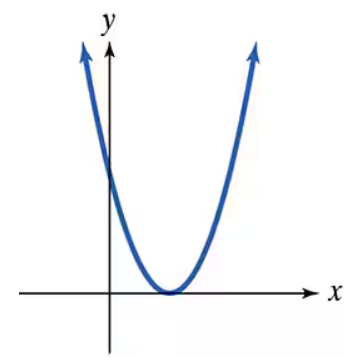
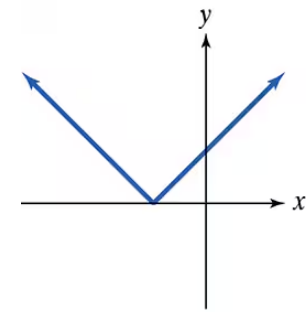
Identify which graphs are not those of polynomial functions.
Problem 12
Identify which graphs are not those of polynomial functions.
Problem 15
In Exercises 15–18, use the Leading Coefficient Test to determine the end behavior of the graph of the given polynomial function. Then use this end behavior to match the polynomial function with its graph. [The graphs are labeled (a) through (d).] <IMAGE>
Problem 17
In Exercises 15–18, use the Leading Coefficient Test to determine the end behavior of the graph of the given polynomial function. Then use this end behavior to match the polynomial function with its graph. [The graphs are labeled (a) through (d).] <IMAGE>
Problem 19
Use the Leading Coefficient Test to determine the end behavior of the graph of the polynomial function.
Problem 20
Use the Leading Coefficient Test to determine the end behavior of the graph of the polynomial function.
Problem 21
Use the Leading Coefficient Test to determine the end behavior of the graph of the polynomial function.
Problem 22
Use the Leading Coefficient Test to determine the end behavior of the graph of the polynomial function. f(x)=11x4−6x2+x+3
Problem 23
Use the Leading Coefficient Test to determine the end behavior of the graph of the polynomial function.
Problem 25
Find the zeros for each polynomial function and give the multiplicity for each zero. State whether the graph crosses the x-axis, or touches the x-axis and turns around, at each zero. f(x)=2(x−5)(x+4)2
Problem 26
Find the zeros for each polynomial function and give the multiplicity for each zero. State whether the graph crosses the x-axis, or touches the x-axis and turns around, at each zero. f(x)=3(x+5)(x+2)2
Problem 28
Find the zeros for each polynomial function and give the multiplicity for each zero. State whether the graph crosses the x-axis, or touches the x-axis and turns around, at each zero. f(x)=−3(x+1/2)(x−4)3
Problem 31
Find the zeros for each polynomial function and give the multiplicity for each zero. State whether the graph crosses the x-axis, or touches the x-axis and turns around, at each zero.
Problem 33
Use the Intermediate Value Theorem to show that each polynomial has a real zero between the given integers. f(x)=x3−x−1; between 1 and 2
Problem 34
Use the Intermediate Value Theorem to show that each polynomial has a real zero between the given integers. f(x)=x3−4x2+2; between 0 and 1
Problem 35
Use the Intermediate Value Theorem to show that each polynomial has a real zero between the given integers.f(x)=2x4−4x2+1; between -1 and 0
Problem 36
In Exercises 33–40, use the Intermediate Value Theorem to show that each polynomial has a real zero between the given integers. f(x)=x4+6x3−18x2; between 2 and 3
Problem 37
Use the Intermediate Value Theorem to show that each polynomial has a real zero between the given integers. f(x)=x3+x2−2x+1; between -3 and -2
Problem 39
Use the Intermediate Value Theorem to show that each polynomial has a real zero between the given integers. f(x)=3x3−10x+9; between -3 and -2
Problem 40
Use the Intermediate Value Theorem to show that each polynomial has a real zero between the given integers. f(x)=3x3−8x2+x+2; between 2 and 3
Problem 5
Divide using long division. State the quotient, and the remainder, .
Problem 7
Divide using long division. State the quotient, and the remainder, .
Problem 9
Divide using long division. State the quotient, and the remainder, .
Problem 10
In Exercises 1–16, divide using long division. State the quotient, and the remainder, r(x). (3x2−2x+5)/(x−3)