Ch. 1 - Equations and Inequalities
Lial - College Algebra 13th Edition
Lial13th EditionCollege AlgebraISBN: 9780136881063Not the one you use?Change textbook
Chapter 2, Problem 14

Use the following facts. If x represents an integer, then x+1 represents the next consecutive integer. If x represents an even integer, then x+2 represents the next consecutive even integer. If x represents an odd integer, then x+2 represents the next consecutive odd integer. Find two consecutive odd integers whose product is 143.

Verified step by step guidance
1
Let the first odd integer be represented by \(x\). Since \(x\) is an odd integer, the next consecutive odd integer can be represented as \(x + 2\).
According to the problem, the product of these two consecutive odd integers is 143. So, we can write the equation: \(x \times (x + 2) = 143\).
Expand the left side of the equation to get a quadratic equation: \(x^2 + 2x = 143\).
Rewrite the equation in standard quadratic form by subtracting 143 from both sides: \(x^2 + 2x - 143 = 0\).
Solve the quadratic equation \(x^2 + 2x - 143 = 0\) using factoring, completing the square, or the quadratic formula to find the values of \(x\), which represent the first odd integer.

Verified video answer for a similar problem:

This video solution was recommended by our tutors as helpful for the problem above.
Video duration:
4m
Was this helpful?

Key Concepts

Here are the essential concepts you must grasp in order to answer the question correctly.

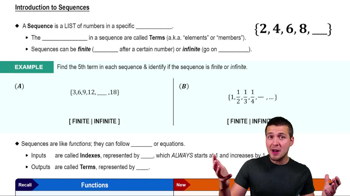
Consecutive Odd Integers

Consecutive odd integers are odd numbers that follow each other in order, each differing by 2. For example, if x is an odd integer, then x + 2 is the next consecutive odd integer. Understanding this helps in setting up expressions for problems involving sequences of odd numbers.
Recommended video:
Guided course
8:22
Introduction to Sequences

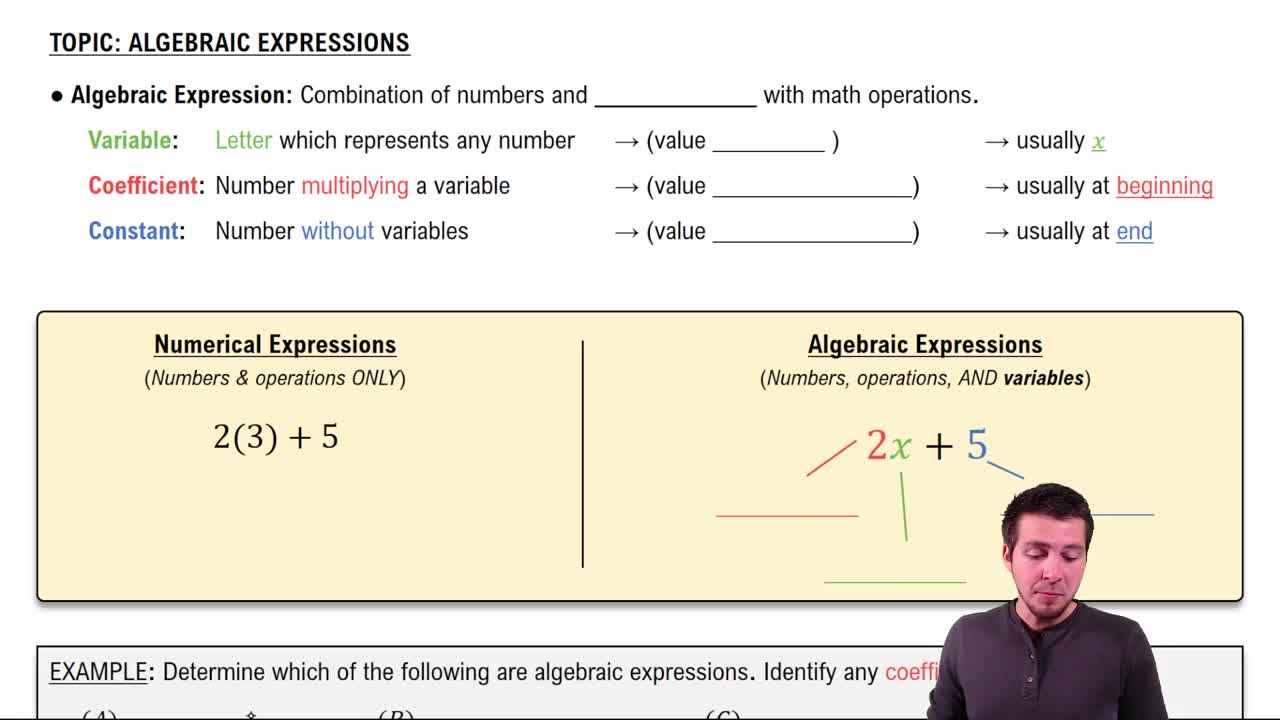
Algebraic Representation of Word Problems

Translating word problems into algebraic expressions involves defining variables to represent unknown quantities and writing equations based on given relationships. Here, representing the two consecutive odd integers as x and x + 2 allows forming an equation to solve for x.
Recommended video:
Guided course
05:09
Introduction to Algebraic Expressions

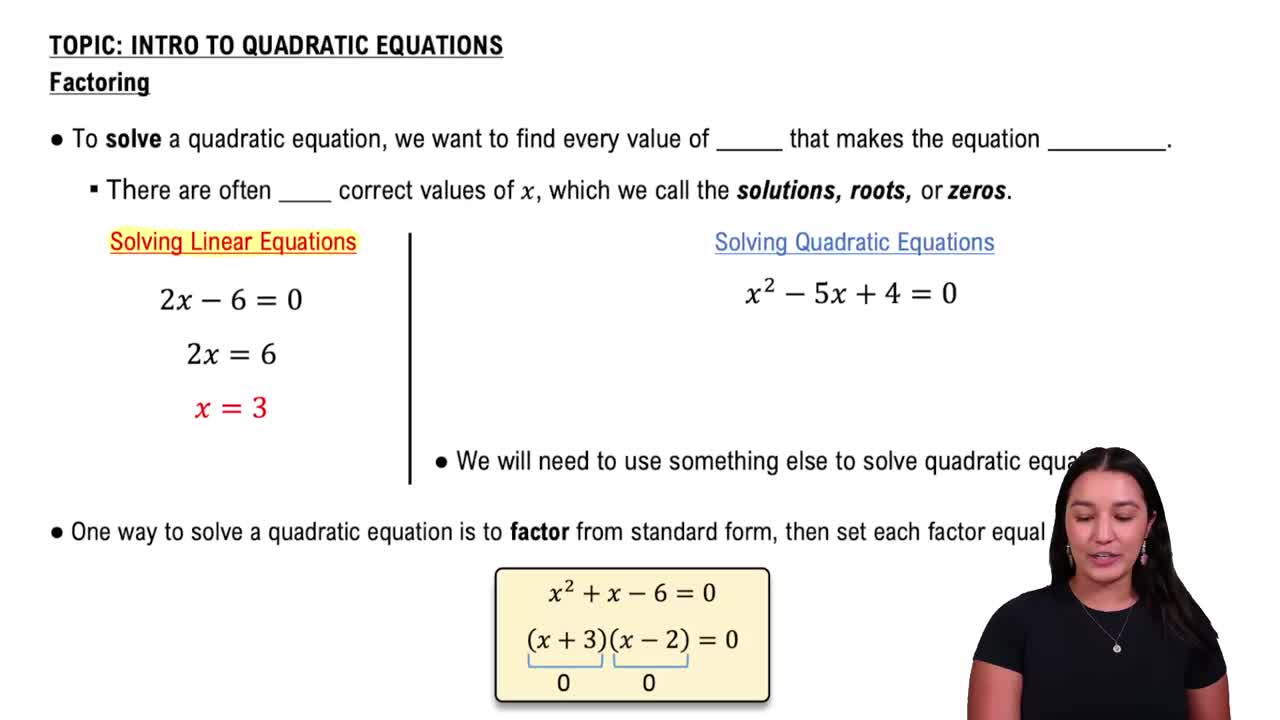
Solving Quadratic Equations

When the product of two expressions is given, it often leads to a quadratic equation. Solving quadratic equations involves rearranging terms, factoring, or using the quadratic formula to find the values of the variable that satisfy the equation.
Recommended video:
06:08
Solving Quadratic Equations by Factoring