Pearson+ LogoPearson+ Logo
Ch.3 Ionic Compounds
McMurry - Fundamentals of GOB 8th Edition
McMurry8th EditionFundamentals of GOBISBN: 9780134015187Not the one you use?Change textbook
Chapter 3, Problem 74

What is the difference between an acid and a base?

Verified step by step guidance
1
An acid is a substance that donates hydrogen ions (H⁺) or protons in a chemical reaction, while a base is a substance that accepts hydrogen ions (H⁺) or protons.
In aqueous solutions, acids increase the concentration of hydronium ions (H₃O⁺), while bases increase the concentration of hydroxide ions (OH⁻).
Acids typically have a pH less than 7, whereas bases have a pH greater than 7. A pH of 7 is considered neutral.
Acids often taste sour (e.g., citric acid in lemons), while bases tend to taste bitter and feel slippery (e.g., soap).
The reaction between an acid and a base is called a neutralization reaction, which typically produces water (H₂O) and a salt as products.

Verified video answer for a similar problem:

This video solution was recommended by our tutors as helpful for the problem above.
Video duration:
57s
Was this helpful?

Key Concepts

Here are the essential concepts you must grasp in order to answer the question correctly.

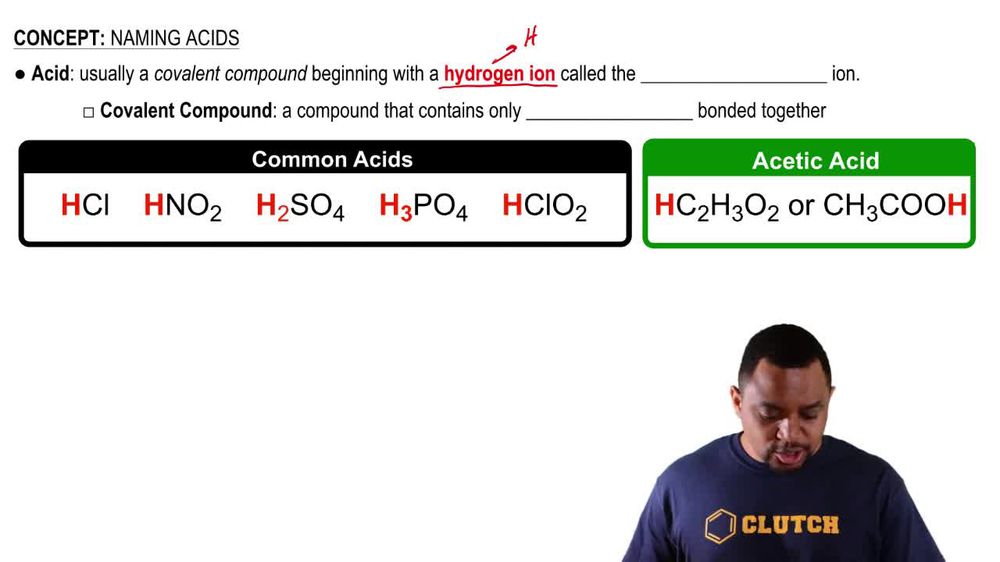
Acids

Acids are substances that can donate protons (H⁺ ions) in a chemical reaction. They typically have a sour taste and can turn blue litmus paper red. Acids are characterized by their ability to increase the concentration of hydrogen ions in a solution, which can lead to a decrease in pH. Common examples include hydrochloric acid (HCl) and sulfuric acid (H₂SO₄).
Recommended video:

Bases

Bases are substances that can accept protons or donate hydroxide ions (OH⁻) in a chemical reaction. They usually have a bitter taste and can turn red litmus paper blue. Bases increase the concentration of hydroxide ions in a solution, resulting in an increase in pH. Common examples include sodium hydroxide (NaOH) and ammonia (NH₃).
Recommended video:
Guided course
1:23
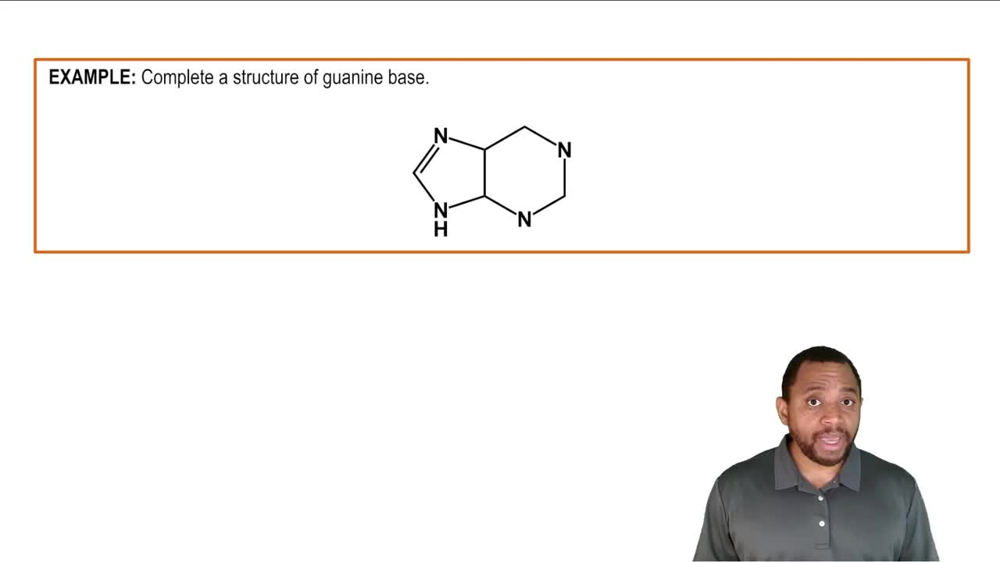
Nitrogenous Bases Example 3

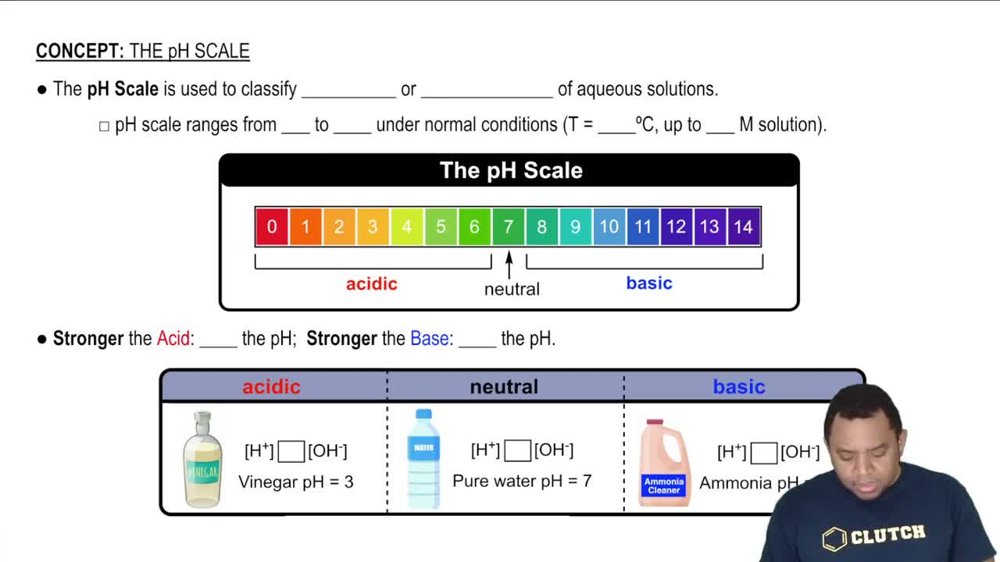
pH Scale

The pH scale is a measure of the acidity or basicity of a solution, ranging from 0 to 14. A pH of 7 is considered neutral, while values below 7 indicate acidity and values above 7 indicate basicity. The scale is logarithmic, meaning each whole number change represents a tenfold change in hydrogen ion concentration. Understanding the pH scale is essential for distinguishing between acids and bases.
Recommended video: