Pearson+ LogoPearson+ Logo
Ch.12 Introduction to Organic Chemistry: Alkanes
McMurry - Fundamentals of GOB 8th Edition
McMurry8th EditionFundamentals of GOBISBN: 9780134015187Not the one you use?Change textbook
Chapter 12, Problem 65

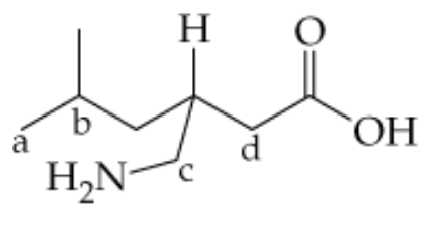
The line structure for pregabalin (Lyrica) is shown as follows:
Line structure of pregabalin with labeled carbons a–d for identification as primary, secondary, tertiary, or quaternary.
Identify carbons a–d as primary, secondary, tertiary, or quaternary.

Verified step by step guidance
1
Step 1: Understand the definitions of primary, secondary, tertiary, and quaternary carbons. A primary carbon is bonded to only one other carbon atom, a secondary carbon is bonded to two other carbon atoms, a tertiary carbon is bonded to three other carbon atoms, and a quaternary carbon is bonded to four other carbon atoms.
Step 2: Examine the line structure of pregabalin (Lyrica) and locate the carbons labeled a–d. Each carbon's bonding pattern will determine its classification.
Step 3: For each labeled carbon (a–d), count the number of carbon atoms directly bonded to it. Use the definitions from Step 1 to classify each carbon as primary, secondary, tertiary, or quaternary.
Step 4: Verify your classifications by double-checking the bonding patterns of each labeled carbon. Ensure that the total number of bonds for each carbon is consistent with the octet rule (four bonds total, including bonds to hydrogen).
Step 5: Summarize your findings by listing the classification (primary, secondary, tertiary, or quaternary) for each labeled carbon (a–d) based on your analysis.

Verified video answer for a similar problem:

This video solution was recommended by our tutors as helpful for the problem above.
Was this helpful?

Key Concepts

Here are the essential concepts you must grasp in order to answer the question correctly.

Carbon Classification

Carbons in organic chemistry are classified based on the number of other carbon atoms they are bonded to. A primary carbon is attached to one other carbon, a secondary carbon to two, a tertiary carbon to three, and a quaternary carbon to four. This classification is essential for understanding the structure and reactivity of organic compounds.
Recommended video:
Guided course
04:19
Classification of Matter

Structural Representation

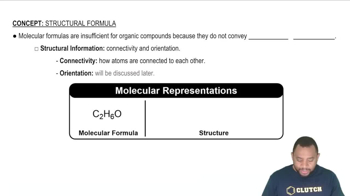
The line structure of a molecule visually represents the arrangement of atoms and bonds. In this format, lines indicate bonds between atoms, while vertices represent carbon atoms. Understanding how to read and interpret these structures is crucial for identifying the types of carbons present in a compound.
Recommended video:
Guided course
2:08
Molecular Representations Concept 1

Functional Groups

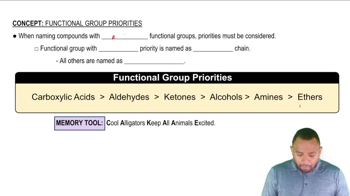
Functional groups are specific groups of atoms within molecules that determine the chemical properties and reactions of those molecules. While the question focuses on carbon classification, recognizing functional groups can provide insight into the behavior of the compound, including its pharmacological effects, as seen with pregabalin.
Recommended video:
Guided course
1:11
Functional Group Priorities Concept 1