Pearson+ LogoPearson+ Logo
Ch.15 Aldehydes and Ketones
McMurry - Fundamentals of GOB 8th Edition
McMurry8th EditionFundamentals of GOBISBN: 9780134015187Not the one you use?Change textbook
Chapter 15, Problem 29c

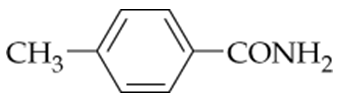
Redraw each of the following in line structure format. Indicate which compounds have an aldehyde carbonyl group, a ketone carbonyl group, or neither. 
c.

Verified step by step guidance
1
Step 1: Understand the problem. The task is to redraw the given compounds in line structure format. Line structures are simplified representations of organic molecules where carbon atoms are represented as vertices, and hydrogen atoms bonded to carbons are typically omitted for clarity.
Step 2: Analyze each compound in the image. Identify the functional groups present in each molecule. Specifically, look for carbonyl groups (C=O), which can be part of aldehydes, ketones, or other functional groups.
Step 3: Recall the definitions of aldehydes and ketones. An aldehyde contains a carbonyl group bonded to at least one hydrogen atom (R-CHO), while a ketone contains a carbonyl group bonded to two carbon atoms (R-CO-R'). If the carbonyl group does not fit either of these descriptions, it is classified as 'neither.'
Step 4: Redraw each compound in line structure format. For each compound, replace the detailed structural formula with a line structure, ensuring that the connectivity of atoms remains accurate. Highlight the carbonyl group, if present, in the line structure.
Step 5: Classify each compound based on the presence and type of carbonyl group. For each compound, determine whether it contains an aldehyde carbonyl group, a ketone carbonyl group, or neither. Clearly label the classification for each compound.

Verified video answer for a similar problem:

This video solution was recommended by our tutors as helpful for the problem above.
Was this helpful?

Key Concepts

Here are the essential concepts you must grasp in order to answer the question correctly.

Aldehyde Carbonyl Group

An aldehyde carbonyl group is characterized by a carbon atom double-bonded to an oxygen atom (C=O) and also bonded to at least one hydrogen atom. This functional group is typically found at the end of a carbon chain, making aldehydes distinct from other carbonyl-containing compounds. Common examples include formaldehyde and acetaldehyde.
Recommended video:
Guided course
1:00
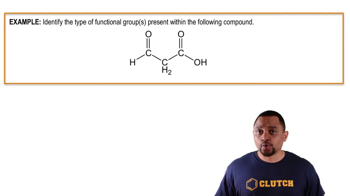
Functional Groups with Carbonyls Example 3

Ketone Carbonyl Group

A ketone carbonyl group features a carbon atom double-bonded to an oxygen atom (C=O) and is flanked by two other carbon atoms. Unlike aldehydes, ketones do not have hydrogen atoms directly attached to the carbonyl carbon, which places them in the middle of carbon chains. Acetone and butanone are well-known examples of ketones.
Recommended video:
Guided course
1:32
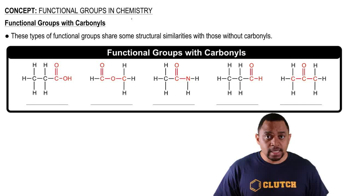
Functional Groups with Carbonyls Concept 3

Line Structure Format

Line structure format is a simplified way of representing organic molecules where lines represent bonds between atoms, and vertices represent carbon atoms. In this format, hydrogen atoms attached to carbons are often omitted for clarity. This method allows for easier visualization of molecular structure and functional groups, such as identifying carbonyl groups.
Recommended video:
Guided course
1:41
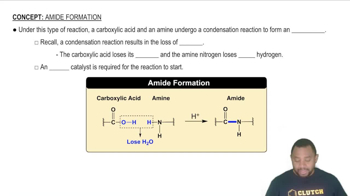
Amide Formation Concept 1