Back

Dimensional Analysis definitions

Control buttons has been changed to "navigation" mode.
1/15
  • Dimensional Analysis

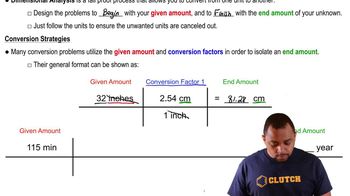
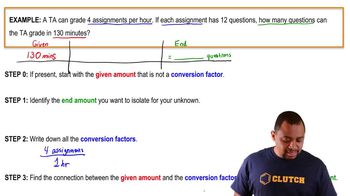
    A systematic approach for converting between units by aligning conversion factors to cancel unwanted units and isolate the desired unit.
  • Conversion Factor

    A numerical ratio expressing the relationship between two units, used to bridge and convert quantities from one unit to another.
  • Given Amount

    The initial quantity and unit provided in a problem, serving as the starting point for unit conversion.
  • End Amount

    The final quantity and unit sought after completing all necessary conversions in a problem.
  • Significant Figures

    Digits in a measurement that convey meaningful precision, determining the accuracy of the final answer in calculations.
  • Metric Prefix

    A modifier attached to units in the metric system to indicate multiples or fractions, aiding in unit conversions.
  • Unit Cancellation

    The process of arranging units in numerators and denominators so that unwanted units are eliminated, leaving only the desired unit.
  • Numerator

    The top part of a fraction or ratio, often representing the quantity being converted in dimensional analysis.
  • Denominator

    The bottom part of a fraction or ratio, typically containing the unit to be canceled in a conversion.
  • Calculator Usage

    The method of inputting numbers and operations correctly, especially when handling multiple sequential conversions.
  • Measurement

    A quantitative value with an associated unit, forming the basis for conversions in dimensional analysis.
  • Ratio

    A comparative relationship between two quantities, foundational for expressing conversion factors.
  • Unit

    A standard quantity used to specify measurements, such as inches, centimeters, or years.
  • Stepwise Conversion

    A multi-stage process using several conversion factors in sequence to reach the desired unit from the original unit.
  • Precision

    The degree of exactness in a measurement, reflected by the number of significant figures retained in calculations.