Back

Disaccharides definitions

Control buttons has been changed to "navigation" mode.
1/13
  • Disaccharide

    A carbohydrate formed by two monosaccharides joined through a glycosidic bond, often found in foods like milk, honey, and table sugar.
  • Monosaccharide

    A simple sugar unit that serves as the building block for more complex carbohydrates such as disaccharides.
  • Glycosidic Linkage

    A covalent bond connecting two sugar molecules, determining the structure and digestibility of the resulting carbohydrate.
  • Maltose

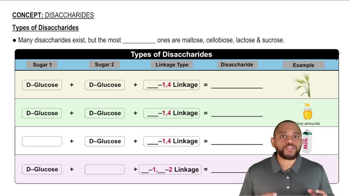
    A sugar composed of two glucose units with an alpha 1-4 bond, commonly present in barley and beer.
  • Cellobiose

    A carbohydrate made of two glucose molecules linked by a beta 1-4 bond, found in trace amounts in honey.
  • Lactose

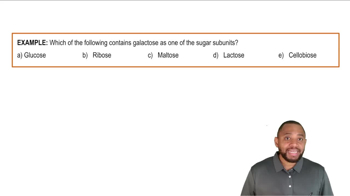
    A sugar consisting of glucose and galactose with a beta 1-4 linkage, known as milk sugar and digested by lactase.
  • Sucrose

    A sweetener made from glucose and fructose, featuring both alpha and beta linkages, commonly known as table sugar.
  • Alpha 1-4 Linkage

    A specific type of glycosidic bond where the first carbon of one glucose connects to the fourth carbon of another in an alpha orientation.
  • Beta 1-4 Linkage

    A glycosidic bond joining the first carbon of one sugar to the fourth of another in a beta configuration, affecting digestibility.
  • Lactase

    An enzyme in humans that enables the breakdown of milk sugar, allowing digestion of dairy products.
  • Glucose

    A common monosaccharide serving as a foundational unit in many disaccharides, including maltose, cellobiose, and lactose.
  • Galactose

    A monosaccharide that combines with glucose to form lactose, contributing to the sugar content in milk.
  • Fructose

    A monosaccharide that pairs with glucose to create sucrose, contributing to the sweetness of table sugar.