Pearson+ LogoPearson+ Logo
Ch.12 Food as Fuel An Overview of Metabolism
Frost - General, Organic and Biological Chemistry 4th Edition
Frost4th EditionGeneral, Organic and Biological ChemistryISBN: 9780134988696Not the one you use?Change textbook
Chapter 8, Problem 17

Describe how cholesterol is packaged after absorption in the intestine.

Verified step by step guidance
1
After cholesterol is absorbed in the intestine, it is incorporated into micelles along with bile salts and other lipids to facilitate its transport across the intestinal wall.
Inside the intestinal cells (enterocytes), cholesterol is re-esterified to form cholesterol esters, which are more hydrophobic and suitable for packaging.
The re-esterified cholesterol is then combined with triglycerides, phospholipids, and proteins to form lipoprotein particles called chylomicrons.
Chylomicrons are released from the enterocytes into the lymphatic system via exocytosis, bypassing the liver initially and entering the bloodstream through the thoracic duct.
Once in the bloodstream, chylomicrons deliver cholesterol and other lipids to tissues for use or storage, completing the packaging and transport process.

Verified video answer for a similar problem:

This video solution was recommended by our tutors as helpful for the problem above.
Video duration:
5m
Was this helpful?

Key Concepts

Here are the essential concepts you must grasp in order to answer the question correctly.

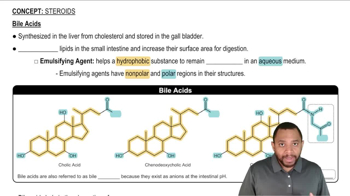
Cholesterol Absorption

Cholesterol absorption occurs primarily in the small intestine, where dietary cholesterol is taken up by enterocytes (intestinal cells). This process involves specific transport proteins that facilitate the movement of cholesterol across the intestinal membrane, allowing it to enter the bloodstream.
Recommended video:
Guided course
2:11
Steroids Concept 3

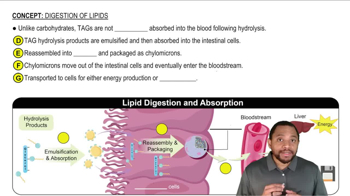
Chylomicrons

After absorption, cholesterol is packaged into lipoproteins called chylomicrons. These large particles are formed in the enterocytes and consist of triglycerides, cholesterol, and proteins. Chylomicrons transport dietary lipids, including cholesterol, from the intestines to other tissues via the lymphatic system and bloodstream.
Recommended video:
Guided course
2:48
Digestion of Lipids Concept 1

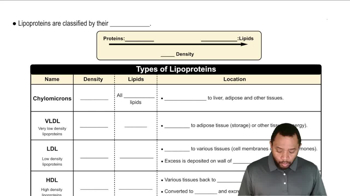
Lipoprotein Metabolism

Lipoprotein metabolism refers to the processes by which lipoproteins, including chylomicrons, are processed and utilized by the body. After entering circulation, chylomicrons deliver cholesterol and triglycerides to tissues, and remnants are eventually taken up by the liver, where cholesterol can be repackaged or excreted as bile.
Recommended video:
Guided course
3:52
Lipoproteins for Transport Concept 2