Pearson+ LogoPearson+ Logo
Ch.12 Food as Fuel An Overview of Metabolism
Frost - General, Organic and Biological Chemistry 4th Edition
Frost4th EditionGeneral, Organic and Biological ChemistryISBN: 9780134988696Not the one you use?Change textbook
Chapter 8, Problem 21a

Indicate whether the statements below apply to the glucose-regulating hormone insulin or to glucagon:
(a) signals cells to take up glucose

Verified step by step guidance
1
Understand the role of insulin and glucagon in glucose regulation. Insulin is a hormone that lowers blood glucose levels by signaling cells to take up glucose, while glucagon raises blood glucose levels by signaling the liver to release stored glucose.
Analyze the statement: 'signals cells to take up glucose.' This describes the action of a hormone that facilitates the uptake of glucose into cells, which is a key function of insulin.
Recall that insulin is secreted by the pancreas in response to high blood glucose levels, promoting glucose uptake by cells and storage as glycogen in the liver.
Contrast this with glucagon, which is secreted when blood glucose levels are low and works to increase glucose levels by stimulating glycogen breakdown in the liver.
Conclude that the statement 'signals cells to take up glucose' applies to insulin, as it directly facilitates the uptake of glucose into cells.

Verified video answer for a similar problem:

This video solution was recommended by our tutors as helpful for the problem above.
Video duration:
2m
Was this helpful?

Key Concepts

Here are the essential concepts you must grasp in order to answer the question correctly.

Insulin

Insulin is a hormone produced by the pancreas that plays a crucial role in regulating blood glucose levels. It facilitates the uptake of glucose by cells, particularly in muscle and fat tissues, allowing them to use glucose for energy or store it as glycogen. Insulin's action lowers blood sugar levels, making it essential for maintaining metabolic homeostasis.

Glucagon

Glucagon is another hormone produced by the pancreas, but it has the opposite effect of insulin. It signals the liver to release stored glucose into the bloodstream, thereby increasing blood sugar levels when they are low. Glucagon is vital for preventing hypoglycemia and ensuring that the body has a steady supply of energy, especially during fasting or intense exercise.

Glucose Homeostasis

Glucose homeostasis refers to the balance of insulin and glucagon in regulating blood sugar levels within a narrow range. This balance is critical for overall health, as it ensures that cells receive adequate energy while preventing excessive glucose levels that can lead to conditions like diabetes. Understanding this concept is essential for analyzing the roles of insulin and glucagon in metabolic processes.
Recommended video:
Guided course
2:07
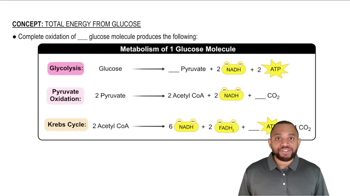
Total Energy From Glucose Concept 1