Pearson+ LogoPearson+ Logo
Ch.12 Food as Fuel An Overview of Metabolism
Frost - General, Organic and Biological Chemistry 4th Edition
Frost4th EditionGeneral, Organic and Biological ChemistryISBN: 9780134988696Not the one you use?Change textbook
Chapter 8, Problem 65a

Identify each pathway as anabolic or catabolic.
a. gluconeogenesis

Verified step by step guidance
1
Understand the definitions of anabolic and catabolic pathways: Anabolic pathways involve the synthesis of complex molecules from simpler ones, requiring energy input (e.g., building proteins from amino acids). Catabolic pathways involve the breakdown of complex molecules into simpler ones, releasing energy (e.g., breaking down glucose during glycolysis).
Analyze the term 'gluconeogenesis': This process refers to the synthesis of glucose from non-carbohydrate precursors such as lactate, glycerol, and amino acids.
Determine whether gluconeogenesis is anabolic or catabolic: Since gluconeogenesis involves the creation of a complex molecule (glucose) from simpler molecules and requires energy input, it is classified as an anabolic pathway.
Relate gluconeogenesis to its biological role: This process is crucial for maintaining blood glucose levels during fasting or intense exercise, ensuring a continuous energy supply for tissues like the brain and red blood cells.
Conclude that gluconeogenesis is an anabolic pathway based on its characteristics and energy requirements.

Verified video answer for a similar problem:

This video solution was recommended by our tutors as helpful for the problem above.
Video duration:
2m
Was this helpful?

Key Concepts

Here are the essential concepts you must grasp in order to answer the question correctly.

Anabolic Pathways

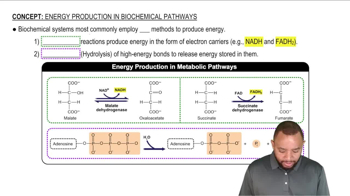
Anabolic pathways are metabolic processes that build larger molecules from smaller ones, requiring energy input. These pathways are essential for growth, repair, and the synthesis of complex biomolecules like proteins, nucleic acids, and carbohydrates. An example of an anabolic process is the synthesis of glucose from non-carbohydrate precursors, which is crucial for maintaining energy balance in the body.
Recommended video:
Guided course
2:13
Energy Production In Biochemical Pathways Concept 1

Catabolic Pathways

Catabolic pathways are metabolic processes that break down larger molecules into smaller ones, releasing energy in the process. These pathways are vital for generating ATP, the energy currency of the cell, and for recycling cellular components. An example of a catabolic process is glycolysis, where glucose is broken down to produce energy, highlighting the balance between catabolism and anabolism in metabolism.
Recommended video:
Guided course
2:13
Energy Production In Biochemical Pathways Concept 1

Gluconeogenesis

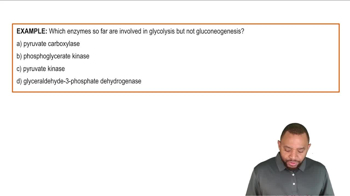
Gluconeogenesis is a specific anabolic pathway that synthesizes glucose from non-carbohydrate sources, such as amino acids and glycerol. This process is crucial during fasting or intense exercise when glucose levels are low, ensuring a continuous supply of glucose for energy, particularly for the brain and red blood cells. Understanding gluconeogenesis helps in comprehending how the body maintains glucose homeostasis.
Recommended video:
Guided course
1:23
Gluconeogenesis Example 2