Pearson+ LogoPearson+ Logo
Ch.12 Food as Fuel An Overview of Metabolism
Frost - General, Organic and Biological Chemistry 4th Edition
Frost4th EditionGeneral, Organic and Biological ChemistryISBN: 9780134988696Not the one you use?Change textbook
Chapter 8, Problem 87

Mammals can regulate their body heat through a process called thermogenesis. What part of metabolism changes to allow for the production of heat?

Verified step by step guidance
1
Understand that thermogenesis is the process by which mammals generate heat to maintain body temperature, often in response to cold environments.
Recognize that thermogenesis is linked to metabolism, which involves the chemical reactions in the body that convert food into energy.
Identify that during thermogenesis, the body increases its metabolic rate, meaning that more energy is consumed and released as heat rather than being stored or used for other processes.
Note that this increase in metabolic rate is often facilitated by the activation of brown adipose tissue (BAT), which contains a high number of mitochondria. These mitochondria use a protein called uncoupling protein 1 (UCP1) to produce heat instead of ATP.
Conclude that the part of metabolism that changes during thermogenesis is the shift in energy usage from ATP production to heat generation, driven by the activation of specific pathways in brown adipose tissue.

Verified video answer for a similar problem:

This video solution was recommended by our tutors as helpful for the problem above.
Video duration:
4m
Was this helpful?

Key Concepts

Here are the essential concepts you must grasp in order to answer the question correctly.

Thermogenesis

Thermogenesis is the process by which organisms generate heat to maintain their body temperature, especially in cold environments. In mammals, this can occur through shivering, non-shivering thermogenesis, and metabolic processes that increase energy expenditure, thereby producing heat as a byproduct.

Metabolism

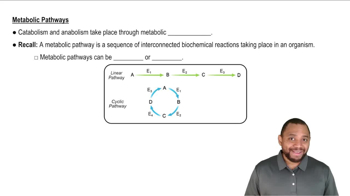
Metabolism encompasses all chemical reactions in the body that convert food into energy. It includes catabolic processes that break down molecules to release energy and anabolic processes that build up components necessary for growth and repair. Changes in metabolism during thermogenesis primarily involve increased catabolic activity.
Recommended video:
Guided course
0:52
Metabolic Pathways Concept 2

Energy Expenditure

Energy expenditure refers to the total amount of energy used by the body to maintain basic physiological functions and perform physical activities. During thermogenesis, energy expenditure increases as the body burns more calories to produce heat, which can be measured in terms of metabolic rate.
Recommended video:
Guided course
01:26
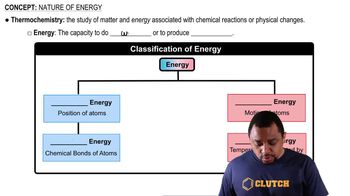
Nature of Energy