
Pearson+ LogoPearson+ Logo
Ch.6 Chemical Reactions: Mole and Mass Relationships
McMurry - Fundamentals of GOB 8th Edition
McMurry8th EditionFundamentals of GOBISBN: 9780134015187Not the one you use?Change textbook
Chapter 6, Problem 43a

Titanium metal is obtained from the mineral rutile, TiO2. The process requires multiple steps, as shown in the following reactions:
TiO2(s) + 2 Cl2(g) + 2 C(s) → TiCl4(s) + 2 CO(g)
TiCl4(s) + 2 Mg(s) → Ti(s) + 2 MgCl2(s)
a. Write mole ratios to show the relationship between the reactants and products for each reaction.

Verified step by step guidance
1
Step 1: Understand the concept of mole ratios. Mole ratios are derived from the coefficients of a balanced chemical equation and represent the proportional relationship between reactants and products in a chemical reaction.
Step 2: For the first reaction, TiO₂(s) + 2 Cl₂(g) + 2 C(s) → TiCl₄(s) + 2 CO(g), identify the coefficients of each substance. These coefficients are: 1 for TiO₂, 2 for Cl₂, 2 for C, 1 for TiCl₄, and 2 for CO.
Step 3: Write the mole ratios for the first reaction. For example, the mole ratio between TiO₂ and Cl₂ is 1:2, between TiO₂ and C is 1:2, between TiO₂ and TiCl₄ is 1:1, and between TiO₂ and CO is 1:2. Similarly, you can write mole ratios for other pairs of reactants and products.
Step 4: For the second reaction, TiCl₄(s) + 2 Mg(s) → Ti(s) + 2 MgCl₂(s), identify the coefficients of each substance. These coefficients are: 1 for TiCl₄, 2 for Mg, 1 for Ti, and 2 for MgCl₂.
Step 5: Write the mole ratios for the second reaction. For example, the mole ratio between TiCl₄ and Mg is 1:2, between TiCl₄ and Ti is 1:1, and between TiCl₄ and MgCl₂ is 1:2. Similarly, you can write mole ratios for other pairs of reactants and products.

Verified video answer for a similar problem:

This video solution was recommended by our tutors as helpful for the problem above.
Video duration:
4m
Was this helpful?

Key Concepts

Here are the essential concepts you must grasp in order to answer the question correctly.

Mole Ratios

Mole ratios are derived from the coefficients of a balanced chemical equation and represent the proportional relationship between the amounts of reactants and products involved in a reaction. They are essential for stoichiometric calculations, allowing chemists to predict how much of each substance is needed or produced in a reaction. For example, in the reaction of TiO2 with Cl2 and C, the mole ratio indicates that one mole of TiO2 reacts with two moles of Cl2 and two moles of C to produce one mole of TiCl4 and two moles of CO.
Recommended video:

Stoichiometry

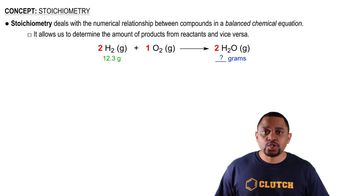
Stoichiometry is the branch of chemistry that deals with the quantitative relationships between the substances involved in chemical reactions. It allows for the calculation of reactants and products in a reaction based on the balanced equation. Understanding stoichiometry is crucial for determining how much titanium can be produced from a given amount of rutile, as it provides the necessary framework for converting between moles of reactants and products.
Recommended video:
Guided course
01:16
Stoichiometry

Chemical Reactions

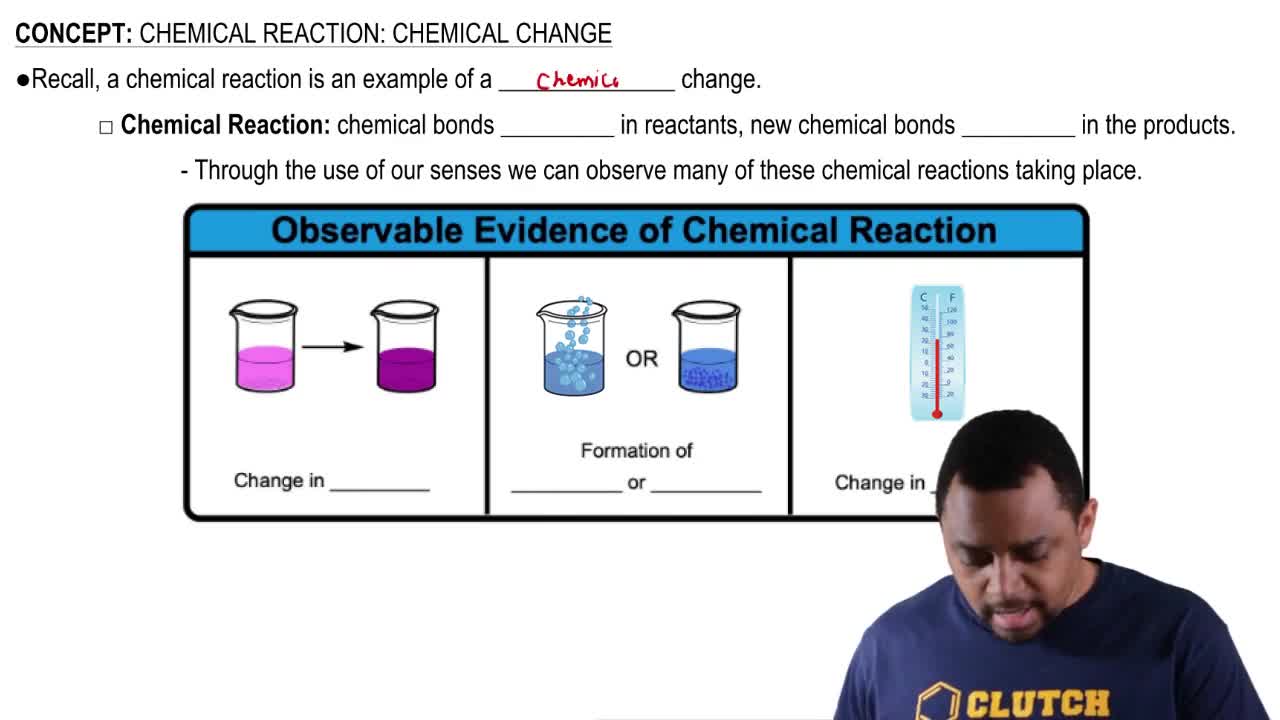
Chemical reactions involve the transformation of reactants into products through the breaking and forming of chemical bonds. Each reaction can be represented by a balanced equation that shows the identity and quantity of each substance involved. In the provided reactions, the conversion of TiO2 to TiCl4 and then to titanium illustrates the multi-step nature of chemical processes, highlighting the importance of understanding each step to accurately write mole ratios and predict outcomes.
Recommended video:
Guided course
00:58
Chemical Reaction: Chemical Change Concept 1