Pearson+ LogoPearson+ Logo
Ch.13 Alkenes, Alkynes, and Aromatic Compounds
McMurry - Fundamentals of GOB 8th Edition
McMurry8th EditionFundamentals of GOBISBN: 9780134015187Not the one you use?Change textbook
Chapter 13, Problem 20

Draw structures corresponding to the following names (refer to Table 13.2 if necessary):
a. m-Chloronitrobenzene
b. o-Nitrotoluene
c. p-Methylaniline
d. p-Nitrophenol

Verified step by step guidance
1
Step 1: Understand the naming conventions for aromatic compounds. The prefixes 'm-', 'o-', and 'p-' refer to the positions of substituents on a benzene ring. 'm-' (meta) means the substituents are on carbons 1 and 3, 'o-' (ortho) means they are on carbons 1 and 2, and 'p-' (para) means they are on carbons 1 and 4.
Step 2: For m-Chloronitrobenzene, start with a benzene ring. Place a chlorine atom (Cl) on one carbon and a nitro group (NO₂) on the meta position (carbon 3 relative to the chlorine).
Step 3: For o-Nitrotoluene, start with a benzene ring. Place a methyl group (CH₃) on one carbon and a nitro group (NO₂) on the ortho position (carbon 2 relative to the methyl group).
Step 4: For p-Methylaniline, start with a benzene ring. Place an amino group (NH₂) on one carbon and a methyl group (CH₃) on the para position (carbon 4 relative to the amino group).
Step 5: For p-Nitrophenol, start with a benzene ring. Place a hydroxyl group (OH) on one carbon and a nitro group (NO₂) on the para position (carbon 4 relative to the hydroxyl group).

Verified video answer for a similar problem:

This video solution was recommended by our tutors as helpful for the problem above.
Was this helpful?

Key Concepts

Here are the essential concepts you must grasp in order to answer the question correctly.

Nomenclature of Organic Compounds

Understanding the nomenclature of organic compounds is essential for interpreting chemical names. This involves recognizing prefixes, suffixes, and the significance of substituents in the structure. For example, 'm-', 'o-', and 'p-' indicate the positions of substituents on a benzene ring, which is crucial for drawing the correct structures.
Recommended video:
Guided course
2:26
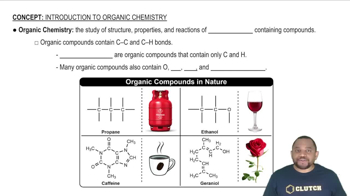
Introduction to Organic Chemistry Concept 1

Benzene Derivatives

Benzene derivatives are compounds that contain a benzene ring with various substituents. The properties and reactivity of these compounds can vary significantly based on the nature and position of the substituents. Familiarity with common derivatives like nitro and methyl groups helps in accurately constructing their structures.
Recommended video:
Guided course
00:47
The Ideal Gas Law Derivations

Structural Representation of Organic Molecules

Structural representation involves illustrating the arrangement of atoms within a molecule. This can be done through various methods, such as Lewis structures or skeletal formulas. Accurately representing the connectivity and geometry of atoms is vital for understanding the chemical behavior and properties of the compounds in question.
Recommended video:
Guided course
2:26
Introduction to Organic Chemistry Concept 1