Pearson+ LogoPearson+ Logo
Ch.22 Carbohydrate Metabolism
McMurry - Fundamentals of GOB 8th Edition
McMurry8th EditionFundamentals of GOBISBN: 9780134015187Not the one you use?Change textbook
Chapter 22, Problem 20

What is the purpose of the Cori cycle?

Verified step by step guidance
1
The Cori cycle is a metabolic pathway that connects anaerobic glycolysis in muscle cells with gluconeogenesis in the liver. It helps the body manage energy production during intense physical activity.
Step 1: During intense exercise, muscle cells perform anaerobic glycolysis, breaking down glucose into pyruvate. When oxygen is limited, pyruvate is converted into lactate to regenerate NAD⁺, which is essential for glycolysis to continue.
Step 2: Lactate produced in the muscles is transported through the bloodstream to the liver. This prevents lactate accumulation in the muscles, which could lead to fatigue.
Step 3: In the liver, lactate is converted back into pyruvate and then into glucose through the process of gluconeogenesis. This requires energy in the form of ATP, which is supplied by the liver's oxidative metabolism.
Step 4: The newly synthesized glucose is released into the bloodstream and transported back to the muscles, where it can be used as an energy source for continued activity. This completes the cycle and ensures a steady supply of glucose for energy production.

Verified video answer for a similar problem:

This video solution was recommended by our tutors as helpful for the problem above.
Video duration:
5m
Was this helpful?

Key Concepts

Here are the essential concepts you must grasp in order to answer the question correctly.

Cori Cycle

The Cori cycle is a metabolic pathway that describes the conversion of lactate produced by anaerobic glycolysis in muscles back into glucose in the liver. This process helps to recycle lactate, which can accumulate during intense exercise, and provides a means for the body to maintain energy levels and glucose homeostasis.
Recommended video:
Guided course
1:19
Cori Cycle Example 6

Lactate

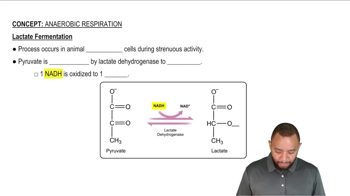
Lactate is a byproduct of anaerobic metabolism, particularly during high-intensity exercise when oxygen levels are insufficient for aerobic respiration. It can accumulate in muscles, leading to fatigue, but is also utilized in the Cori cycle to be converted back into glucose, thus playing a crucial role in energy production and recovery.
Recommended video:
Guided course
1:14
Anaerobic Respiration Concept 3

Gluconeogenesis

Gluconeogenesis is the metabolic process through which glucose is synthesized from non-carbohydrate precursors, such as lactate, glycerol, and amino acids. In the context of the Cori cycle, gluconeogenesis in the liver converts lactate back into glucose, which can then be released into the bloodstream to be used as energy by other tissues, particularly during periods of fasting or intense exercise.
Recommended video:
Guided course
1:23
Gluconeogenesis Example 2