
Pearson+ LogoPearson+ Logo
Ch.17 Nucleic Acids and Protein Synthesis
Timberlake - Chemistry: An Introduction to General, Organic, and Biological Chemistry 14th Edition
Timberlake14thChemistry: An Introduction to General, Organic, and Biological ChemistryISBN: 9781292472249Not the one you use?Change textbook
Chapter 17, Problem 121

What is the difference between a DNA virus and a retrovirus?

Verified step by step guidance
1
Understand that both DNA viruses and retroviruses are types of viruses, but they differ in their genetic material and replication mechanisms.
DNA viruses contain DNA as their genetic material. When they infect a host cell, their DNA is directly used as a template for transcription to produce viral RNA and proteins.
Retroviruses, on the other hand, contain RNA as their genetic material. They use an enzyme called reverse transcriptase to convert their RNA into DNA after infecting a host cell.
The DNA produced by reverse transcriptase in retroviruses integrates into the host's genome, where it can be transcribed and translated to produce viral components.
Summarize the key difference: DNA viruses use DNA directly for replication, while retroviruses rely on reverse transcription to convert RNA into DNA before replication.

Key Concepts

Here are the essential concepts you must grasp in order to answer the question correctly.

DNA Virus

A DNA virus is a type of virus that has DNA as its genetic material. These viruses can be either double-stranded (dsDNA) or single-stranded (ssDNA). They replicate their DNA within the host cell's nucleus and often integrate into the host's genome, which can lead to persistent infections. Examples include the herpesvirus and the adenovirus.
Recommended video:
Guided course
5:08
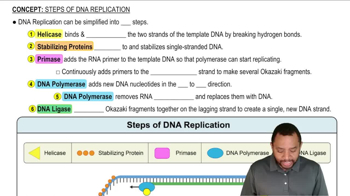
Steps of DNA Replication Concept 1

Retrovirus

A retrovirus is a type of RNA virus that uses reverse transcription to convert its RNA genome into DNA after entering a host cell. This newly formed DNA is then integrated into the host's genome, allowing the virus to replicate as the host cell divides. Retroviruses are known for their role in diseases such as HIV/AIDS and certain types of cancer.

Replication Mechanism

The replication mechanism refers to the process by which viruses reproduce within host cells. DNA viruses typically replicate their DNA directly using the host's cellular machinery, while retroviruses first transcribe their RNA into DNA using reverse transcriptase. Understanding these mechanisms is crucial for developing antiviral therapies and vaccines.
Recommended video:
Guided course
1:40
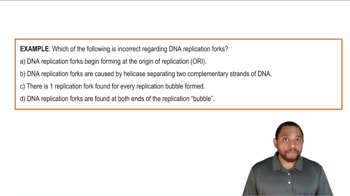
Intro to DNA Replication Example 2