Pearson+ LogoPearson+ Logo
Ch.4 Atoms and Elements
Timberlake - Chemistry: An Introduction to General, Organic, and Biological Chemistry 14th Edition
Timberlake14thChemistry: An Introduction to General, Organic, and Biological ChemistryISBN: 9781292472249Not the one you use?Change textbook
Chapter 4, Problem 95c

Complete the following statements:
c. Sodium and potassium are examples of elements called _____.

Verified step by step guidance
1
Identify the periodic table group to which sodium (Na) and potassium (K) belong. Both are located in Group 1.
Understand that elements in Group 1 are known as alkali metals. This group includes lithium (Li), sodium (Na), potassium (K), rubidium (Rb), cesium (Cs), and francium (Fr).
Recall the properties of alkali metals: they are highly reactive, especially with water, and they form +1 ions in chemical reactions.
Note that alkali metals are characterized by having a single electron in their outermost shell, which makes them very reactive.
Conclude that sodium and potassium are examples of elements called alkali metals.

Verified video answer for a similar problem:

This video solution was recommended by our tutors as helpful for the problem above.
Video duration:
1m
Was this helpful?

Key Concepts

Here are the essential concepts you must grasp in order to answer the question correctly.

Alkali Metals

Sodium and potassium belong to the group of elements known as alkali metals, which are found in Group 1 of the periodic table. These metals are characterized by their high reactivity, especially with water, and they typically form strong bases when reacting with acids. Alkali metals have one electron in their outermost shell, which they readily lose to form positive ions.
Recommended video:
Guided course
01:08
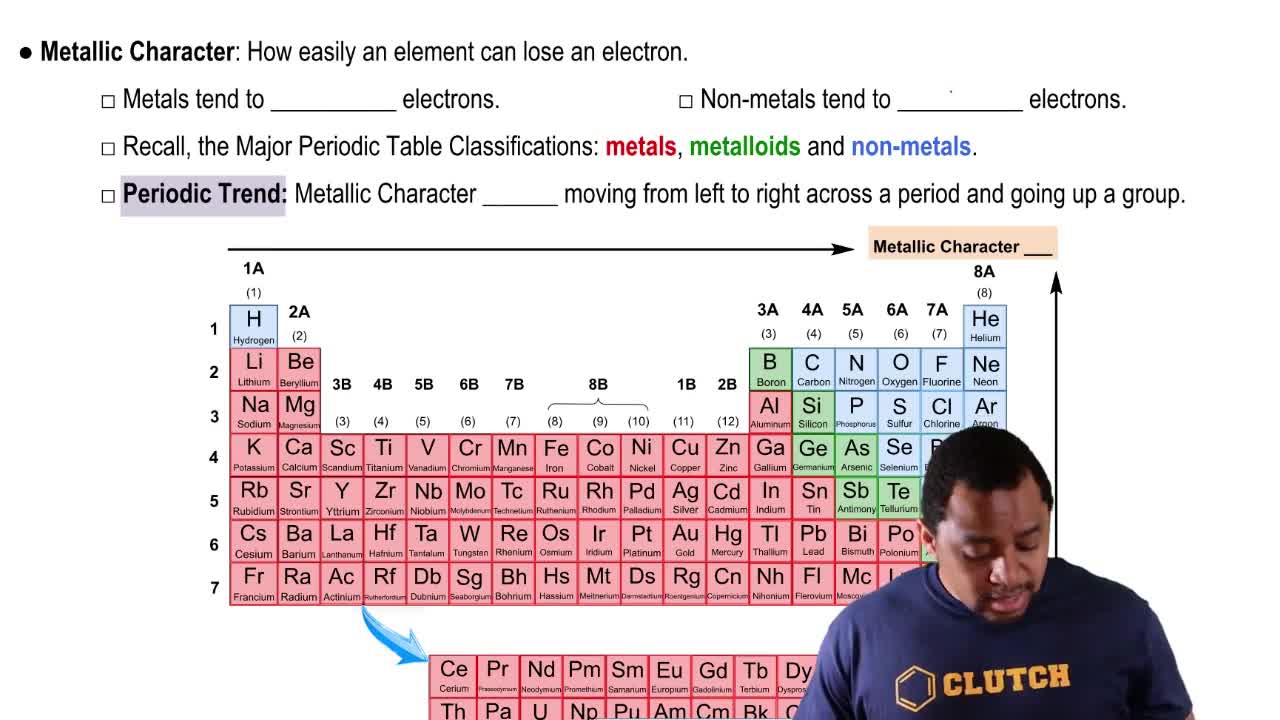
Periodic Trend: Metallic Character

Periodic Table

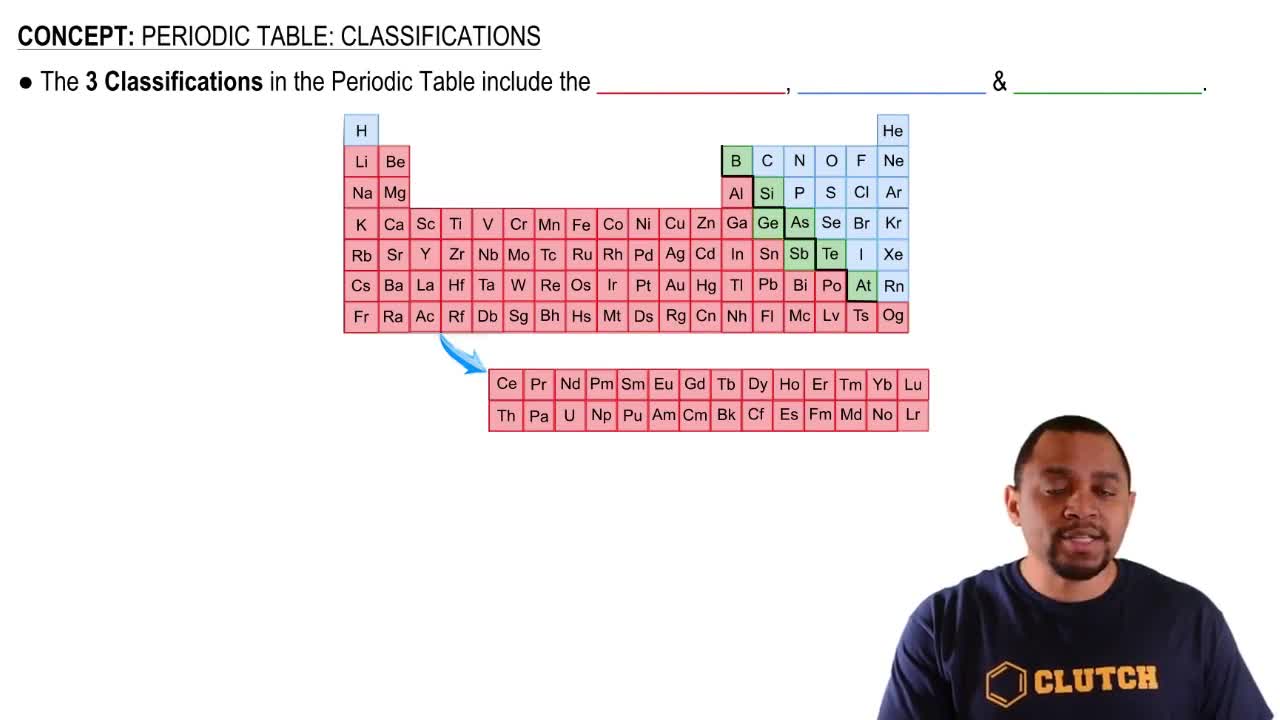
The periodic table is a systematic arrangement of elements based on their atomic number, electron configuration, and recurring chemical properties. Elements are organized into rows (periods) and columns (groups), with alkali metals located in the first column. Understanding the periodic table is essential for predicting the behavior of elements and their compounds.
Recommended video:
Guided course
02:40
Periodic Table: Classifications

Chemical Reactivity

Chemical reactivity refers to the tendency of a substance to undergo chemical changes, which can involve the formation of new substances. For alkali metals like sodium and potassium, reactivity increases down the group, meaning that cesium is more reactive than sodium. This property is crucial for understanding how these elements interact with other substances, particularly in biological and industrial processes.
Recommended video:
Guided course
02:11
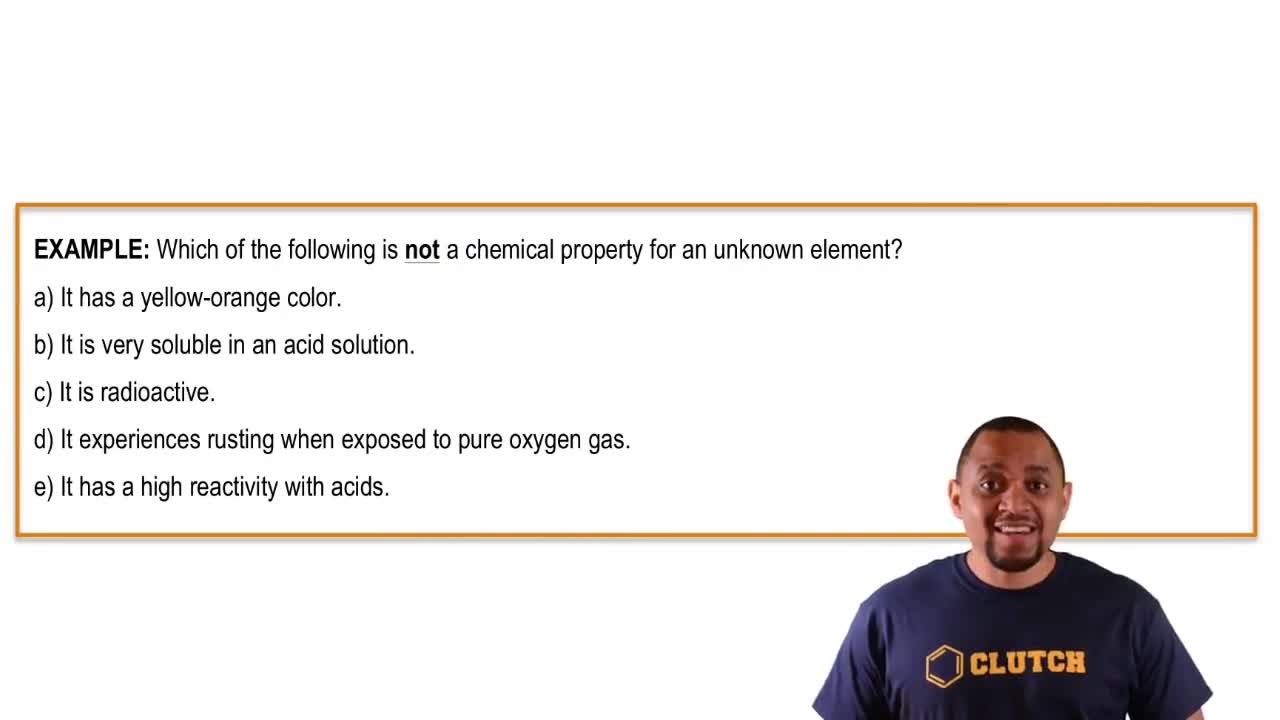
Chemical Properties Example 1