Indietro
 Bruice 8th EditionCh. 16 - Reactions of Aldehydes and Ketones • More Reactions of Carboxylic Acid Derivatives
Problema 54e
What are the products of the following reactions?
e.
Problema 54f
What are the products of the following reactions?
f.
Problema 54g
What are the products of the following reactions?
g.
Problema 54h
What are the products of the following reactions?
h.
Problema 55
Rank the following compounds from most reactive to least reactive toward nucleophilic addition:
Problema 56
Draw the structure of two esters that will be reduced to propanol and butanol by LiAlH4 (followed by addition of aqueous acid).
Problema 57a(7)
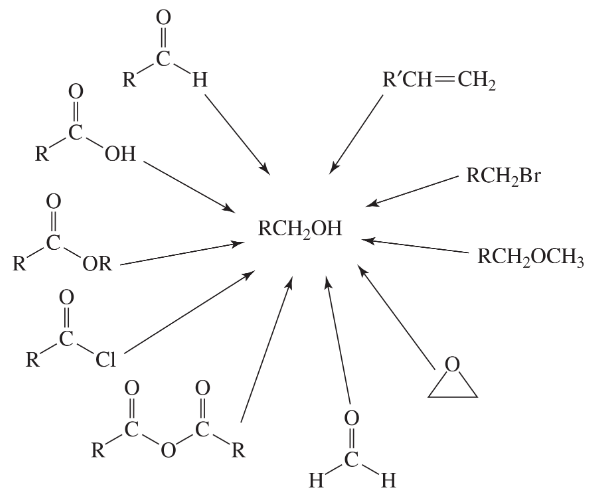
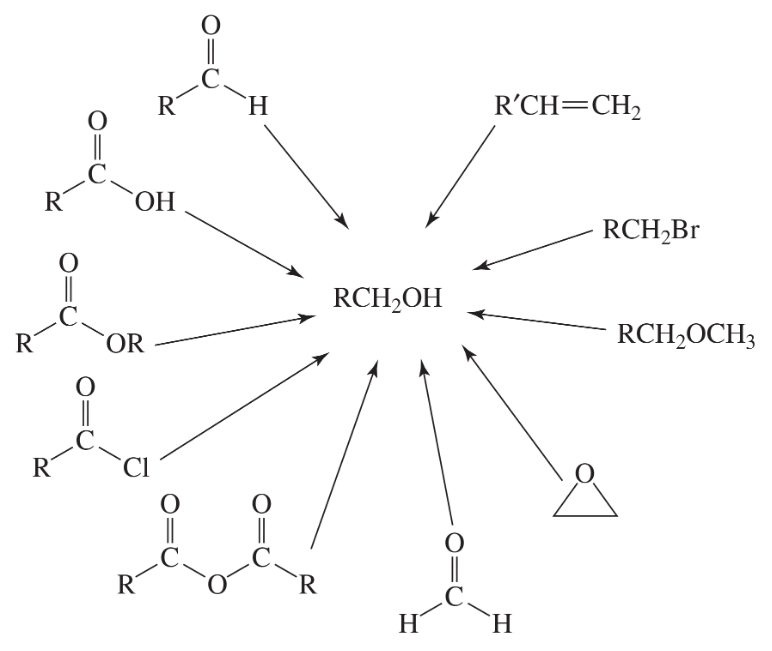
a. Show the reagents required to form the primary alcohol in each of the following reactions.
Problema 57a(1)
Show the reagents required to form the primary alcohol in each of the following reactions.
Problema 57a(4)
a. Show the reagents required to form the primary alcohol in each of the following reactions.
Problema 57a(8)
a. Show the reagents required to form the primary alcohol in each of the following reactions.
Problema 57a(5)
a. Show the reagents required to form the primary alcohol in each of the following reactions.
Problema 57a(10)
a. Show the reagents required to form the primary alcohol in each of the following reactions.
Problema 57a(3)
a. Show the reagents required to form the primary alcohol in each of the following reactions.
Problema 57b
Which of the reactions cannot be used for the synthesis of isobutyl alcohol?
Problema 58a,b,c
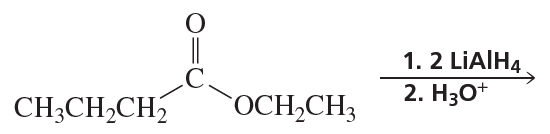
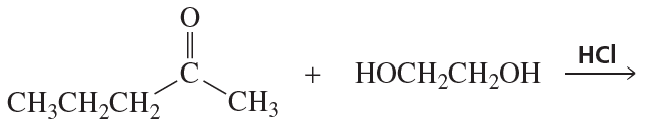
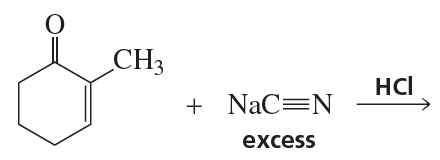
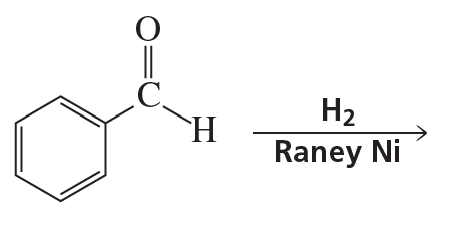
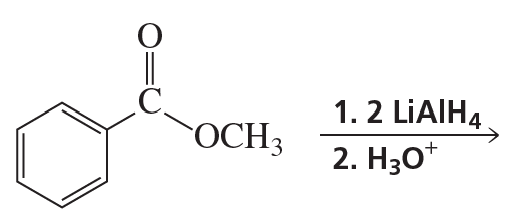
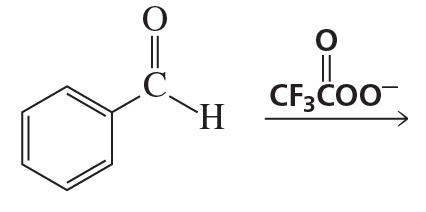
Draw the products of the following reactions. Indicate whether each reaction is an oxidation or a reduction.
a.
b.
c.
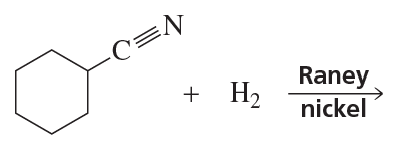
Problema 58d
Draw the products of the following reactions. Indicate whether each reaction is an oxidation or a reduction.
d.
Problema 58e
Draw the products of the following reactions. Indicate whether each reaction is an oxidation or a reduction.
e.
Problema 58f
Draw the products of the following reactions. Indicate whether each reaction is an oxidation or a reduction.
f.
Problema 60a,b
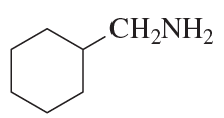
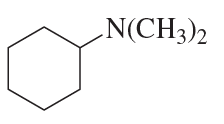
Using cyclohexanone as the starting material, describe how each of the following compounds can be synthesized:
a.
b.
Problema 60c
Using cyclohexanone as the starting material, describe how each of the following compounds can be synthesized:
c.
Problema 60d
Using cyclohexanone as the starting material, describe how each of the following compounds can be synthesized:
d.
Problema 60e
Using cyclohexanone as the starting material, describe how each of the following compounds can be synthesized:
e.
Problema 60f
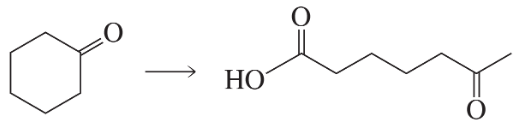
Using cyclohexanone as the starting material, describe how each of the following compounds can be synthesized:
f.
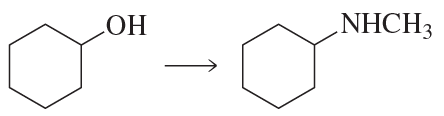
Problema 62a
Show how each of the following compounds can be prepared, using the given starting material:
a.
Problema 62c
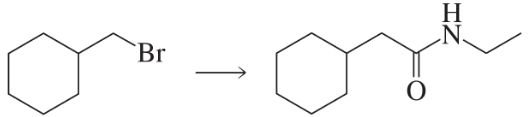
Show how each of the following compounds can be prepared, using the given starting material:
c.
Problema 62e
Show how each of the following compounds can be prepared, using the given starting material:
e.
Problema 62f
Show how each of the following compounds can be prepared, using the given starting material:
f.
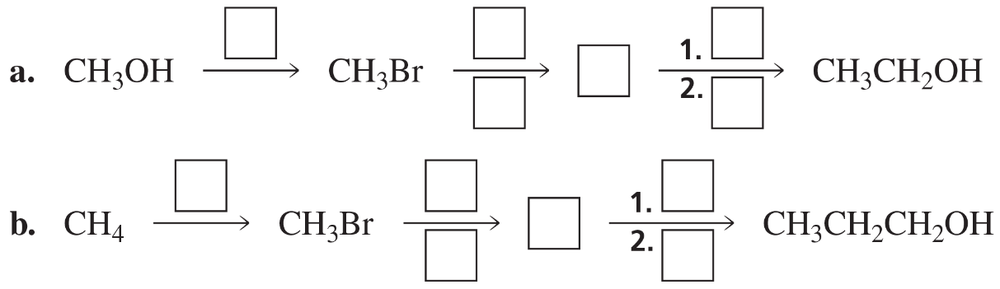
Problema 63
Fill in the boxes:
Problema 64a
Thiols can be prepared from the reaction of thiourea with an alkyl halide, followed by hydroxide-ion-promoted hydrolysis.
a. Propose a mechanism for the reaction.
Problema 64b
Thiols can be prepared from the reaction of thiourea with an alkyl halide, followed by hydroxide-ion-promoted hydrolysis.
b. What thiol will be formed if the alkyl halide employed is pentyl bromide?