Indietro
Problema 16c
Show how you would accomplish the following syntheses.
c. hexan-1-ol → 2-hydroxyheptanoic acid
Problema 17
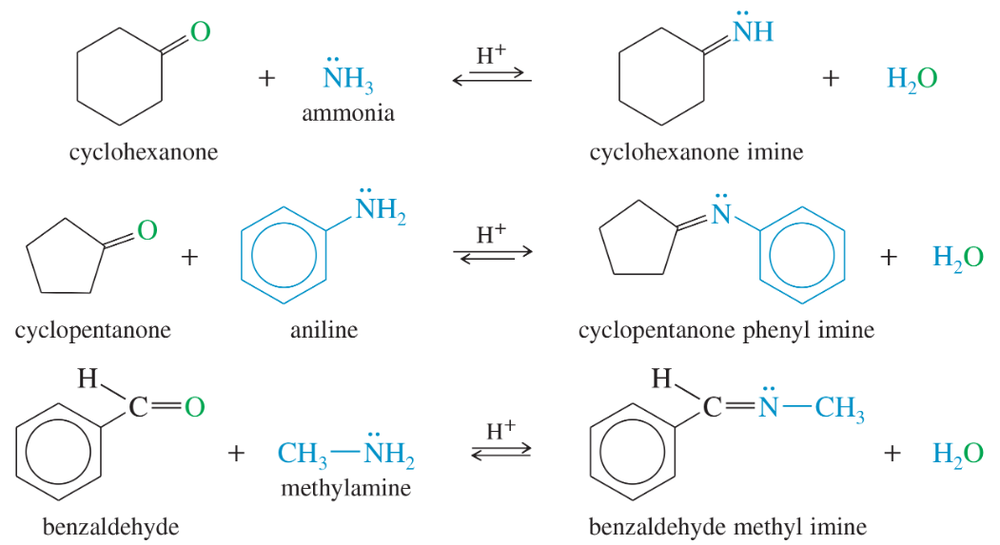
Propose mechanisms for the three imine-forming reactions just shown.
Problema 18a
Depending on the reaction conditions, two different imines of formula C8H9N might be formed by the reaction of benzaldehyde with methylamine. Explain, and give the structures of the two imines.
Problema 18d
Show how hex-1-yne might be converted to
d. 1,1,2,2-tetrabromohexane.
Problema 19a,b,c
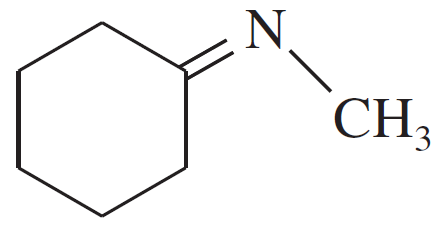
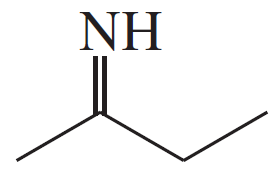
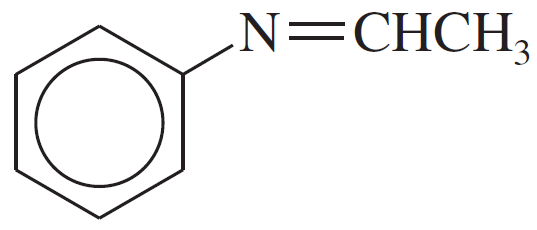
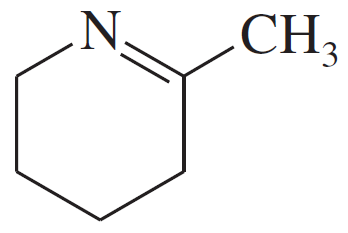
Give the structures of the carbonyl compound and the amine used to form the following imines.
(a)
(b)
(c)
Problema 19d,e,f
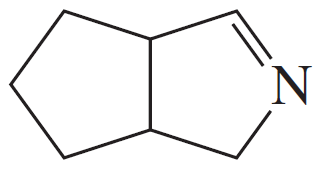
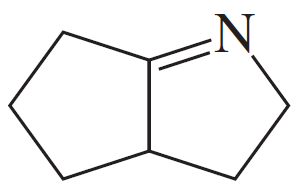
Give the structures of the carbonyl compound and the amine used to form the following imines.
(d)
(e)
(f)
Problema 20a
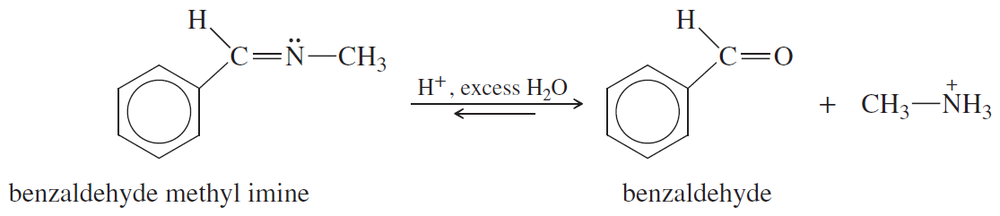
Propose a mechanism for the hydrolysis of benzaldehyde methyl imine just shown.
Problema 21a
2,4-Dinitrophenylhydrazine is frequently used for making derivatives of ketones and aldehydes because the products (2,4-dinitrophenylhydrazones, called 2,4-DNP derivatives) are even more likely than the phenylhydrazones to be solids with sharp melting points. Propose a mechanism for the reaction of acetone with 2,4-dinitrophenylhydrazine in a mildly acidic solution.
Problema 22a,b
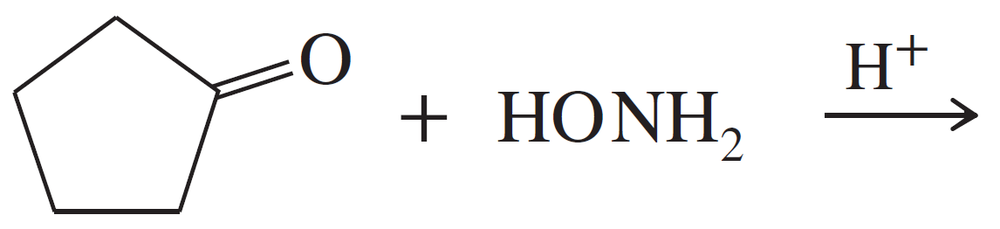
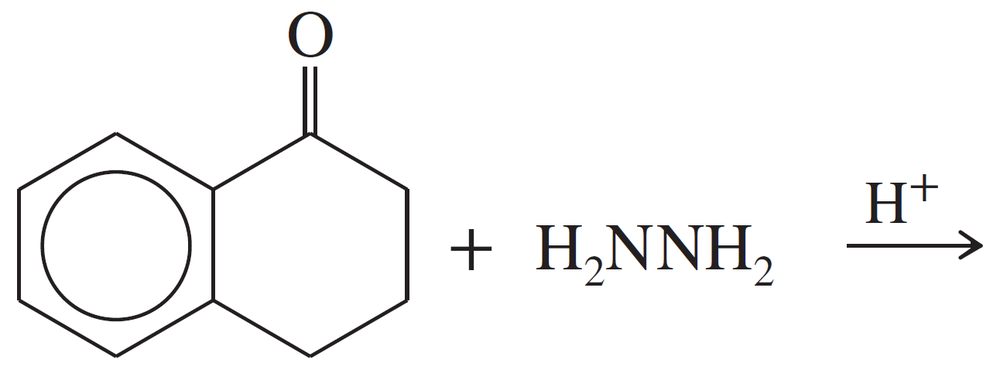
Predict the products of the following reactions.
(a)
(b)
Problema 22c,d
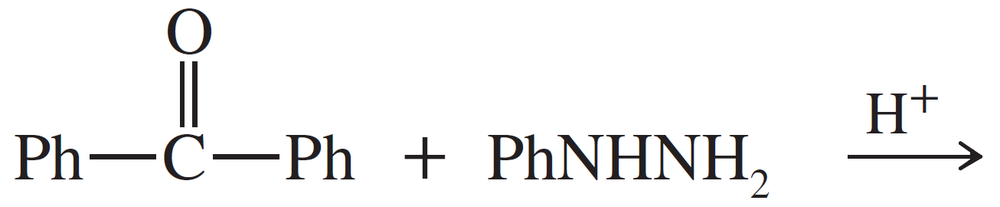
Predict the products of the following reactions.
(c)
(d)
Problema 23a,b,c
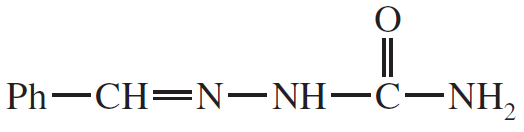
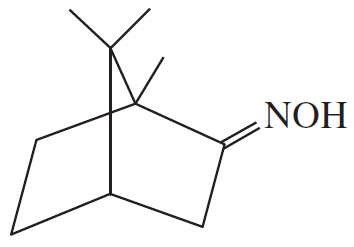
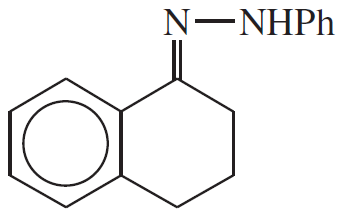
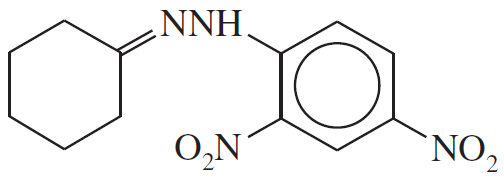
Show what amines and carbonyl compounds combine to give the following derivatives.
(a)
(b)
(c)
Problema 23d
Show what amines and carbonyl compounds combine to give the following derivatives.
(d)
Problema 23e
Show what amines and carbonyl compounds combine to give the following derivatives.
(e)
Problema 23f
Show what amines and carbonyl compounds combine to give the following derivatives.
(f)
Problema 24
Propose a mechanism for the acid-catalyzed reaction of benzaldehyde with methanol to give benzaldehyde dimethyl acetal.
Problema 25
Propose a mechanism for the acid-catalyzed hydrolysis of cyclohexanone dimethyl acetal.
Problema 26a,b,c
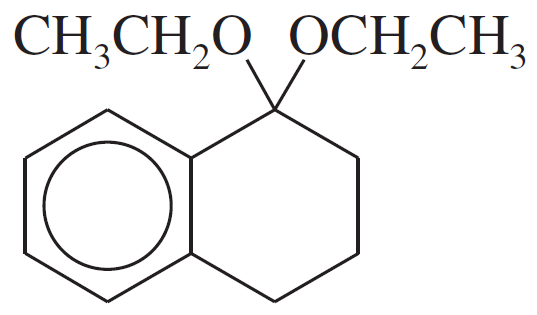
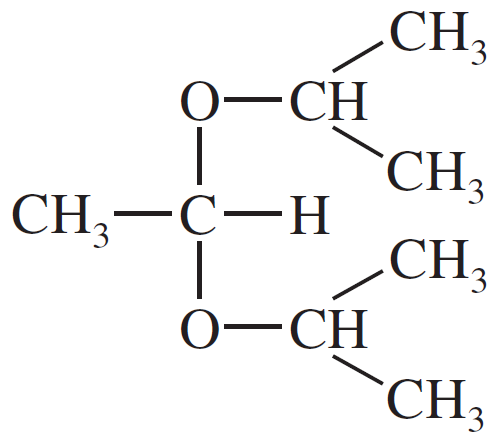
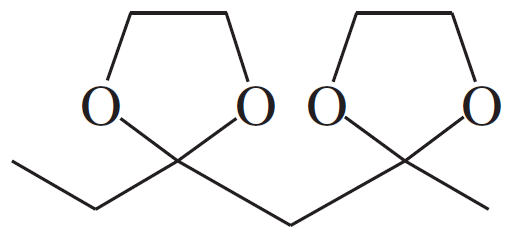
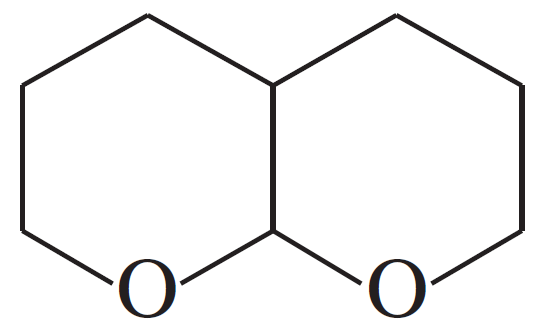
Show what alcohols and carbonyl compounds give the following derivatives.
(a)
(b)
(c)
Problema 27
In the mechanism for acetal hydrolysis shown, the ring oxygen atom was protonated first, the ring was cleaved, and then the methoxy group was lost. The mechanism could also be written to show the methoxy oxygen protonating and cleaving first, followed by ring cleavage. Draw this alternative mechanism.
Problema 28a
Propose a mechanism for the acid-catalyzed reaction of cyclohexanone with ethylene glycol to give cyclohexanone ethylene acetal.
Problema 28b
Propose a mechanism for the acid-catalyzed hydrolysis of cyclohexanone ethylene acetal.
Problema 28d
Propose a mechanism for the acid-catalyzed hydrolysis of the acetal given in Problem 18-26(f).
Problema 29a
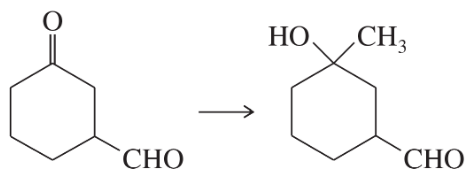
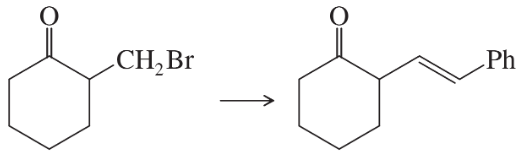
Show how you would accomplish the following syntheses. You may use whatever additional reagents you need.
(a)
Problema 29b
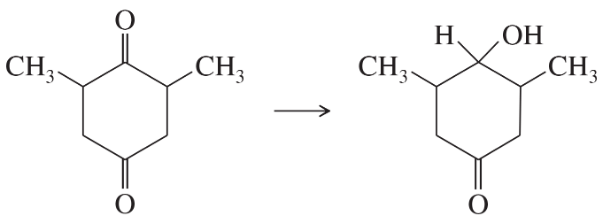
Show how you would accomplish the following syntheses. You may use whatever additional reagents you need.
(b)
Problema 29c
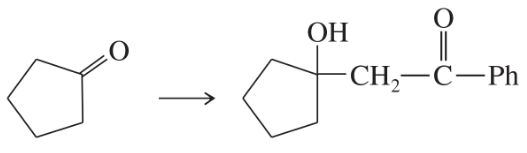
Show how you would accomplish the following syntheses. You may use whatever additional reagents you need.
(c)
Problema 29d
Show how you would accomplish the following syntheses. You may use whatever additional reagents you need.
(d)
Problema 29e
Show how you would accomplish the following syntheses. You may use whatever additional reagents you need.
(e)
Problema 29f
Show how you would accomplish the following syntheses. You may use whatever additional reagents you need.
(f)
Problema 30
Trimethylphosphine is a stronger nucleophile than triphenylphosphine, but it is rarely used to make ylides. Why is trimethylphosphine unsuitable for making most phosphorus ylides?
Problema 30a
Write the sequence of steps required for the conversion of benzene into benzenediazonium chloride.
Problema 31a
Like other strong nucleophiles, triphenylphosphine attacks and opens epoxides. The initial product (a betaine) quickly cyclizes to an oxaphosphetane that collapses to an alkene and triphenylphosphine oxide.
(a) Show each step in the reaction of trans-2,3-epoxybutane with triphenylphosphine to give but-2-ene. What is the stereochemistry of the double bond in the product?