Ch. 2 The Chemical Level of Organization
Martini - Fundamentals of Anatomy & Physiology 11th Edition
Martini, Nath, Bartholomew11th EditionFundamentals of Anatomy & PhysiologyISBN: 9780136874089당신이 사용하는 게 아니라요?교과서 변경
2장, 문제 14

Which of the following is not a function of a protein?
(a) Support
(b) Transport
(c) Metabolic regulation
(d) Storage of genetic information
(e) Movement

검증된 단계별 안내
1
Step 1: Understand the primary functions of proteins in the body. Proteins serve various roles including structural support, transport of molecules, catalyzing metabolic reactions, and enabling movement through muscle contraction.
Step 2: Review each option in the question and relate it to known protein functions: (a) Support - proteins like collagen provide structural support; (b) Transport - proteins such as hemoglobin transport oxygen; (c) Metabolic regulation - enzymes, which are proteins, regulate metabolism; (e) Movement - proteins like actin and myosin are involved in muscle contraction.
Step 3: Identify the option that does not align with protein functions. Storage of genetic information is primarily the role of nucleic acids (DNA and RNA), not proteins.
Step 4: Conclude that the correct answer is the function that proteins do not perform, which is the storage of genetic information.
Step 5: Summarize that proteins are versatile molecules involved in support, transport, metabolic regulation, and movement, but genetic information storage is outside their functional scope.

비슷한 문제에 대한 검증된 영상 답변:

이 영상 해법은 위 문제에 도움이 된다고 튜터들이 추천한 것입니다.
영상 길이:
3m

주요 개념

질문에 올바르게 답하기 위해 반드시 이해해야 하는 핵심 개념들은 다음과 같습니다.

Functions of Proteins

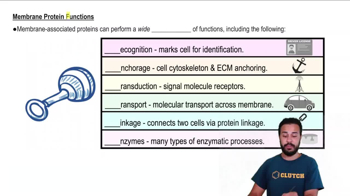
Proteins perform diverse roles in living organisms, including providing structural support, facilitating transport of molecules, regulating metabolic processes through enzymes and hormones, and enabling movement via muscle contraction.
추천 영상:
가이드 코스
03:54
Membrane Protein Functions

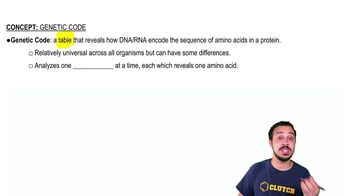
Storage of Genetic Information

The storage of genetic information is primarily the role of nucleic acids, such as DNA and RNA, which carry hereditary instructions, not proteins. Proteins do not store genetic data but may interact with nucleic acids to regulate gene expression.
추천 영상:

Metabolic Regulation

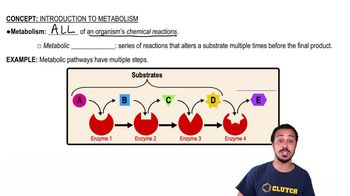
Proteins regulate metabolism by acting as enzymes that catalyze biochemical reactions and as hormones that control physiological processes, ensuring proper cellular function and homeostasis.
추천 영상:
가이드 코스
02:17
Introduction to Metabolism