Ch. 20 The Heart
Martini - Fundamentals of Anatomy & Physiology 11th Edition
Martini, Nath, Bartholomew11th EditionFundamentals of Anatomy & PhysiologyISBN: 9780136874089당신이 사용하는 게 아니라요?교과서 변경
20장, 문제 25

What factors influence cardiac output?

검증된 단계별 안내
1
Understand that cardiac output (CO) is the volume of blood the heart pumps per minute, and it is calculated as the product of heart rate (HR) and stroke volume (SV). The formula is: \[ CO = HR \times SV \]
Identify that heart rate (HR) is the number of heartbeats per minute, which can be influenced by autonomic nervous system activity, hormones, and physical activity.
Recognize that stroke volume (SV) is the amount of blood ejected by the left ventricle with each beat, and it depends on three main factors: preload, afterload, and contractility.
Explain that preload refers to the degree of stretch of the cardiac muscle fibers at the end of diastole, which is related to venous return and blood volume.
Describe afterload as the resistance the heart must overcome to eject blood, influenced by arterial blood pressure and vascular resistance, while contractility is the intrinsic strength of cardiac muscle contraction, affected by sympathetic stimulation and certain hormones.

비슷한 문제에 대한 검증된 영상 답변:

이 영상 해법은 위 문제에 도움이 된다고 튜터들이 추천한 것입니다.
도움이 되었나요?

주요 개념

질문에 올바르게 답하기 위해 반드시 이해해야 하는 핵심 개념들은 다음과 같습니다.

Heart Rate

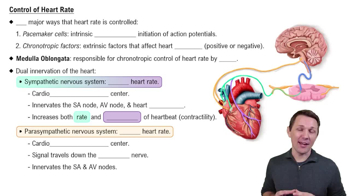
Heart rate is the number of times the heart beats per minute. It directly affects cardiac output because an increase in heart rate generally raises the volume of blood pumped by the heart, while a decrease lowers it. Factors like exercise, stress, and autonomic nervous system activity influence heart rate.
추천 영상:
가이드 코스
6:13
Control of Heart Rate

Stroke Volume

Stroke volume is the amount of blood ejected by the left ventricle with each heartbeat. It depends on factors such as preload (ventricular filling), contractility (strength of contraction), and afterload (resistance the heart must overcome). Changes in stroke volume significantly impact cardiac output.
추천 영상:

Venous Return

Venous return is the flow of blood back to the heart, which affects preload and thus stroke volume. It is influenced by blood volume, venous tone, and muscle activity. Adequate venous return is essential to maintain sufficient cardiac output to meet the body's demands.
추천 영상:
6:50
Types of Anastomoses